
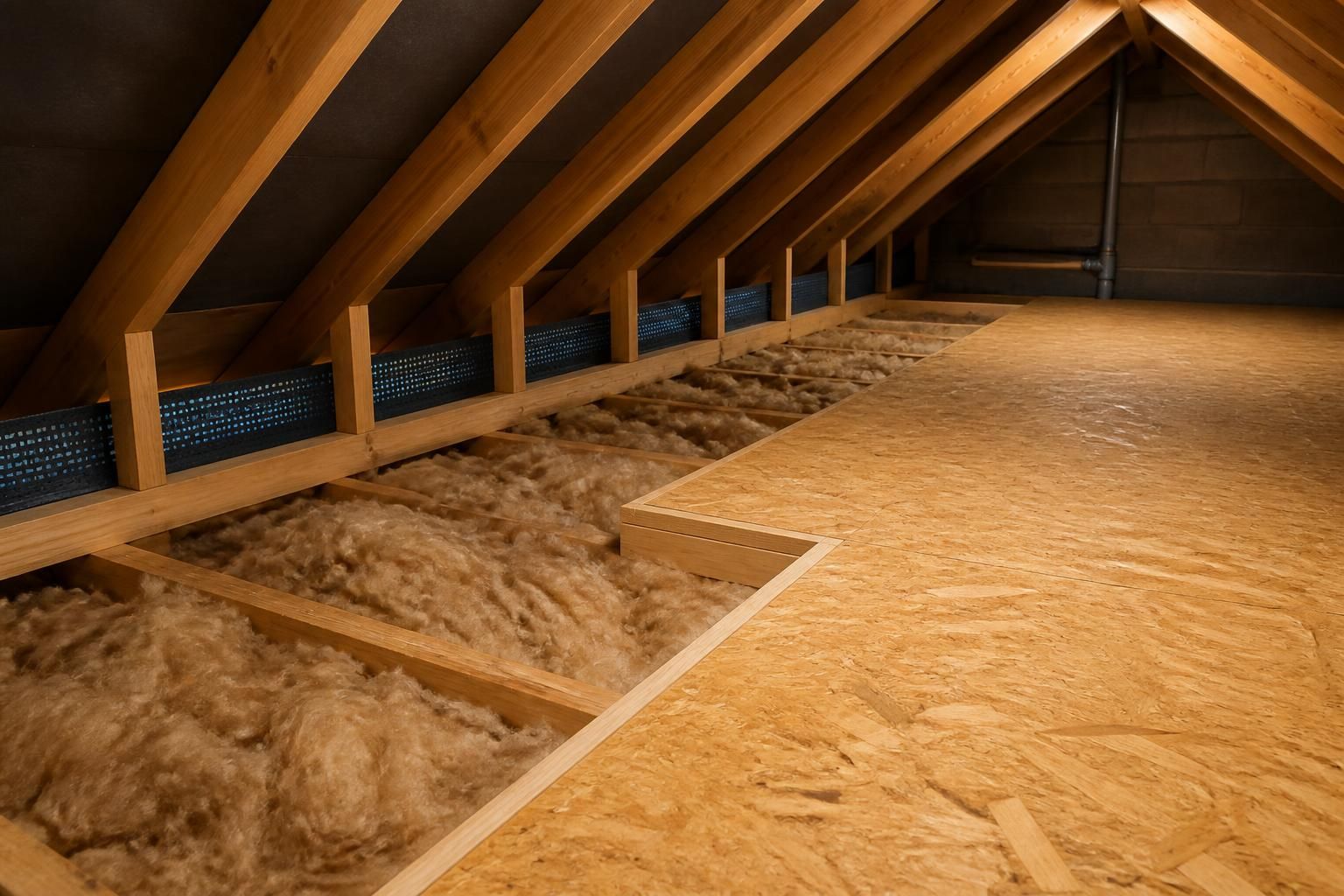
How does a loft boarding package protect loft ventilation?
A loft boarding package protects ventilation by raising flooring above insulation, preserving its depth and leaving intended airflow routes clear around the roof space.
We assess insulation and ventilation before specifying boarding, so storage remains separate from insulation rather than compressing it.
A loft boarding package protects ventilation by keeping roof-level air paths, eaves openings and installed vents clear during the work.
Ventilation helps remove moisture from the roof space. Blocked airflow can increase condensation risk, particularly where warm air escapes from the rooms below.
We inspect the loft before specifying the package. The assessment considers eaves, roof vents, insulation depth, electrical services and the intended storage area.
- We keep ventilation openings at the roof edges unobstructed.
- We avoid covering visible tile, ridge or other designed roof vents.
- We check that insulation does not restrict airflow at the eaves.
- We plan the boarding layout around fixed features and necessary clearance.
- We identify areas requiring additional attention before storage is added.
The flooring layout should not treat every part of the loft as interchangeable. Roof geometry, insulation and ventilation details determine where boarding can be placed safely.
Storage areas can then sit within the assessed footprint without blocking air movement through the roof space. We explain any sections that should remain unboarded or free from stored items.
Access also affects ventilation protection. An insulated drop-down hatch can reduce uncontrolled heat movement between the home and loft, while a correctly fitted frame helps maintain the intended separation.
Ventilation protection does not replace repairs. We will identify signs such as damp insulation, staining, mould or damaged roof coverings for further investigation before storage use.
After installation, keep eaves areas, vents and designated clearances free from boxes or loose insulation. Do not push stored items against roof edges where they could obstruct airflow.
These checks allow a loft boarding package to add practical storage without overlooking the roof space conditions that support insulation performance and help manage condensation.
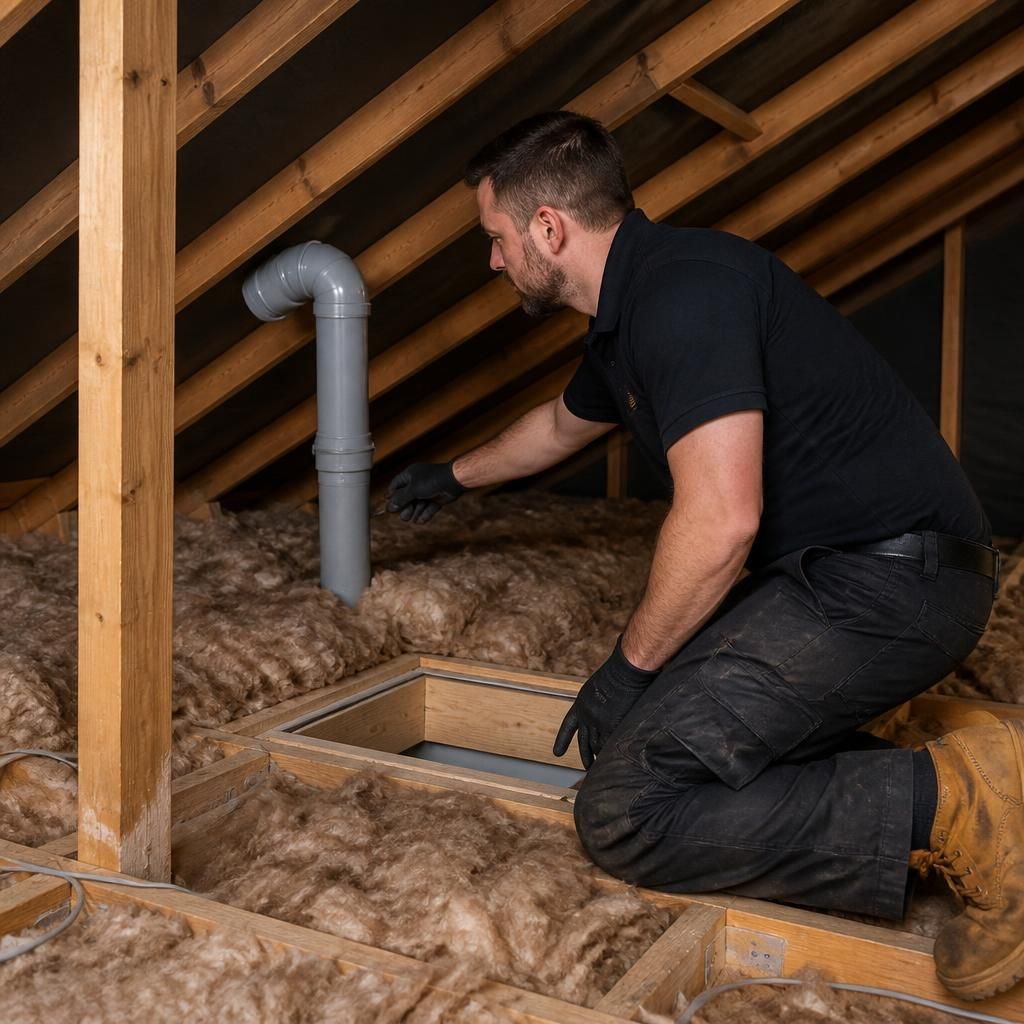
Roof ventilation and household moisture are separate considerations. Air entering the loft from bathrooms, kitchens or gaps around services can add moisture even when roof vents remain open.
During the assessment, we look for extract ducting that ends in the loft, unsealed service penetrations and gaps around the hatch. We explain any points requiring attention before storage is specified.
Keeping moisture sources controlled allows roof ventilation to perform its intended role. It also helps prevent a boarding package from concealing issues that need investigation before the loft is used for storage.