
Will loft boarding damage insulation?
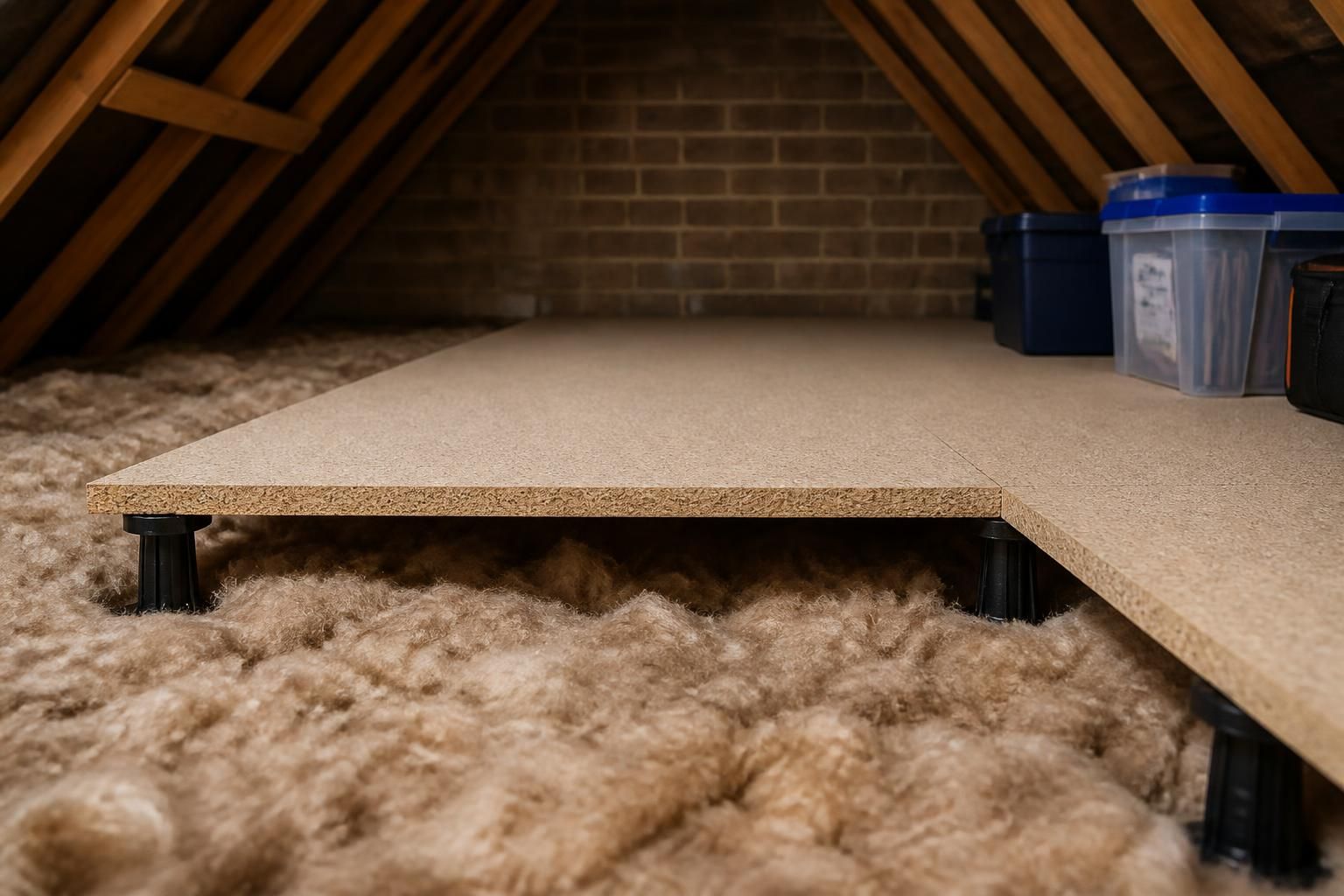
Loft boarding can damage insulation if boards compress it directly. Professionally installed LoftZone raised flooring keeps storage above the insulation, helping preserve its depth and thermal performance.
Loft boarding does not have to damage insulation, but the installation method matters. Problems usually arise when boards rest directly on insulation, compress it, move it from its intended position or obstruct ventilation.
Insulation works by trapping air within its material. When it is compressed, its depth is reduced and its thermal performance can be affected. Gaps around the edges, displaced insulation and uninsulated areas can also create weaker points in the loft’s overall coverage.
Raised loft boarding separates the storage surface from the insulation beneath it. We install LoftZone raised flooring on a supporting framework, allowing insulation to remain at its intended depth rather than carrying the boards or stored items.
- Compression: insulation should not be used as a structural support for boards, boxes or household items.
- Displacement: insulation can be pushed aside during installation, leaving parts of the ceiling less protected.
- Torn or disturbed material: handling can damage rolls, slabs or quilted insulation if installers work without care.
- Restricted airflow: boarding should not block ventilation routes at the eaves or around relevant roof details.
- Moisture concerns: disturbed insulation can make existing dampness, staining or condensation harder to identify.
Professional preparation helps prevent these issues. We inspect the accessible loft area, consider the existing insulation and identify obstructions before fixing the raised support system. This allows the storage area to be planned without treating insulation as a substitute for structural support.
Deep insulation needs particular care because standard boards may sit too low without compressing it. Raised flooring creates clearance above the insulation, while the layout can be adapted around roof timbers, tanks, cables and other fixed features.
Insulation should also be checked before boarding begins. Wet, contaminated, heavily settled or damaged material may need attention first. Boarding over a problem can make inspection and future maintenance more difficult, even if the boards themselves are correctly supported.
Installation should preserve access to areas that may require inspection. A planned layout can leave suitable routes to relevant equipment and avoid covering services without consideration. We can also discuss how an insulated drop-down hatch, ladder and lighting affect access to the completed storage area.
Boarding does not make the loft a habitable room. The finished area is intended for storage, and stored items should remain within the capacity of the supporting structure. Heavy loads should not be concentrated in one area without appropriate advice.
A correctly planned installation therefore protects the insulation by keeping it separate from the storage floor, maintaining coverage and retaining practical access. Loft Storage & Accessories, including shelving and lighting, can then be considered around the boarding layout rather than forcing changes that disturb the insulation.

Raised flooring also limits later disturbance. You can place boxes on the boards instead of stepping directly on insulation when accessing stored items, reducing repeated handling of the material beneath.
We plan the storage surface around areas that need inspection or maintenance. This means you can use the boarded section without removing large areas of flooring and disturbing insulation unnecessarily.