
Does compressing loft insulation affect its performance?
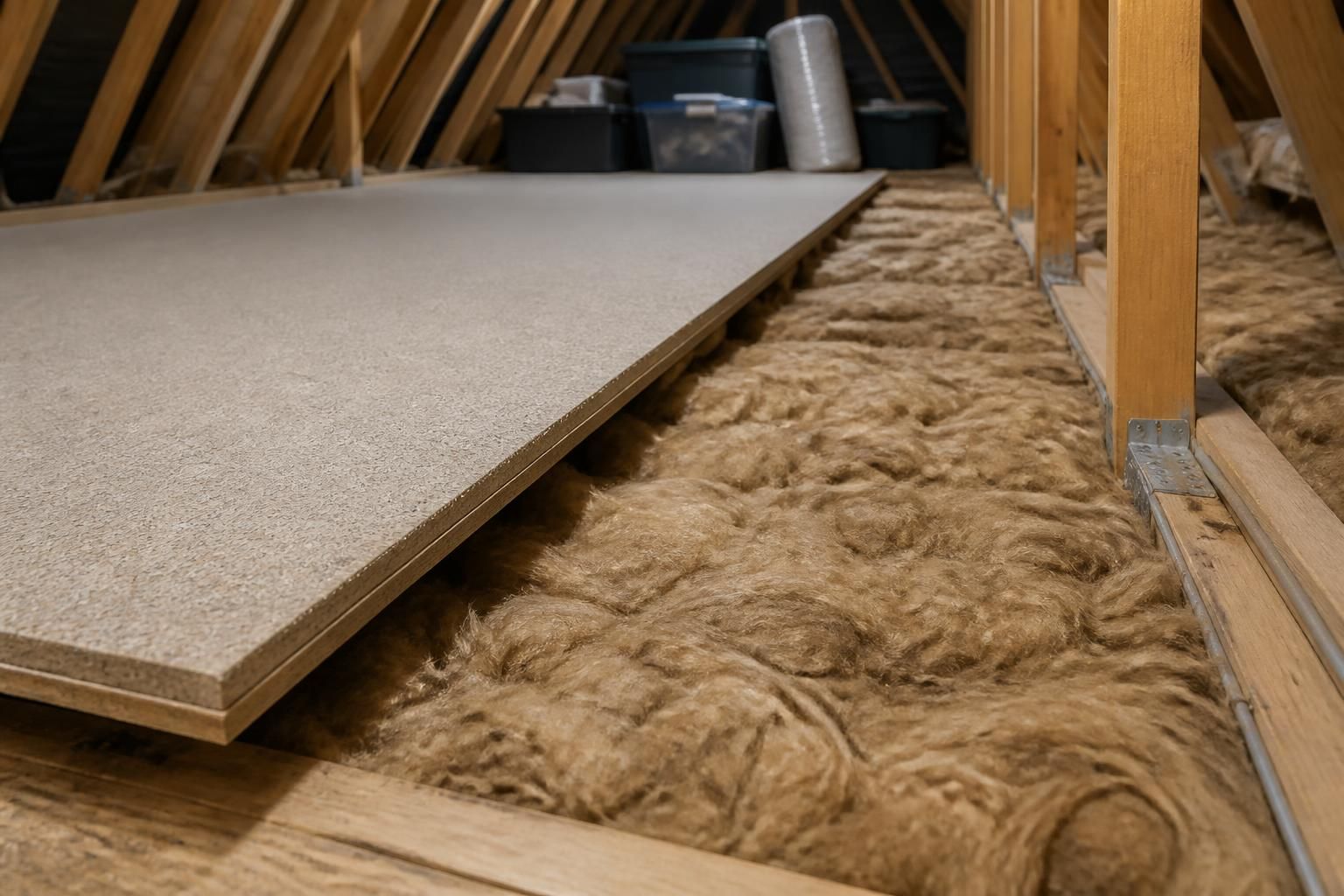
Yes. Compressing loft insulation reduces its thickness and can reduce its thermal performance. Raised loft boarding keeps storage above the insulation, helping it retain its intended depth.
The extent of performance loss depends on how far the insulation is compressed, how widely compression occurs and whether gaps are created. A lightly compressed area may have limited effect, while widespread compression can leave the loft floor less effective at slowing heat loss.
Loft insulation works partly because its thickness holds air within the material. Boards placed directly onto quilt insulation squash that structure. The material then has less depth to provide thermal resistance, particularly beneath frequently used storage areas.
Compression can also create uneven insulation levels. Firmly supported sections may sit beside areas where the insulation remains deeper, producing an inconsistent layer across the loft floor. Gaps around boards, joists, pipes or access points can further reduce continuity.
The result is not always visible from below. A ceiling may still feel normal, even when insulation has been flattened above it. A loft inspection should therefore consider the material type, original depth, compressed areas, gaps and the way the boarding is supported.
- Mineral wool quilt: Boards can flatten the quilt and reduce its thickness across the contact area.
- Loose-fill insulation: Boarding can disturb or displace the material, leaving uneven coverage if the support arrangement is unsuitable.
- Rigid insulation boards: Compression may be less relevant, but joints, edges and gaps still require careful consideration.
Storage weight can add pressure if the boarding bears directly on insulation. Concentrated loads, such as boxes or shelving, may affect small areas more severely than evenly distributed items.
Raised flooring changes the support arrangement. We install a framework above the insulation, then fix boarding to that raised structure. The insulation remains beneath the storage surface instead of carrying the boards and stored items.
The required height depends on the existing insulation, the proposed boarding area and any services crossing the loft floor. We assess these conditions before recommending a boarding arrangement.
Insulation should not be pulled apart simply to fit boards. Disturbing it can expose gaps, reduce coverage and make later inspection more difficult. We retain the existing layer where practicable and identify areas requiring adjustment.
Small compressed sections may need local correction rather than wholesale replacement. Where insulation has become displaced, damaged or insufficient, a top-up may be appropriate after the boarding layout has been established.
Access work also needs consideration. An insulated drop-down hatch should close against a suitable frame without crushing nearby insulation. We can assess the hatch area as part of a wider loft storage installation.
Homeowners considering DIY boarding should check the insulation depth and the proposed support system first. Boards resting on joists may compress insulation between them, particularly where the insulation extends above joist level.
A suitable assessment should record:
- the insulation material and approximate depth;
- areas where boards or stored items would create pressure;
- the proposed raised-floor height and support positions;
- gaps, displaced material and restricted sections;
- access, lighting and shelving requirements affecting the layout.
Loftopia can combine raised boarding with insulation work, loft access and Loft Storage & Accessories. That allows the storage layout to be considered alongside the insulation rather than after compression has occurred.
Compressed insulation does not automatically mean that the entire loft requires removal. The appropriate action depends on the extent, location and condition of the affected material, together with the proposed storage arrangement.
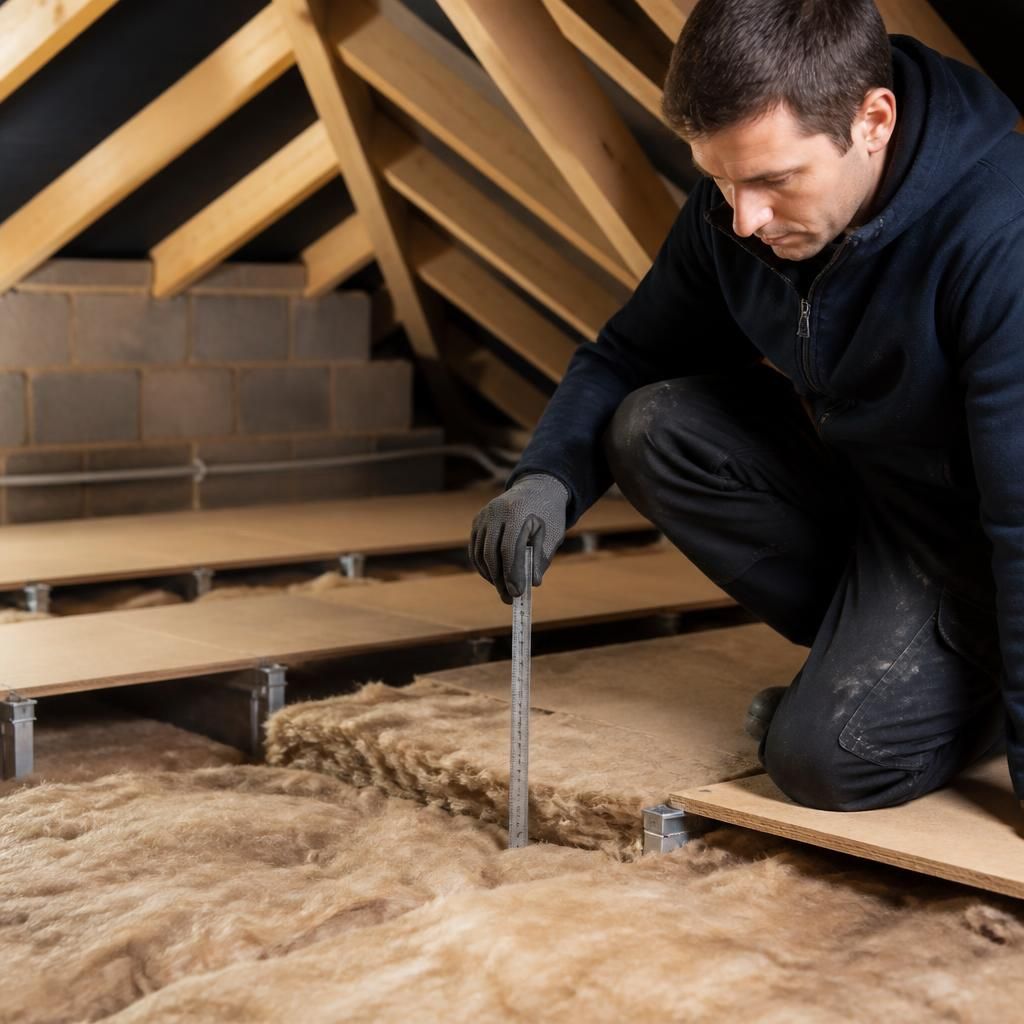
The finished boards do not show whether insulation has been compressed underneath. Assessment should compare exposed insulation with areas below the storage structure, noting changes in depth, coverage and condition.
This check helps separate a thermal concern caused by compression from one caused by displaced or missing material. We can identify affected sections before deciding whether local adjustment or additional insulation is appropriate.