
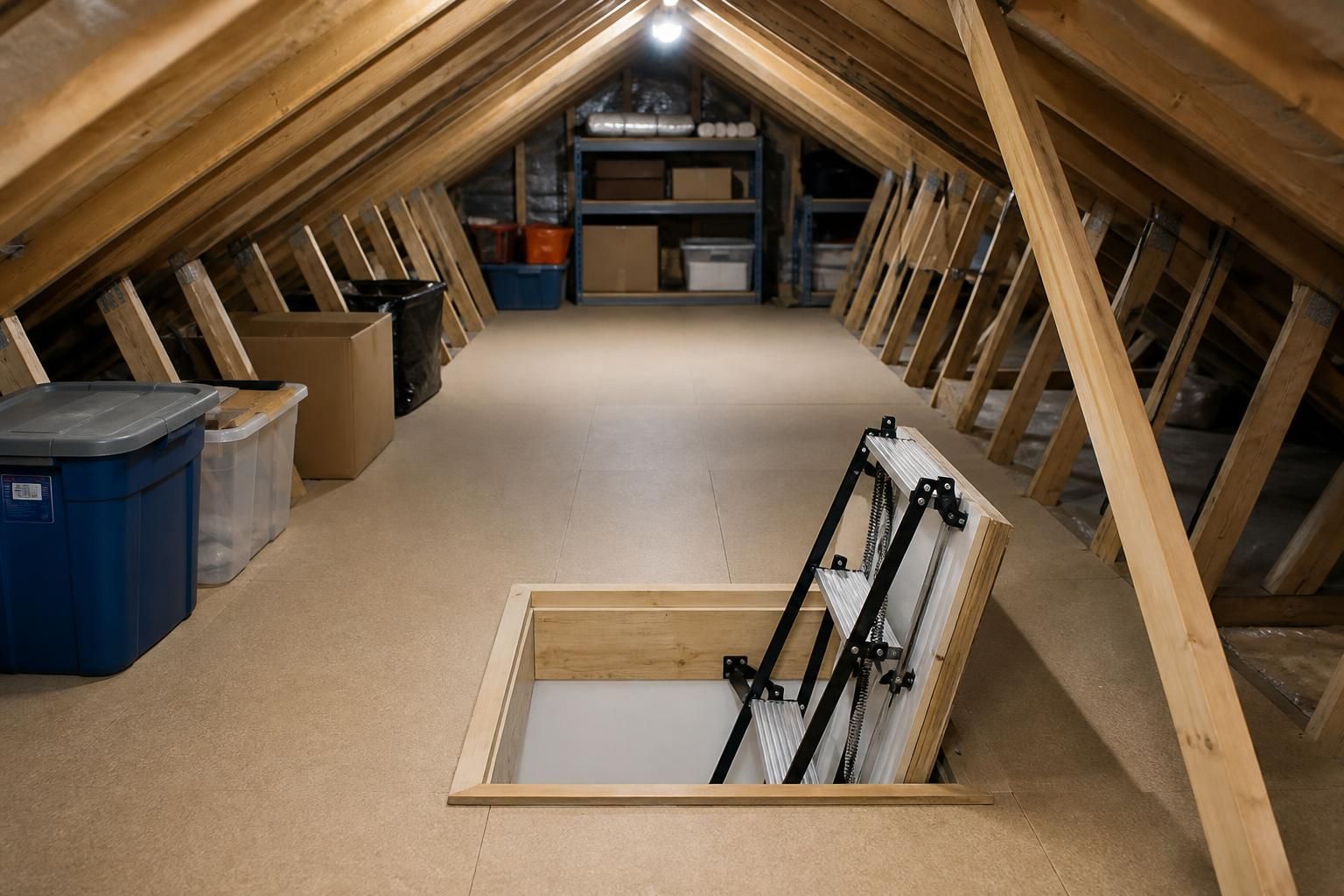
Are MDF loft boards suitable for storage?
MDF loft boards can suit limited, dry storage, but they are generally unsuitable for robust loft flooring because moisture and loading can cause swelling or sagging.
For dependable storage, use boards specified for flooring and install them on suitable raised supports above insulation.
MDF is not normally the right choice for permanent loft storage flooring. It can support light items in a dry, carefully controlled area, but standard MDF is not designed as a structural flooring board.
MDF consists of compressed wood fibres and resin. Its smooth, dense surface makes it useful for furniture and shelving, but loft storage creates demands that furniture panels may not handle well.
- Moisture: MDF can absorb moisture through exposed edges, cut-outs and damaged surfaces. Swelling can affect the board’s shape and reduce its usefulness as a stable walking surface.
- Load and span: MDF may sag between supports when it carries stored boxes or people. The result depends on thickness, support spacing, fixing and the weight distribution.
- Edges and fixings: Repeated movement, screws near edges and impact from storage boxes can damage MDF more readily than a board designed for flooring.
- Loft conditions: Temperature changes, condensation, roof leaks and humid air can expose MDF to moisture after installation. A loft that appears dry during inspection can still experience seasonal changes.
Moisture-resistant MDF is not automatically suitable for loft flooring. The description refers to improved resistance, not permission to use the panel as a structural floor. Check the manufacturer’s stated application, span information and load guidance before using any MDF in a loft.
MDF also needs a firm, continuous arrangement of supports. Laying sheets across joists or ceiling ties without checking their spacing can produce movement, deflection or damaged ceiling fixings. The board itself cannot correct inadequate support.
Insulation creates an additional design issue. Modern loft insulation can sit substantially above the existing ceiling structure. Pressing boards directly into it can reduce its depth and interfere with the intended insulation performance. Raised supports create storage above insulation while leaving the insulation in place.
Loftopia uses LoftZone raised flooring where the loft requires a raised storage deck above insulation. The installer checks the available space, support arrangement and proposed boarding area rather than treating every loft as identical.
MDF may be considered for limited purposes when all of the following apply:
- The area remains dry and has no signs of leaks or persistent condensation.
- The panel has documented suitability for the intended use.
- Supports provide the required span and stability.
- Stored items remain light and spread across the supported area.
- Edges and openings are protected from impact and moisture.
- The installation does not compress insulation or obstruct necessary airflow.
These conditions do not make standard MDF equivalent to a flooring board. They simply reduce some of the risks associated with a limited, low-load application.
For a storage deck, specify boards intended for flooring and match them to the support system. Tongue-and-groove edges can help panels meet consistently, but they do not replace correct support, fixing or load assessment.
Storage should also be planned around concentrated loads. A box of books, tools or seasonal decorations can place more pressure on a small area than several lightweight containers. Shelving can help organise items, but its supports must transfer weight into suitable flooring or the supporting structure.
An existing MDF floor should be inspected rather than assumed to be adequate. Look for swelling, soft areas, lifted joints, cracked surfaces, staining and movement underfoot. Do not add heavier storage until the support and board specification have been checked.
Replacing MDF may be appropriate where moisture damage, excessive movement or unsuitable support is present. In other cases, an installer may be able to retain part of the existing floor and alter the storage layout. The correct approach depends on the loft structure and the condition of the boards.
Loftopia can assess the boarding requirement alongside access and storage planning. An insulated drop-down hatch, aluminium sliding loft ladder or timber loft ladder can make entry safer, while Loft Storage & Accessories can include shelving and lighting for a more usable storage area.
MDF is therefore best treated as a limited panel material, not a default loft-flooring choice. A flooring-rated board on suitable raised supports provides a more appropriate basis for storing household items above insulation.
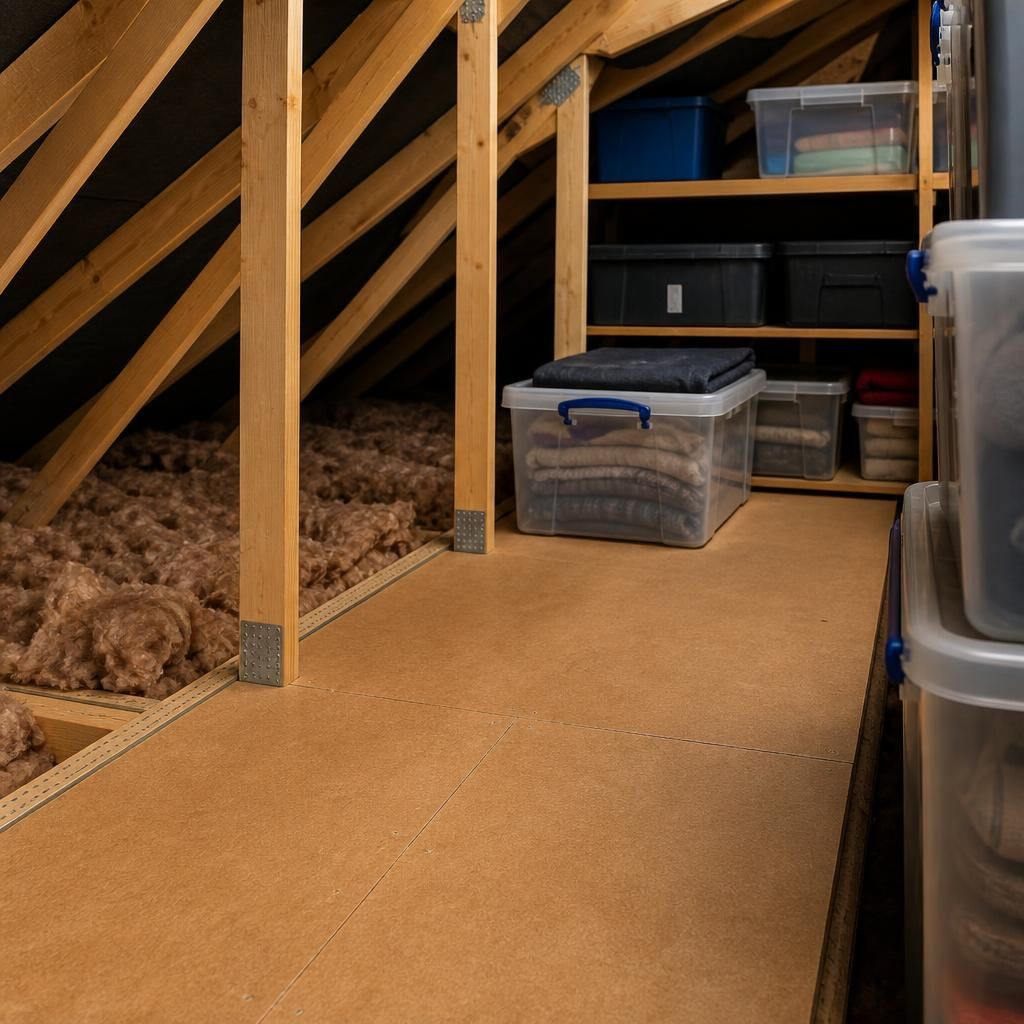
MDF can have a place within a loft storage layout when it forms a fixed, lightly loaded component rather than the surface you walk across. For example, supported shelf panels, dividers or cupboard fronts may be suitable in a dry area.
That distinction matters because a storage floor must cope with occasional foot traffic as well as the weight of stored items. If access across the boarded area is part of the plan, choose panels specified for flooring and have the support arrangement checked.