

How much weight can loft boarding sheets safely support?
Loft boarding sheets can safely support normal storage loads when the sheet specification, joist capacity, support spacing and fixings are suitable.
There is no single safe weight limit: distribute stored items across the raised flooring and avoid treating the loft as a habitable room.
The safe load depends on the complete loft floor, not the boarding sheets alone. Joist size, span, condition, support spacing, sheet specification and fixing method all affect the result.
Loft boarding sheets spread stored items across their supports. They do not increase the load capacity of ceiling joists. A sheet may appear strong, while the joists beneath it remain unsuitable for concentrated storage.
Raised flooring changes the arrangement by creating storage above insulation. LoftZone raised flooring uses supports that keep the boards clear of deep insulation and transfer loads towards the supporting structure. The existing joists still need suitable condition and capacity.
Manufacturers normally assess boarding for distributed storage loads rather than unlimited weight. A row of lightweight boxes creates a different load from one heavy item standing on a small base.
- Distributed items: Suitcases, decorations and boxed household belongings place weight across several areas when stored carefully.
- Concentrated items: A heavy box, shelving foot or tightly packed stack can apply greater pressure to one point.
- Unsupported edges: Sheets need adequate support beneath joints and edges. Unsupported sections can flex even when the total stored weight seems modest.
- Moving loads: Walking, kneeling and moving boxes create short-term forces that storage alone does not create.
Storage should be arranged so heavier belongings remain near supported areas and lighter items occupy less accessible sections. Avoid stacking items tightly against the roof structure, electrical equipment or ventilation routes.
Fixings help keep sheets stable and reduce movement. They do not turn unsuitable joists into storage supports or compensate for excessive spans between supports. Correctly cut sheets also reduce weak or poorly supported sections.
A professional assessment should check the joists, existing insulation, roof structure, access route and intended storage pattern. It should also identify signs of moisture, timber deterioration, movement or previous alterations.
Do not use loft boarding as a basis for storing unusually heavy equipment, dense materials, large quantities of books or other concentrated loads without specific structural advice. Water tanks and building materials require separate consideration.
Loft boarding is intended for storage access, not for treating the loft as a normal occupied floor. A bedroom, office or other habitable use would require different structural, fire and building-control considerations.
We can assess the loft and explain how raised flooring, suitable sheet materials and secure fixings work together. The recommended storage arrangement should reflect the structure, access and items you plan to keep there.
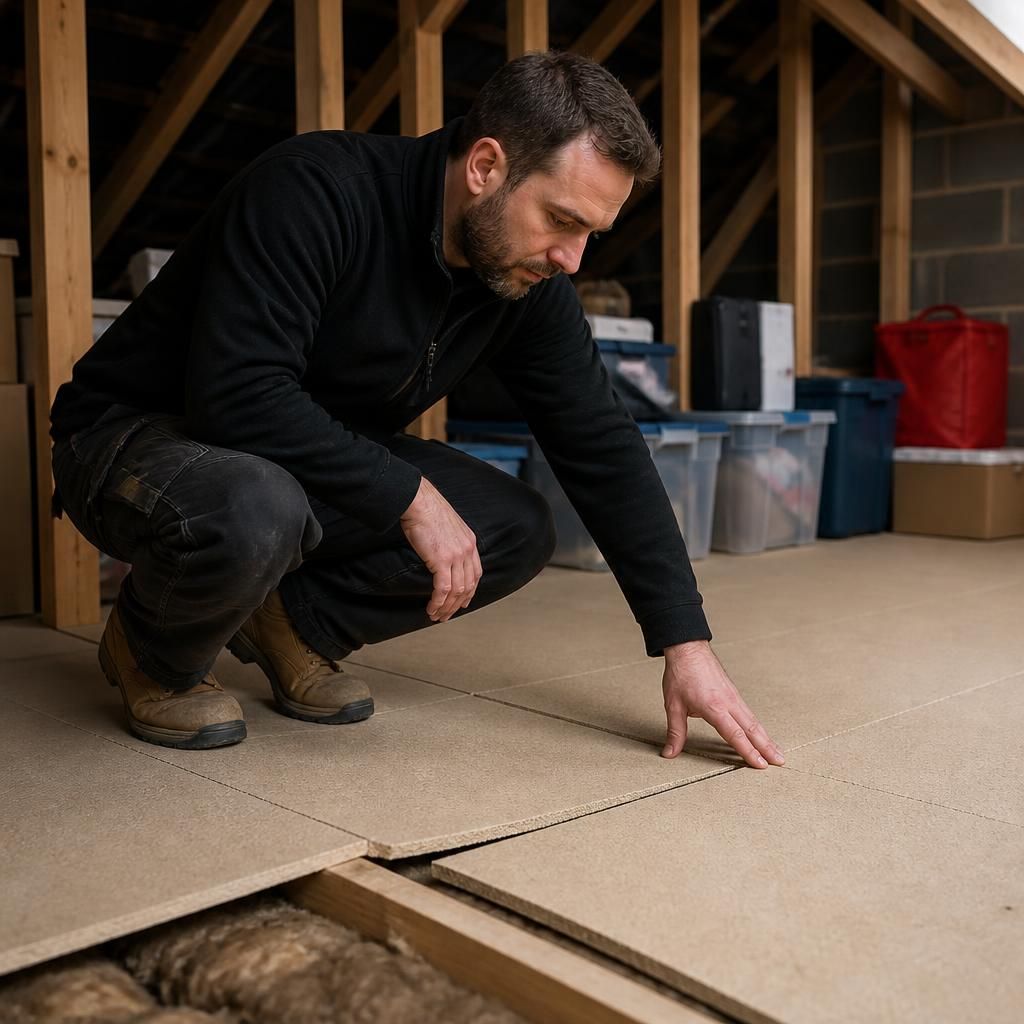
After boarding, check the surface before storing heavier belongings. Noticeable flexing, movement, creaking or opening joints can indicate that the arrangement needs review.
Remove weight from any affected area and ask for the supports, fixings and joists to be checked. Do not assume that adding more boards or tighter fixings will correct a structural issue.