

How can storage protect low loft insulation from future compression?
Raised storage protects low loft insulation by keeping boards and stored items above it, so the insulation is not compressed by everyday use. LoftZone raised flooring transfers the storage load to the joists while preserving the insulation layer beneath.
Storage protects low loft insulation when the design prevents pressure being applied during loading, access and storage. A raised storage area creates a defined surface for boxes and movement, so later use does not gradually flatten insulation beneath it.
This matters because compression reduces the thickness of insulation and can reduce the resistance it provides against heat loss. Insulation that has already settled or flattened may need assessment before storage is added. Raised flooring cannot restore insulation that has lost its original depth, but it can help prevent further deterioration.
Loftopia assesses the existing loft before recommending a storage arrangement. The inspection should consider insulation depth, joist layout, access, ventilation, electrical services and the amount of storage required. These details determine where raised flooring can be placed and whether insulation needs attention first.
A suitable raised storage system should provide a stable load path without pressing directly onto the insulation. LoftZone raised flooring supports a usable storage deck at an appropriate level, allowing the insulation to remain beneath it rather than becoming the material that carries stored items.
The layout also protects insulation during normal loft use. Without a defined floor, people may kneel on insulation, place boxes across it or create makeshift walkways. Those actions can flatten local areas and make future access less predictable. A planned storage surface gives you a clear area for placing and retrieving belongings.
Storage organisation affects the protection provided. You should keep heavier items on the most suitable supported areas, avoid piling items against roof ventilation paths and leave access routes clear. Shelving can keep boxes arranged vertically, reducing the need to move several items across the loft when you need something.
Loft storage should not cover every part of the loft automatically. The practical storage footprint depends on what you need to keep, how you access the area and whether some sections require inspection or ventilation clearance. A smaller, properly planned area may protect the insulation more effectively than unplanned boarding across the loft.
Access equipment can reduce accidental pressure on insulation as well. An insulated drop-down hatch limits heat loss at the opening, while aluminium sliding loft ladders or timber loft ladders provide a more controlled route into the storage area. The suitable choice depends on the hatch position, available clearance and how the loft will be used.
After installation, avoid adding heavy items without checking where they will sit. Loftopia can explain the intended use of the storage area and identify restrictions that affect loading, access or future changes. You should also report any signs of movement, damaged boards or moisture before continuing to use the affected section.
Protecting low insulation therefore involves more than covering it with boards. The existing layer needs checking, the storage surface needs appropriate support and the completed area needs to be used as designed. This approach helps preserve remaining insulation depth while providing a safer, more organised place for household belongings.
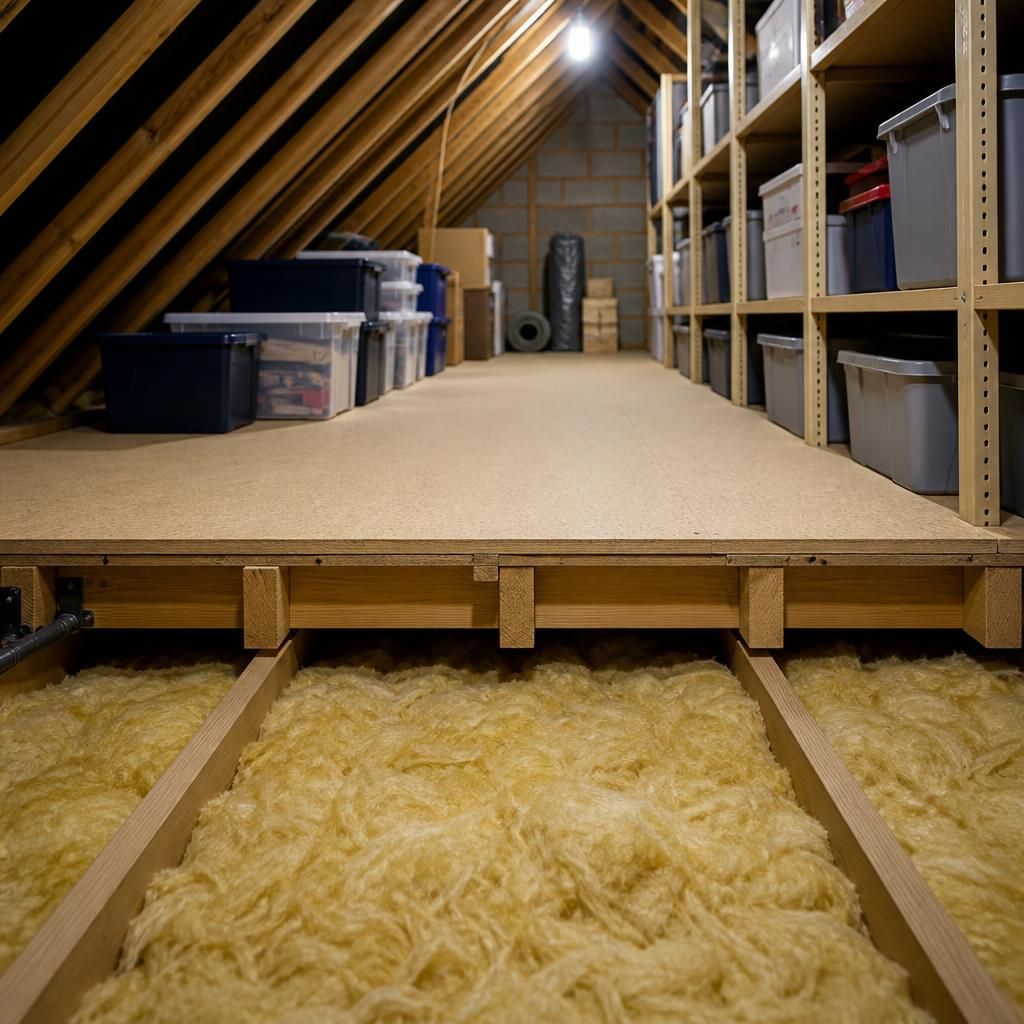
A raised storage deck separates two functions within the loft. The deck provides the walking and loading surface, while low insulation remains a thermal layer beneath it rather than becoming part of the floor structure.
This separation also helps prevent later alterations from placing pressure on the insulation. Adding loose boards, temporary platforms or extra stored items directly onto low areas can recreate the compression that raised flooring was intended to avoid.