
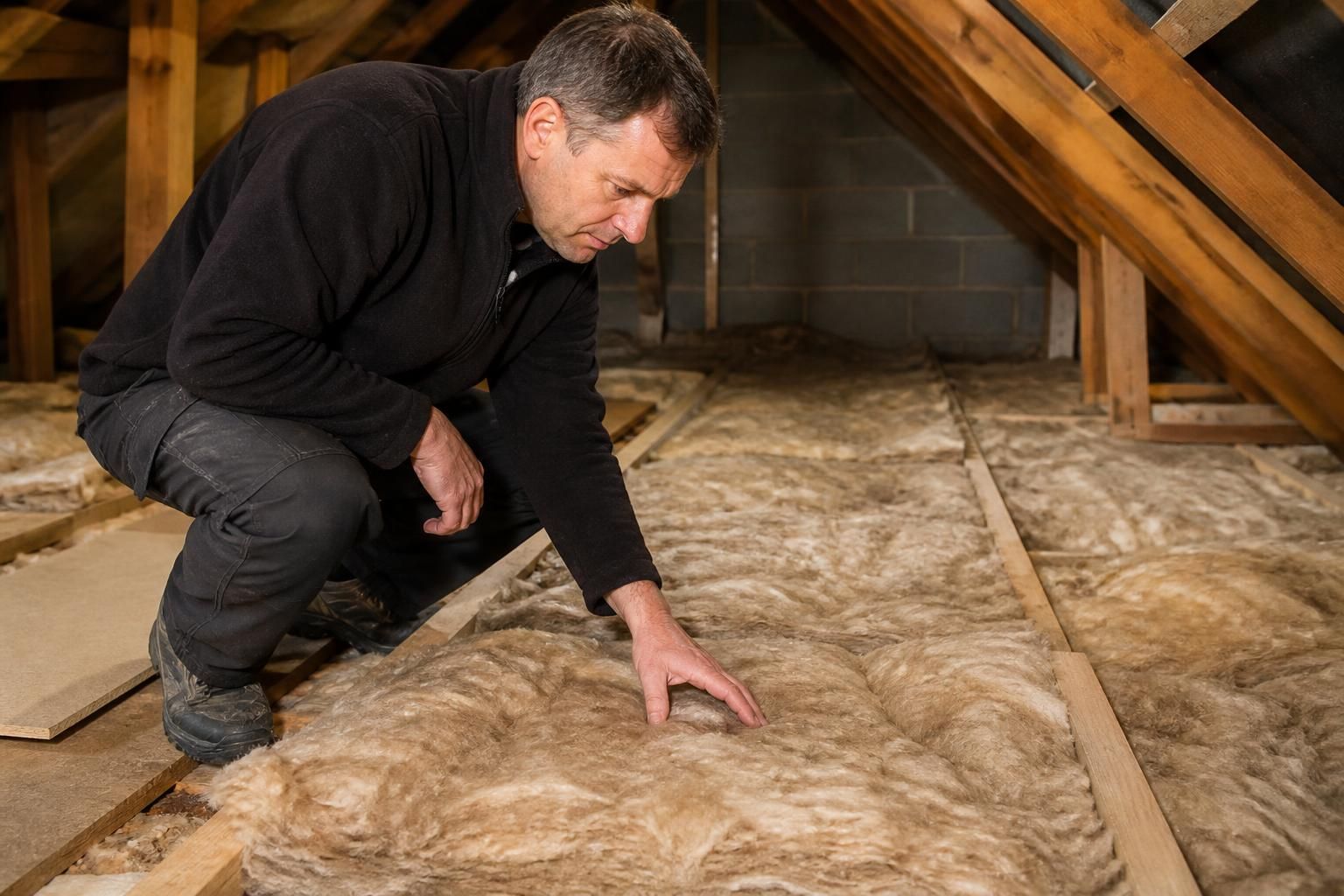
What signs show that low loft insulation has been compressed?
Signs include visibly flattened or uneven insulation, cold rooms, draughts around the ceiling and higher heating bills than expected.
A professional inspection can confirm compression and identify whether the insulation needs repair, removal or a carefully planned top-up.
The strongest additional clues are compression patterns around joists, walkways, stored items and previous boarding. Insulation may also show pressure marks where boards, boxes or other materials have rested.
- Insulation sits below its intended depth: Measure several areas rather than judging one visible section. A section that is consistently shallow may have been installed that way, while isolated low areas may indicate compression or disturbance.
- Compressed sections feel dense: Mineral wool that has been pressed down can feel harder and less springy than nearby material. Do not push into insulation unnecessarily, because handling can disturb its fibres and position.
- Joist lines remain pronounced: When insulation has been squeezed between joists, the timber can become more prominent at the surface. Narrow ridges may follow walking routes, storage positions or the edges of old boards.
- Gaps appear around disturbed areas: Compression can pull rolls apart or leave spaces beside joists, cables and roof edges. These gaps reduce continuity even when most of the loft still appears covered.
- Boards sit unusually close to the insulation: Existing boards that press directly onto the insulation may indicate that its depth has been reduced. This is particularly relevant where the original insulation was deeper than the available space.
- Different areas look noticeably unlike one another: A loft may contain loose, resilient insulation in one section and dense, flattened material near stored items or access routes. That contrast can help identify localised compression.
Some visible conditions do not prove compression. Discoloured insulation may indicate a leak, while dampness, mould or condensation can involve ventilation or roof defects. A surveyor should assess those possibilities separately.
Inspection from the loft is more informative than judging the ceiling below. We check representative areas, compare compressed and undisturbed sections, and consider the insulation depth, position and condition.
We also check whether boards, stored items, cables or roof structures have altered the insulation. The inspection should establish whether the material needs repositioning, repair, removal or a carefully planned top-up.
A professional assessment is especially useful when existing boards prevent a clear view. Removing boards without care can disturb insulation and obscure the original cause of the compression.
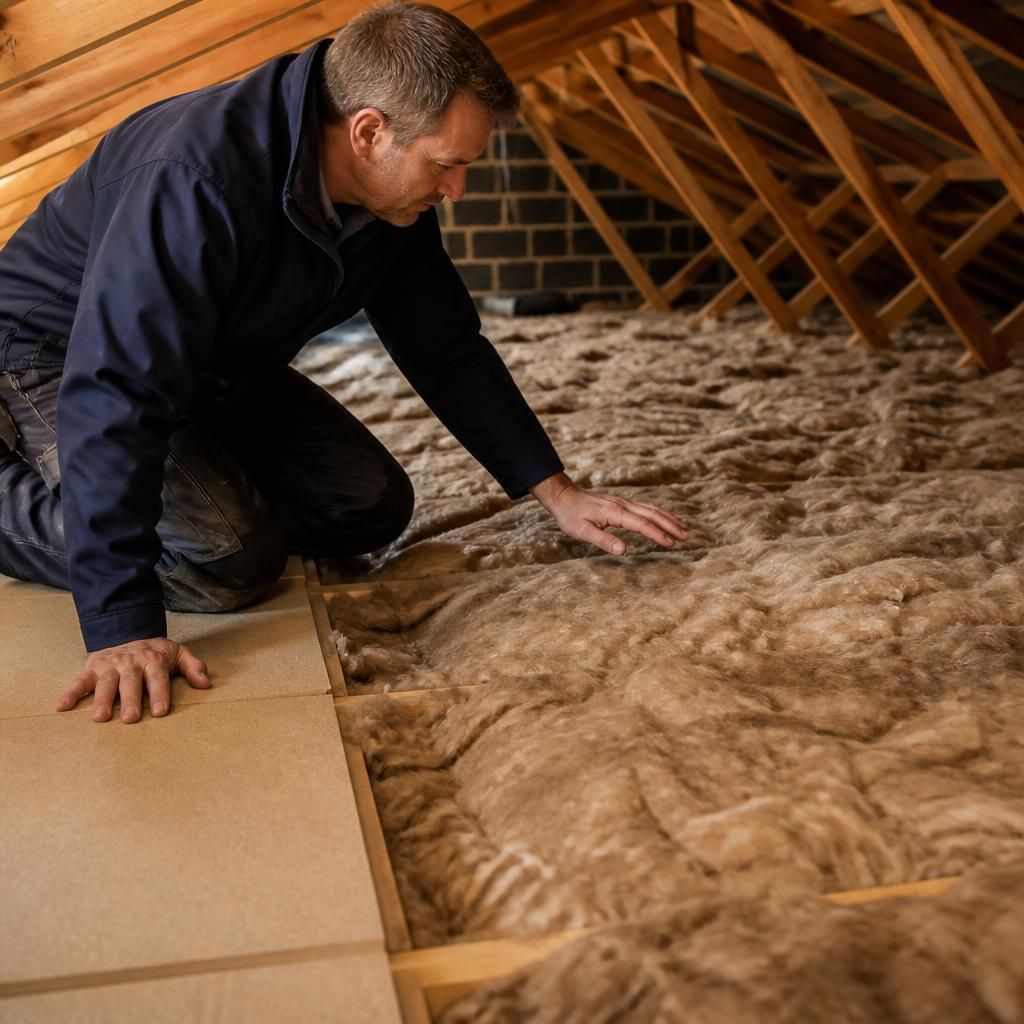
Low insulation is not automatically compressed. Different materials can have different textures and depths, while earlier installation work may leave uneven areas without pressure damage.
A stronger indication is a local change that matches something above it, such as a former board edge, stored item or access route. We compare that area with nearby insulation of the same type before deciding whether compression has occurred.
Where the pattern is unclear, a survey can distinguish original installation levels from later flattening. This helps identify whether the insulation needs repositioning, repair or a planned top-up.