

How is damp loft insulation safely removed?
Damp loft insulation should be removed only after the moisture source has been identified and addressed. We assess the affected area, remove compromised insulation carefully, and check the loft before installing suitable dry insulation.
Safe removal starts with controlling the risk of moisture, contamination and damage to the loft structure. Damp insulation should not simply be lifted out and replaced.
We first examine the affected insulation and surrounding area. This includes checking roof coverings, flashing, pipes, tanks, ventilation routes and signs of condensation. The inspection helps distinguish a plumbing leak from rainwater entry or moisture building up because airflow is restricted.
The extent of wetting also matters. A small isolated area may have different requirements from insulation that is saturated, mould-affected, compressed or spread across the loft. Insulation that has lost its shape may no longer perform as intended.
- Identify immediate hazards. We look for exposed cables, damaged ceiling surfaces, unstable boarding, sharp fixings, animal contamination and restricted access. Suspected asbestos-containing materials require specialist advice before disturbance.
- Protect the route into the loft. We use suitable access arrangements and protective equipment. This reduces contact with fibres, dust and contaminated material while insulation is moved.
- Separate affected material. Damp sections are removed carefully rather than dragged across ceiling joists or pushed into roof edges. This limits damage to plasterboard, wiring and roof components.
- Inspect the exposed area. Once the insulation is out, we can examine timber, pipework, ventilation paths and the ceiling below. Hidden staining or decay is easier to identify at this stage.
- Control remaining moisture. The loft needs suitable ventilation and the original source must be dealt with. Installing new insulation over a continuing leak can conceal the problem and cause repeated dampness.
- Handle waste appropriately. Removed insulation should be contained and disposed of through suitable waste arrangements. It should not be left loose in the loft or placed in household recycling.
Moisture may also affect nearby materials. Wet insulation can become heavier, lose its insulating properties and hold moisture against timber or ceiling surfaces. Mould growth may develop where dampness remains and ventilation is poor.
We do not treat visibly damp insulation as suitable for reuse without checking its condition. Drying may be inappropriate where material is contaminated, compressed, mould-affected or damaged. The correct decision depends on the insulation type and the cause of wetting.
Electrical equipment in the loft needs particular care. Water near cables, junction boxes, light fittings or other electrical components should be treated as a potential hazard. A qualified electrician should deal with electrical defects before removal continues.
After removal, we check that the loft is suitable for replacement insulation. This may involve reviewing ventilation at the eaves, maintaining clear air paths and allowing affected surfaces to dry. The replacement material must not block ventilation or conceal unresolved defects.
Raised flooring should only be considered after the loft is dry and the structure has been checked. Boarding over damp areas can restrict inspection and make later access more difficult. Storage above insulation also depends on keeping insulation correctly positioned beneath the raised flooring.
A professional assessment is especially useful when dampness covers a large area, returns after drying, has produced a strong odour or appears alongside timber discolouration. These signs may indicate a wider building or ventilation issue.
We can assess the affected loft, remove compromised insulation carefully and check the area before suitable dry insulation is installed. The work should leave the cause of dampness understood rather than concealed.
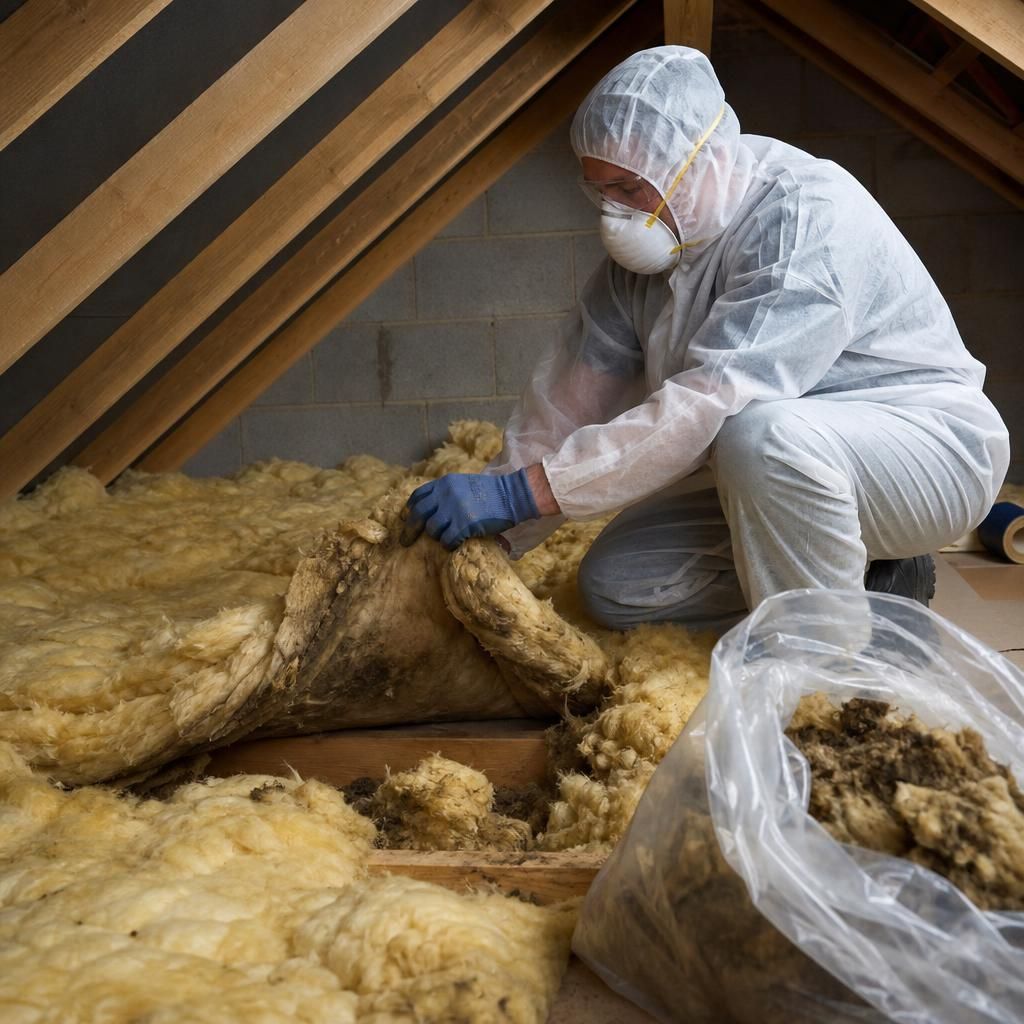
Safe removal does not always mean replacing every layer of insulation. We assess the affected area and distinguish material that is damp or contaminated from material that remains dry and serviceable.
This prevents unnecessary disturbance while ensuring moisture is not trapped beneath insulation left in place. After removal, we check the exposed surfaces before deciding where replacement insulation is appropriate.