
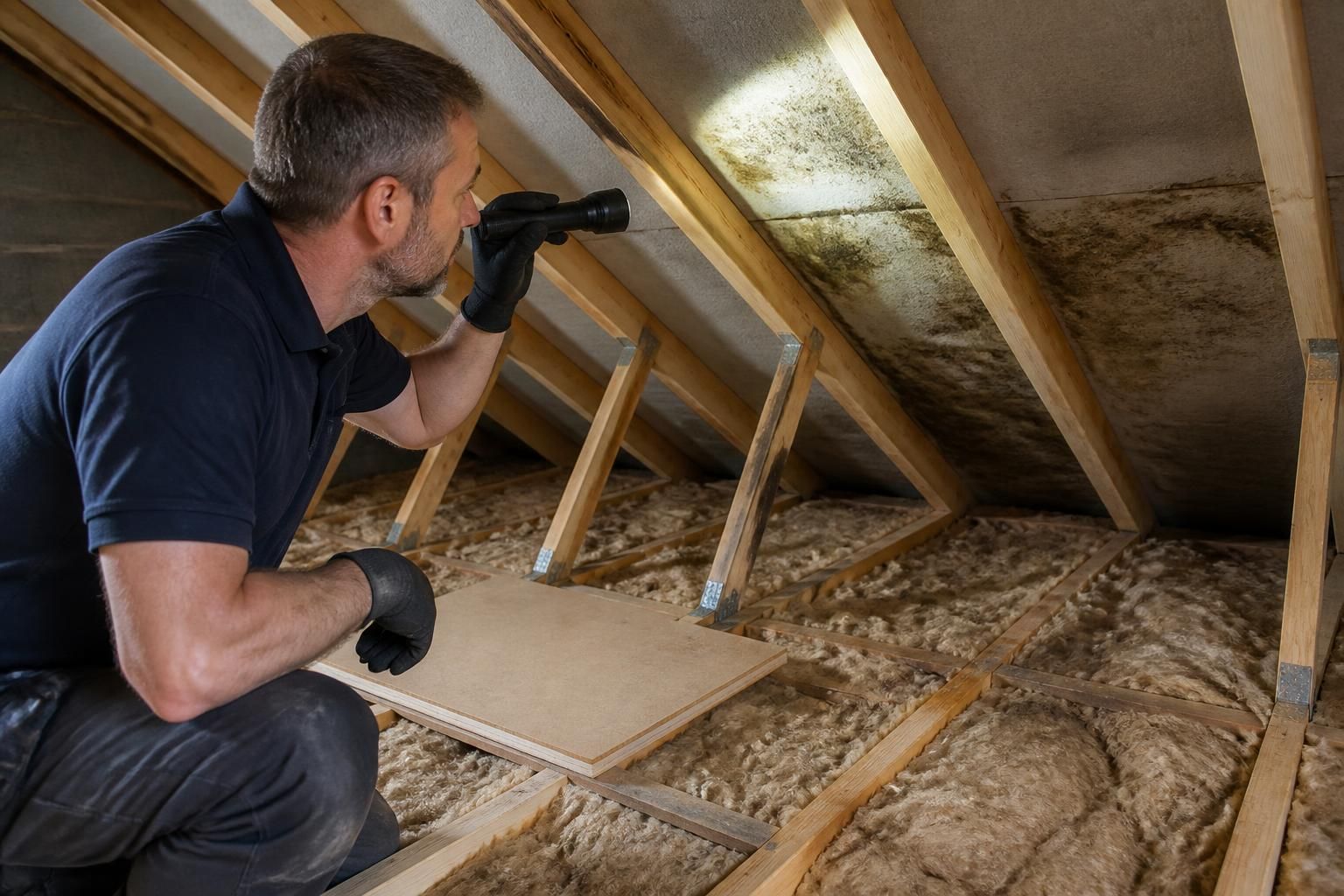
How do you fix condensation in loft insulation?
Fix condensation in loft insulation by identifying the moisture source, correcting leaks or ventilation problems, and allowing affected materials to dry properly. A professional inspection can establish whether insulation, roof timbers or stored belongings need remedial work before the loft is used again.
Fixing condensation in loft insulation requires you to remove the source of moisture, restore suitable airflow and assess the insulation after the loft has dried. Do not cover damp insulation with boards, store belongings above it or assume that ventilation alone will resolve the problem.
Begin with a careful inspection of the loft and roof space. Look for wet patches, staining, mould, damaged roof coverings, leaking pipes and gaps around roof penetrations. Check whether bathroom or kitchen extract ducts discharge into the loft rather than outside. Warm, moist air escaping through gaps around the loft hatch, ceiling fittings or pipework can also condense on colder roof surfaces.
Roof leaks and plumbing defects need repair before you assess the insulation. Condensation caused by warm air escaping from the home requires attention to the ceiling below. Seal suitable air leakage points without blocking designed roof ventilation, eaves vents or other openings that allow the roof space to breathe.
Insulation needs separate assessment once the moisture source has been corrected. Clean, lightly affected insulation may dry in place if airflow is adequate. Saturated, contaminated or persistently wet material may need removal and replacement. Removing all insulation automatically is not always necessary, and disturbing mouldy material can spread spores.
- Keep people away from heavily affected areas until the condition has been assessed.
- Do not walk directly on mineral wool or other loose insulation.
- Do not compress insulation beneath loft boards to create storage space.
- Do not use heaters in the loft to force drying, because this can increase air movement and create further risks.
Roof timbers should be checked for staining, softening, mould growth and other signs of prolonged damp. Surface mould may be dealt with after the area is dry, but extensive growth or damaged timber calls for professional investigation. Cleaning alone will not correct an ongoing moisture problem.
Ventilation must provide a clear route for air movement through the roof space. Insulation should not block eaves ventilation, and stored items should not be pushed tightly against areas intended to remain ventilated. Improving airflow does not replace repairs to leaks or gaps in the ceiling below.
Moisture can remain hidden beneath insulation, around the loft perimeter or near cold roof junctions. A proper inspection should include these less visible areas rather than relying only on the appearance of the top surface. The inspection can also establish whether insulation has lost its shape or effectiveness.
Loft boarding should wait until the cause has been corrected and affected materials are suitably dry. LoftZone raised flooring creates storage above insulation instead of compressing its intended depth, but raised flooring does not cure condensation by itself. The roof space still needs appropriate ventilation and the ceiling below still needs reasonable control of warm air leakage.
An insulated drop-down hatch can reduce the cold surface and draught path at the loft entrance. A correctly fitted hatch also helps separate the warmer rooms below from the colder loft. The hatch must still close properly, and gaps around its frame should be addressed where they permit warm air to escape.
After remedial work, inspect the previously affected areas during colder weather and after periods of wet weather. Check insulation, roof timbers and nearby stored belongings for renewed dampness, staining or mould. Recurring moisture indicates that the original cause may remain unresolved.
Professional advice is particularly appropriate when condensation covers a large area, insulation remains wet, mould returns, roof timbers appear damaged or the source cannot be identified. An assessment can distinguish condensation from a roof leak and determine which materials require drying, cleaning, repair or replacement before storage work proceeds.
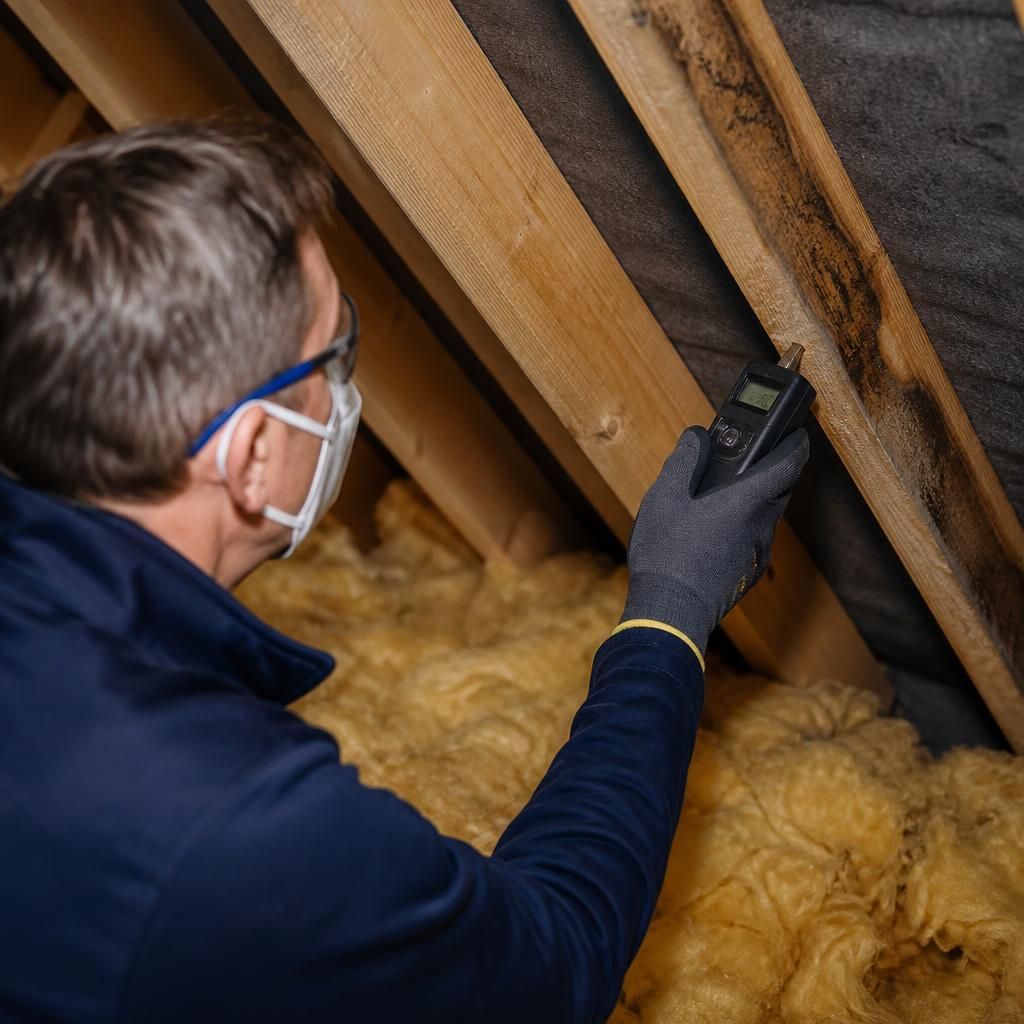
Condensation can be intermittent, so a dry-looking loft does not always confirm that the problem has ended. Moisture readings, staining patterns and the condition of adjoining materials should be considered together rather than assessed from appearance alone.
Keep a record of recurring marks, musty smells or changes after cold or wet weather. This information helps identify whether moisture is entering from the roof, rising from the home or collecting at a particular cold junction before further loft work is planned.