
Could the wrong insulation material be why your loft is not performing?
Yes. An unsuitable, damaged or compressed insulation material can reduce heat retention and make the loft harder to use safely. A loft assessment can identify whether the material, installation method or insulation depth needs attention.
Yes. Loft insulation can underperform when its material does not suit the loft, the intended insulation position or the way the space is used.
Different materials manage heat, moisture, movement and installation differently. A material may perform well in one loft but create problems when fitted in another location or covered incorrectly.
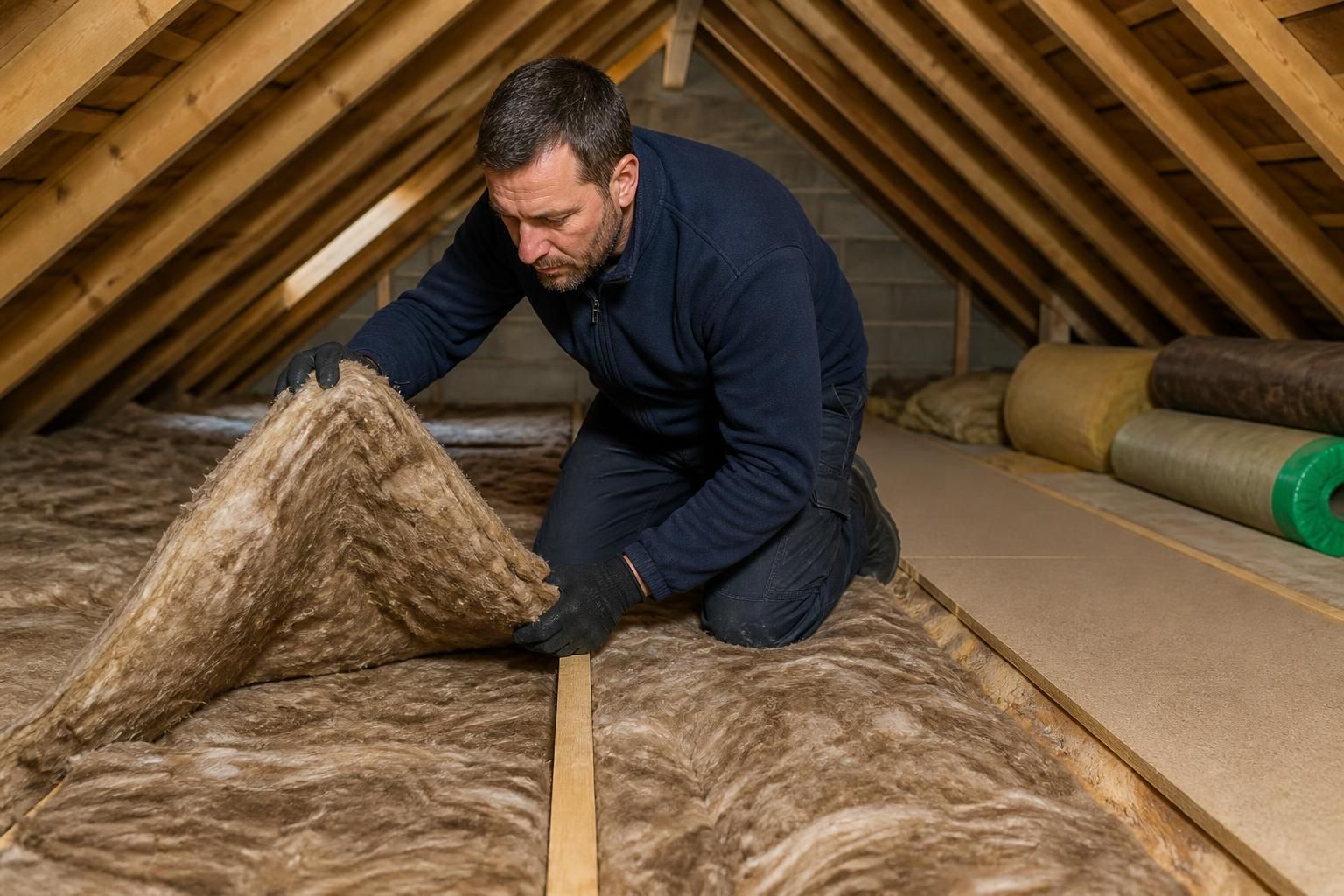
Mineral wool insulation is commonly used between ceiling joists. Its flexible structure can fit around irregular spaces and services, but gaps, slumping and excessive compression reduce continuity. Adding boards directly onto compressed insulation can also reduce its intended thickness and leave the loft floor uneven.
Rigid insulation boards can provide useful insulation where accurate cutting and firm support are possible. They require careful fitting around joists, pipework, cables and roof details. Small gaps around several boards can create cold areas, while unsuitable support can make the surface unstable.
Spray-applied insulation needs particular care because it bonds to surfaces and can make roof timbers, tiles and hidden defects harder to inspect. It may also affect future maintenance or alteration work. Its suitability depends on the roof construction, ventilation arrangements and installation details, rather than the material name alone.
The correct material also depends on where insulation belongs. Insulation at ceiling level helps retain heat in the rooms below. Insulation between rafters serves a different purpose and needs suitable ventilation and moisture control around the roof structure. Using the wrong approach can leave parts of the loft cold or restrict airflow.
Material selection should also account for:
- the existing insulation type, condition and position;
- the available depth between joists or rafters;
- ventilation paths at the eaves and around roof coverings;
- pipework, electrical cables, water tanks and recessed fittings;
- moisture, condensation and the condition of the roof structure;
- the need for safe access and storage above the insulation.
Some materials are suitable for topping up existing insulation, while others are not appropriate for mixing without checking compatibility. A further layer can be ineffective if it covers ventilation routes, traps moisture or leaves gaps around the loft perimeter.
Storage requirements matter as well. Loftopia can install raised flooring that places storage above insulation, instead of using the insulation layer as a bearing surface. This approach helps preserve the planned insulation depth while creating a more even route through the loft.
An assessment should identify the material, its location and its installation condition. It should also check whether insulation has been cut around services, obstructed ventilation or altered near the hatch. The material may be suitable, with the real problem arising from gaps, poor detailing or an unsuitable covering.
Loftopia can discuss insulation work alongside raised flooring, access improvements and Loft Storage & Accessories. An insulated drop-down hatch can limit heat loss at the opening, while shelving can keep stored items away from insulation and roof components.
The right material is therefore only one part of loft performance. Correct positioning, continuous coverage, moisture control, ventilation and suitable storage access must work together for the loft to function as intended.
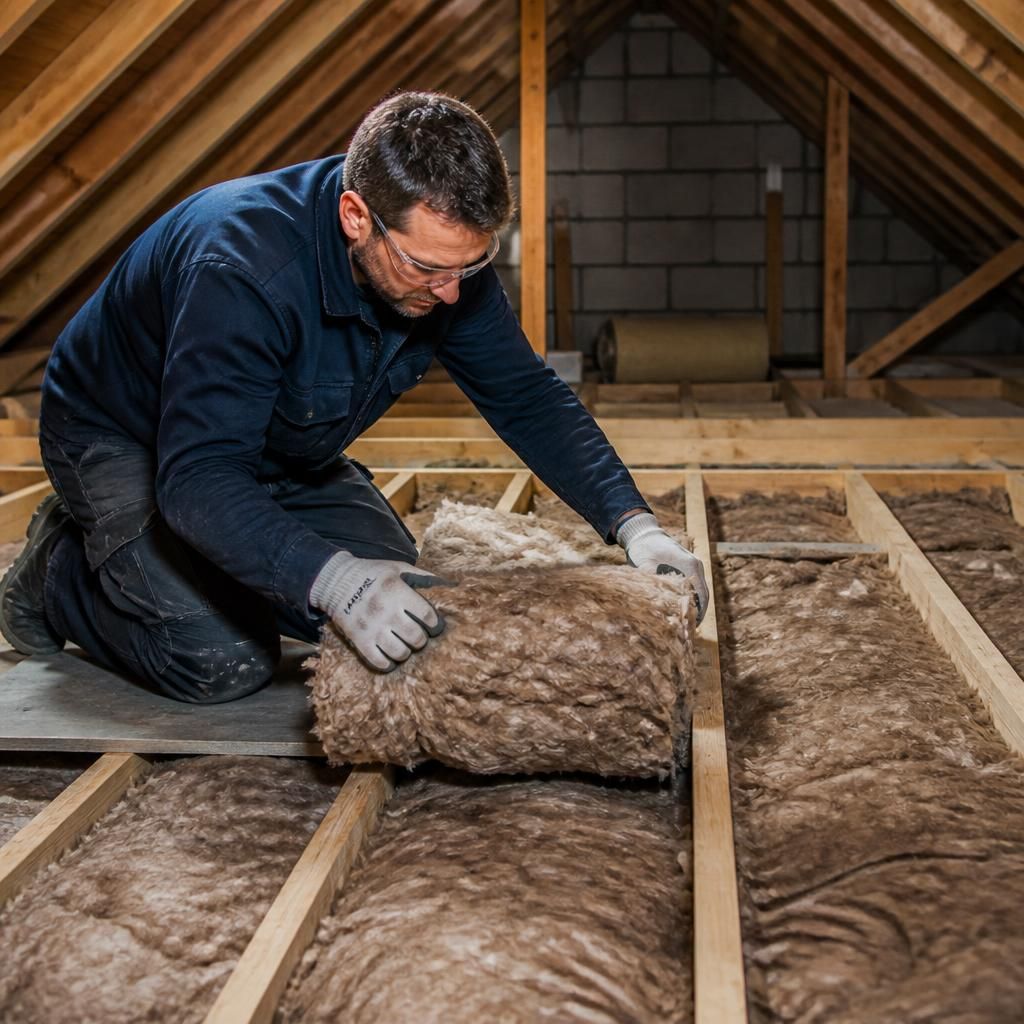
Insulation should be assessed by its intended use, not appearance alone. Products with similar thicknesses can have different properties, so depth by itself does not confirm effective performance.
Check product markings and installation guidance before adding another material. Loftopia can identify what is already present and assess whether its position, condition and intended use suit the loft.