

Does loft insulation type affect installation time?
Yes. Insulation type affects preparation, handling and fitting time, with loose-fill, rigid boards and existing spray foam requiring different work from roll insulation.
We assess the loft before confirming an installation timescale, including any preparation needed for storage above insulation.
Insulation type can affect installation time because each material creates different preparation, handling and access requirements. The effect depends on the insulation’s condition, the loft layout and the work you want completed above it.
Roll insulation is commonly handled in sections and can usually be positioned between and across the joists. Installers still need to work around cables, roof timbers, ventilation routes and stored belongings. Fitting raised flooring above roll insulation also requires accurate support, so the insulation remains effective without being compressed.
Loose-fill insulation can take longer to manage because the material may move when installers work across the loft. We may need to contain, level or temporarily clear it before access routes and storage areas can be prepared. The condition and depth of loose-fill insulation also need checking before boarding takes place.
Rigid insulation boards require careful measurement and cutting around joists, rafters, cables and other obstructions. That preparation can make installation more involved than laying roll insulation. The final timescale depends on how much cutting the loft requires and whether the boards form part of the insulation work or already exist.
Spray foam insulation needs a separate assessment before further work is planned. Installers must consider where the foam has been applied, how it affects access and whether the roof structure remains properly inspectable. Boarding cannot simply be treated in the same way as a loft containing flexible rolls.
Existing insulation can also affect the work if it is displaced, uneven, damp or obstructing the intended storage area. We may need to discuss adjustments before installing additional insulation or raised flooring. This helps establish which areas can receive storage and which areas should remain clear.
Insulation and boarding may not take the same length of time. Insulation work can involve preparing the loft and positioning material, while raised flooring involves setting out supports and creating stable storage space above the insulation. An insulated drop-down hatch, aluminium sliding loft ladder, timber loft ladder, shelving or lighting adds separate fitting tasks.
- Roll insulation usually involves sectioned handling and careful positioning around services.
- Loose-fill insulation may require more preparation to prevent movement during installation.
- Rigid boards need measuring and cutting around the loft structure.
- Spray foam requires inspection before storage work can be planned.
- Deep or disturbed insulation may need preparation before raised flooring is installed.
Loftopia assesses the insulation type, its condition and the available working space before confirming the installation timescale. We can then explain whether insulation, raised flooring and access improvements should be completed together or arranged as separate stages.
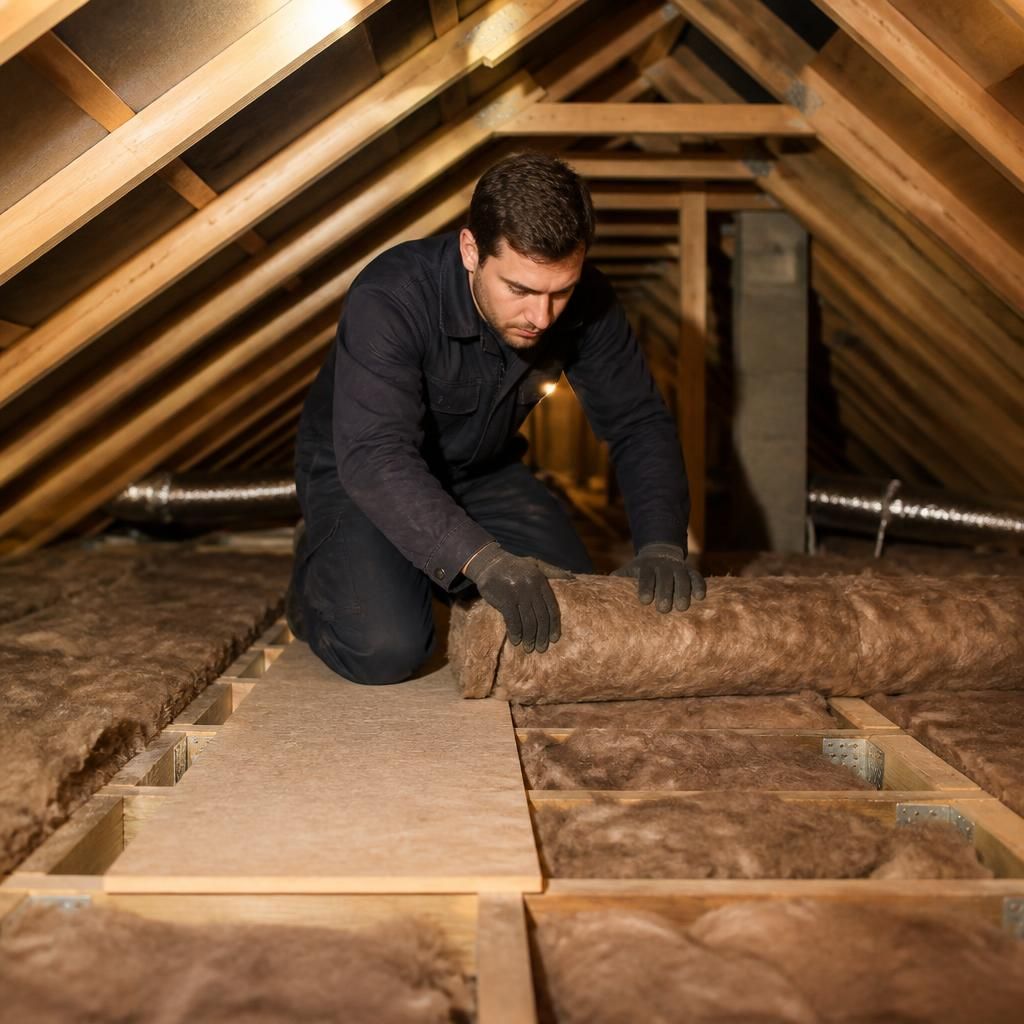
Insulation type is one part of the installation timescale, not the only factor. The material’s depth, condition and position can affect how the working area is prepared.
We also allow for setting out supports at the correct level, so raised flooring provides storage above insulation without compressing it. This preparation helps maintain an effective insulation layer while creating a stable route through the loft.