

How is old loft insulation removed?
Old loft insulation is removed by first assessing the loft, access and visible services, then lifting the material carefully in manageable sections. We clear the insulation without disturbing the ceiling, wiring or ventilation, and inspect the exposed loft before any replacement insulation or raised flooring is considered.
The removal method depends on the insulation type, its condition and how easily each section can be reached. We remove old insulation in controlled stages, keeping materials contained and protecting the loft structure during the work.
1. Identify the existing insulation
We first distinguish between common materials, because each requires a different handling method. Older lofts may contain mineral wool rolls, loose-fill insulation, rigid boards or mixed materials from previous upgrades.
We also look for dampness, staining, pest contamination, damaged materials and areas that have become compressed. These findings help determine whether all insulation needs removing or only specific sections require attention.
Materials that appear unusual, contaminated or potentially hazardous should not be disturbed casually. We can advise when specialist assessment is appropriate before removal continues.
2. Prepare the access route
Removal starts at the loft hatch. We organise the working route before handling insulation, so materials can leave the loft without unnecessary movement across the ceiling.
We protect the access area and keep loose fibres, dust and debris controlled as the work progresses. The exact preparation depends on the hatch position, loft size and the amount of material present.
Good preparation also helps prevent insulation from spreading into the landing or rooms below. We keep removed material together rather than dragging it across other parts of the loft.
3. Remove rolls and batts carefully
Mineral wool rolls and batts are usually separated into manageable sections. We lift or fold each section before moving it towards the hatch.
Compressed material may break apart during handling, particularly where it has become damp or deteriorated. We handle these areas more slowly to reduce loose fibres and keep the remaining loft clearer.
Insulation around cables, pipes, light fittings and other services requires particular care. We avoid pulling material against anything that could move, snag or become damaged.
4. Handle loose-fill insulation differently
Loose-fill insulation cannot be treated like a roll. Small particles can move beneath boards, around joists and into difficult corners.
We remove loose material progressively, using appropriate collection equipment where required. This limits movement through the loft and helps identify material that remains in concealed areas.
Loose-fill products can include mineral fibre, cellulose, vermiculite or other granular materials. Their appearance alone may not confirm the exact type, so unusual material should be assessed before disturbance.
5. Remove rigid boards and remnants
Rigid insulation boards are lifted separately from loose or fibrous products. Boards may have been cut tightly between joists, fixed in place or covered by later alterations.
We avoid levering against ceiling boards or joists when releasing stuck pieces. Small remnants are collected after the larger sections have been removed.
Previous insulation work can leave scraps, fixings and compressed patches behind. These are dealt with as part of clearing the relevant area, rather than being hidden beneath new materials.
6. Keep services visible and accessible
Removing insulation can reveal cables, junction boxes, pipework and ventilation components that were previously difficult to see. We work around these items and note any condition that needs further attention.
We do not treat electrical work as part of insulation removal. If wiring appears damaged, poorly supported or unsuitable for the intended work, the issue should be referred to a qualified electrician.
The same principle applies to damaged pipework, roof defects and structural concerns. Removal provides better visibility, but it does not automatically make unrelated repairs part of the service.
7. Clear the exposed areas
After the main insulation has been removed, we collect remaining pieces and loose debris from the areas being worked on. The level of cleaning depends on the material and the condition of the loft.
We take care around ceiling joists, service routes and roof timbers. The aim is to leave the relevant areas clear enough for inspection and any agreed follow-on work.
Complete removal is not always necessary or suitable. Some insulation may remain where it is sound, correctly positioned and outside the planned work area.
8. Inspect before new work begins
Once the old material is out of the way, the exposed loft gives a clearer view of the joists, roof underside, ventilation paths and visible services.
We can then identify issues such as damp timber, roof leaks, damaged ceiling boards or blocked ventilation routes. These findings should be considered before replacement insulation or storage work proceeds.
Where raised flooring is planned, the insulation depth and joist arrangement affect the installation method. LoftZone raised flooring can provide storage above insulation when the loft is suitable for that arrangement.
Replacement insulation, raised flooring, access improvements and lighting should be planned around the condition of the loft rather than fitted over unresolved problems.
What affects the removal process?
- The insulation type and whether it is loose, damp, compressed or bonded.
- The loft hatch size and the route between the loft and the outside.
- The amount of insulation present and whether several layers have been added.
- The position of cables, pipes, tanks, ventilation equipment and existing boards.
- Signs of water damage, pests, contamination or deterioration.
- Whether the work involves the whole loft or selected areas only.
These factors affect the equipment, handling method and preparation required. A survey gives a more reliable view than estimating the work from the hatch alone.
Removing old loft insulation is therefore more than lifting material out of the way. The work involves identifying what is present, controlling its removal and checking the exposed loft before the next stage is decided.
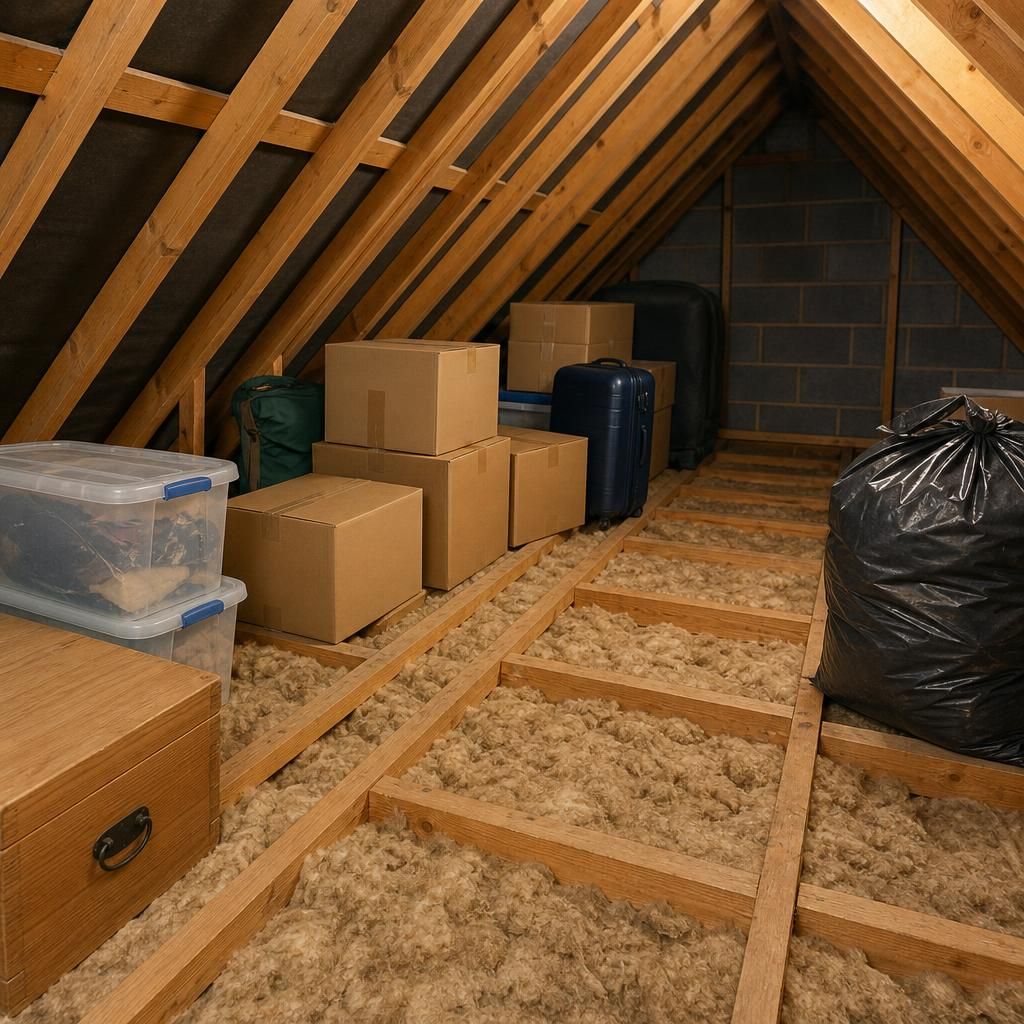
Stored belongings can affect how old loft insulation is removed. Items in the planned work area need moving first, so insulation can be lifted without dragging material against boxes, furniture or stored possessions.
Loftopia can identify the areas that need clearing during the assessment. This helps separate essential preparation from items that can remain elsewhere in the loft, where they do not obstruct safe removal or inspection.