
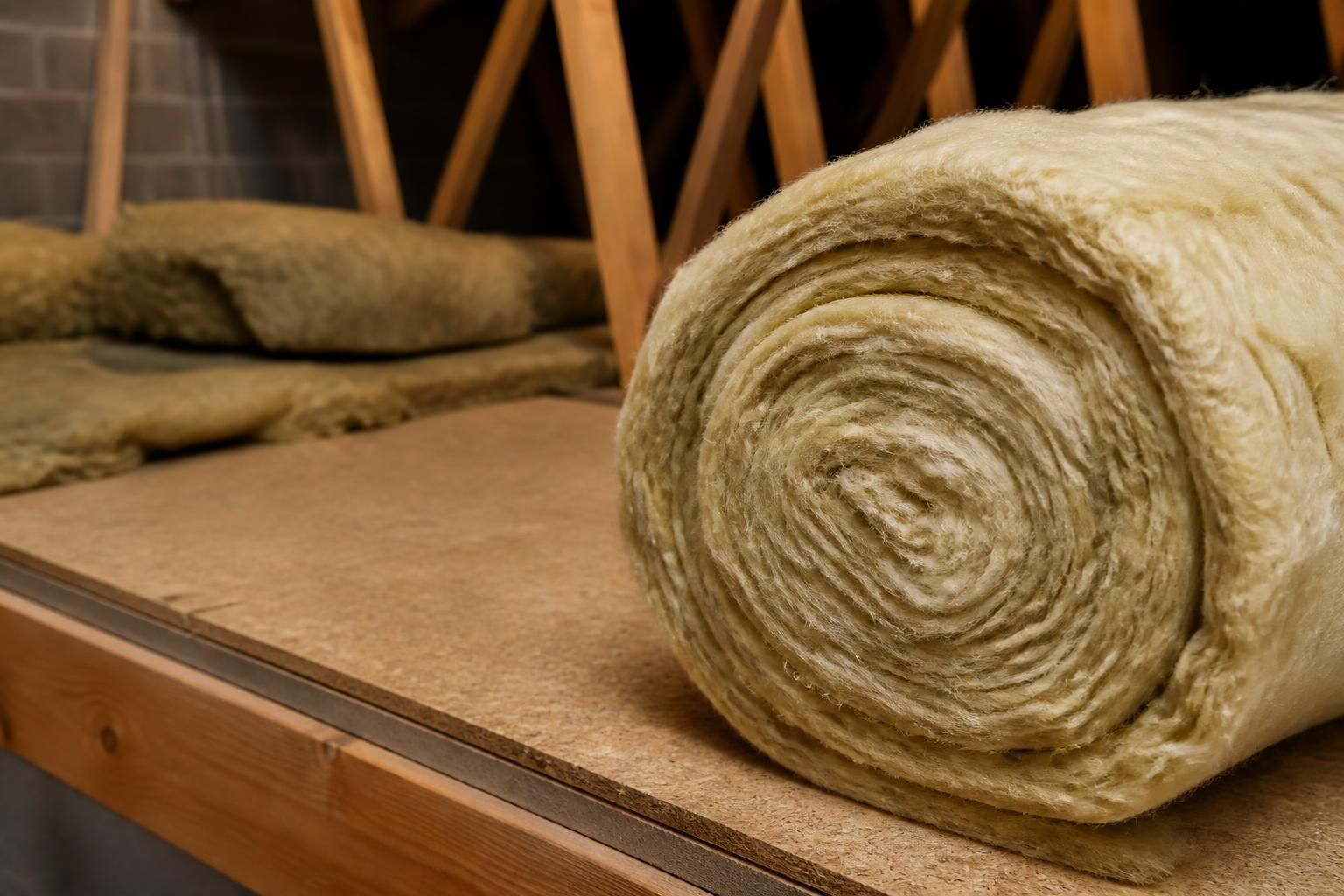
Is mineral wool insulation made from recycled materials?
Yes. Mineral wool can contain recycled materials: glass wool commonly uses recycled glass, while rock wool may include reclaimed mineral or industrial materials, although the exact content varies between products and manufacturers.
The amount of recycled material is product-specific, so you should check the manufacturer’s technical information rather than assume every mineral wool roll has the same composition.
How recycled material enters production
Manufacturers select, sort and process suitable recovered material before combining it with other mineral raw materials. The mixture is then melted at high temperature and formed into fine fibres.
A binder holds the fibres together after they have been spun. Some products also include a facing, such as paper or foil, which performs a separate function from the insulation itself.
Recovered feedstock must meet manufacturing requirements. Contamination, moisture and inconsistent composition can affect whether a material is suitable for the production process.
Does recycled content affect insulation performance?
Recycled content alone does not determine how mineral wool performs in a loft. The finished product’s density, thickness, fibre structure and declared thermal conductivity also matter.
Fire classification, acoustic performance, moisture behaviour and compressive properties depend on the complete product. They do not follow from recycled content alone.
Manufacturers test finished insulation against the relevant performance requirements. This means a product should be selected by its technical specification, not simply by the proportion of recovered material it contains.
Why the stated content can vary
Recycled feedstock availability changes between manufacturing sites and product ranges. The stated content may also distinguish pre-consumer manufacturing waste from post-consumer material recovered after use.
These terms describe different sources. Pre-consumer material comes from industrial processes, while post-consumer material has previously been used by households or businesses.
Product literature may also describe recycled content as an average or refer to a particular component. Check the wording carefully if environmental credentials are important to your purchasing decision.
Independent environmental declarations can provide wider information about a product’s raw materials, manufacturing impacts and end-of-life considerations. They offer more context than a recycled-content statement alone.
What this means for loft insulation
For a loft, the insulation must suit the intended installation depth and the existing construction. The material must also be installed without blocking necessary ventilation at the eaves.
Deep insulation in newer homes can make direct boarding unsuitable because compressing it reduces its designed depth. Raised flooring can provide storage above insulation while retaining the required space beneath the boards.
Recycled content does not remove the need to check the loft before work. Existing insulation may be uneven, damaged, damp or contaminated, and the surrounding roof structure requires consideration.
We can assess the loft, explain the available insulation specification and identify how storage work relates to the existing layers. Loft insulation and raised flooring should be considered together when the loft is being upgraded.
Questions to ask when comparing products
- What type of mineral wool is specified?
- Does the technical sheet state the recycled content and how it is measured?
- What thermal conductivity and thickness apply to the proposed installation?
- What fire and moisture information is available?
- Is the product suitable for the loft’s existing construction and intended use?
- Will installation maintain ventilation and avoid compressing insulation?
Recycled content is a useful part of an insulation assessment, but it should sit alongside thermal performance, fire behaviour, installation requirements and the condition of the loft.

“Recycled content” does not usually mean that pieces of old insulation are reused in the same form. Recovered glass or mineral material is processed and melted before manufacturers draw it into new fibres.
This gives recycled feedstock a role in manufacturing, while the finished insulation remains a newly formed product. The technical specification still determines its suitability for loft use.