
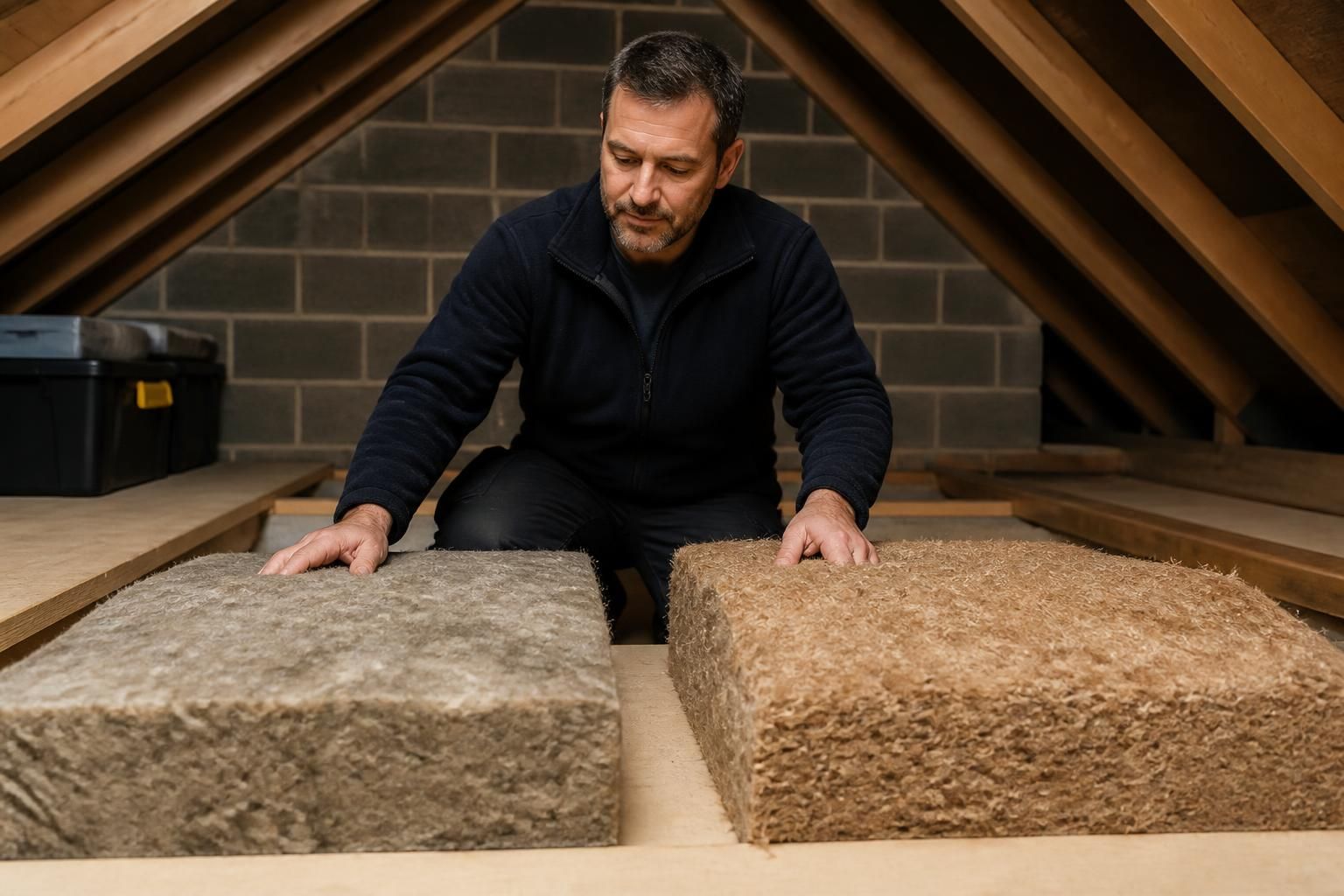
How does Rockwool loft insulation compare with earth wool insulation?
Rockwool and earth wool can both insulate a loft effectively when the correct depth and installation method are used. Rockwool is a mineral-based insulation with strong fire resistance, while earth wool uses natural fibres and may appeal if renewable materials and moisture management are priorities; cost, handling and available depth also affect the choice.
Neither material is automatically the better choice. The right insulation depends on the required thermal performance, available depth, loft layout, installation method and how the storage area will be used.
Thermal performance depends on more than the material name. Compare the declared thermal conductivity, the installed thickness and the continuity of the insulation. Gaps around joists, eaves and loft access points can reduce performance regardless of the insulation selected.
A lower conductivity value can provide stronger thermal resistance at the same depth. However, the available space may determine which product reaches the required performance without interfering with roof ventilation, electrical equipment or raised flooring.
Rockwool and earth wool handle differently. Rockwool is generally denser and more rigid, so it can feel easier to position accurately between joists. Its structure can also make it suitable where insulation needs to retain its shape during other loft work.
Earth wool is often softer and easier to cut around irregular spaces. That can help around obstructions, but careful fitting remains important. Compressed or loosely installed insulation will not perform as intended.
Handling comfort also matters. Some mineral products can release fibres during cutting or movement. Installers should use suitable protective equipment and avoid unnecessary disturbance. Natural-fibre products can feel more comfortable to handle, but installers still need to follow the product instructions.
Moisture behaviour is different from waterproofing. Some earth wool products can absorb and release limited moisture, which may help regulate short-term changes in humidity. This does not make them suitable for persistently damp lofts.
Rockwool does not provide a remedy for roof leaks, condensation or inadequate ventilation. Wet insulation of either type needs an assessment of the moisture source before replacement or topping up.
The roof covering, eaves ventilation and vapour movement should be considered before installation. Adding insulation without maintaining required airflow can create problems around the roof structure, regardless of the chosen material.
Fire performance needs product-specific checking. Do not assume that every product in a broad insulation category has identical classification. Check the manufacturer’s technical information for the exact product, especially around electrical equipment and other heat sources.
Insulation should not be packed tightly around recessed lights, transformers, flues or other equipment unless the equipment and insulation instructions allow it. A loft survey can identify clearances before installation begins.
Raised storage changes the specification. Standard loft boarding can compress insulation if boards sit directly across joists. Compression reduces the insulation depth and can restrict the intended thermal performance.
LoftZone raised flooring creates storage above insulation, allowing the insulation layer to retain its designed depth beneath the floor. The supporting structure carries the storage load; the insulation should not be treated as a structural layer.
Rockwool or earth wool can therefore be considered beneath raised flooring, provided the selected product, depth and installation details suit the loft. We check joist spacing, existing insulation, services, ventilation and access before arranging the floor layout.
Top-up work requires compatibility checks. Existing insulation may be uneven, contaminated, damp or poorly fitted. Adding a different material over it does not correct every underlying problem.
We assess the existing layer before recommending a top-up. The final depth should leave required ventilation routes clear and avoid blocking access to electrical equipment, the roof structure or maintenance points.
Sustainability involves more than the fibre source. Earth wool may appeal to homeowners prioritising renewable natural materials. Rockwool may appeal where mineral composition, durability and fire classification carry greater weight.
For a fair comparison, consider the complete product information. This includes raw materials, recycled content, manufacturing, transport, expected service life and disposal route. A material that performs poorly because it was compressed or badly fitted will not deliver the intended benefit.
Cost should be compared as an installed specification. Material prices vary with product type, thickness, access and the amount of preparation required. Labour can also change if installers must remove damaged insulation, work around services or adapt the loft for storage.
A cheaper roll may not remain cheaper if it requires additional depth, more cutting or alterations to the storage floor. Ask for the insulation depth, product specification and areas included in the quotation, rather than comparing material names alone.
The better choice depends on the loft’s constraints. Rockwool may suit a loft requiring a denser mineral product with specific fire characteristics. Earth wool may suit a homeowner prioritising natural fibres and easier cutting around some obstructions.
Both materials require correct depth, continuous coverage, suitable ventilation and careful work around services. Neither should be selected solely because it sounds more sustainable, softer or more robust.
For a storage-focused loft, the insulation choice should be assessed alongside access and flooring. We can discuss insulation, raised flooring, an insulated drop-down hatch, aluminium sliding loft ladders, timber loft ladders and Loft Storage & Accessories as connected parts of the design.
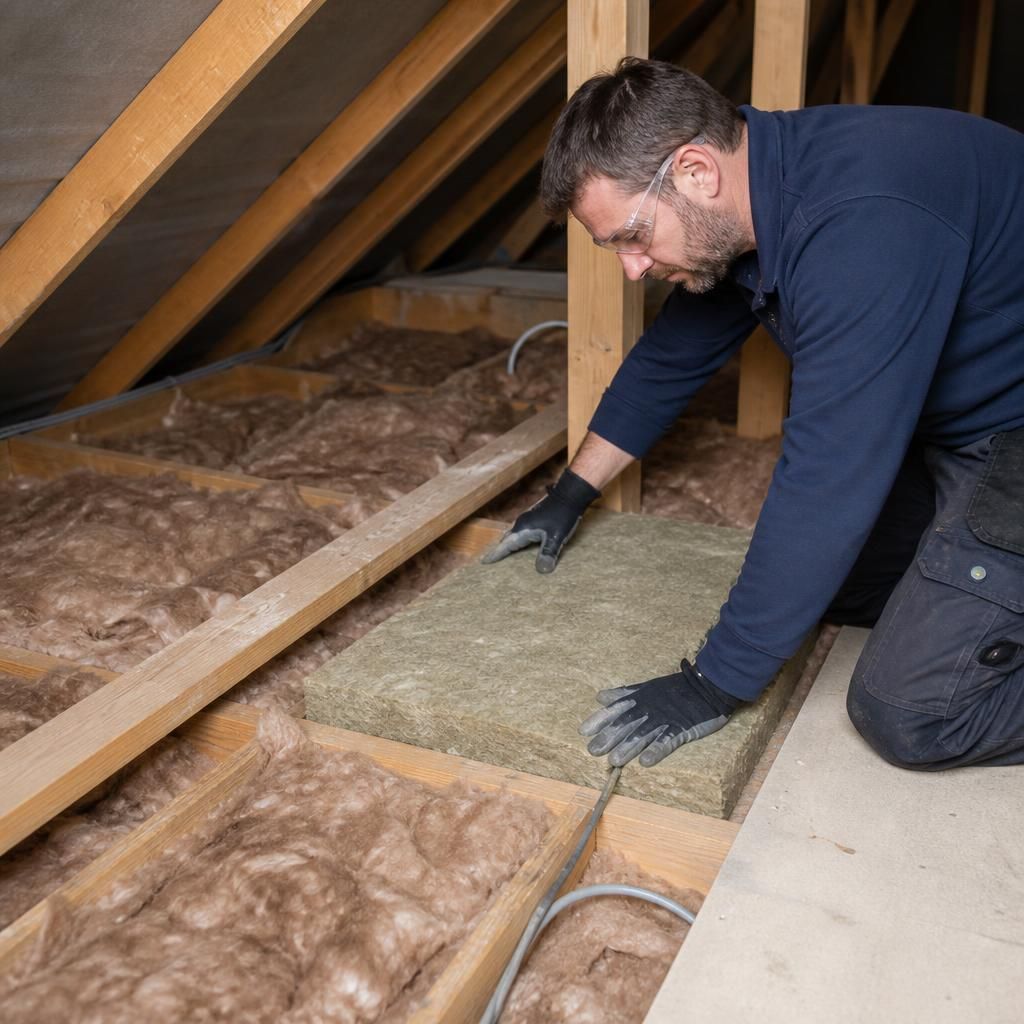
Compare Rockwool and earth wool products for the same position in the loft. Insulation designed for the loft floor should not be compared directly with a product intended for pitched roofs or wall cavities.
Ask for the exact product, installation location and fitted depth in any quotation. We can then assess how the chosen material works with the existing insulation, roof ventilation and planned storage above the loft floor.