

What maintenance does a loft hatch and ladder require?
A loft hatch and ladder need periodic cleaning and checks of hinges, catches, fixings, joints and moving parts. Tighten only accessible fixings safely, and ask a professional to inspect looseness, damage or difficult movement before regular use.
Maintenance is mainly preventative: keep the access components dry, preserve the hatch seal, and stop small defects affecting safe operation. Follow the care instructions supplied with the installed hatch and ladder.
Care for the loft hatch:
- Remove dust from the hatch panel, frame and surrounding ceiling with a soft, dry cloth.
- Use only a lightly damp cloth for marks, then dry the surfaces thoroughly.
- Keep paint, plaster and decorating materials away from the frame, seal and closing mechanism.
- Do not paint over a compressible draught seal. Paint can make the seal stick or prevent the panel closing evenly.
- Check that the panel sits flush within the frame. A visible gap can indicate distortion, a displaced seal or a damaged catch.
- Keep storage items away from the hatch panel. Weight pressing against it can affect opening and closing.
An insulated drop-down hatch should retain its insulation layer and close firmly against its seal. Do not remove insulation from the panel or obstruct the mechanism with loose material.
Care for the loft ladder:
- Wipe rungs, rails and the underside of the ladder to remove dust and loose insulation fibres.
- Keep ladder feet clean and positioned on a firm floor surface. Contaminated or worn feet can reduce stability.
- For sliding or folding ladders, operate each section without forcing it. Sections should move through their intended travel without catching.
- Keep locking features fully engaged before climbing. Never rely on a partially extended section or an incompletely closed catch.
- Check that timber components remain dry. Moisture can contribute to swelling, splitting or changes in alignment.
- Follow the stated load limit and avoid carrying boxes that prevent you maintaining hand contact while climbing.
Do not apply oil, grease or household lubricant unless the installation instructions permit it. Lubricant can attract dust or affect friction-based locking components.
Look more closely after decorating, roof work, a leak or movement around the ceiling opening. These events can introduce dust, moisture or impact that affects access equipment.
Stop using the ladder if a rung moves, a rail bends, a section fails to lock, a foot separates or the ladder shifts during use. Do not attempt a temporary repair with tape, improvised timber or household fasteners.
A hatch that drops unexpectedly, binds, will not latch or shows daylight around the frame also needs assessment. Moisture staining, mould or a persistent draught may indicate a problem beyond routine cleaning.
We can assess access equipment when movement, alignment, sealing or fixing needs more than basic household care. We can advise whether adjustment, component replacement or a new loft access installation is appropriate.
Keep the area below the opening clear during inspections and use a stable means of access. Do not stand on furniture or reach through the hatch to operate a ladder.
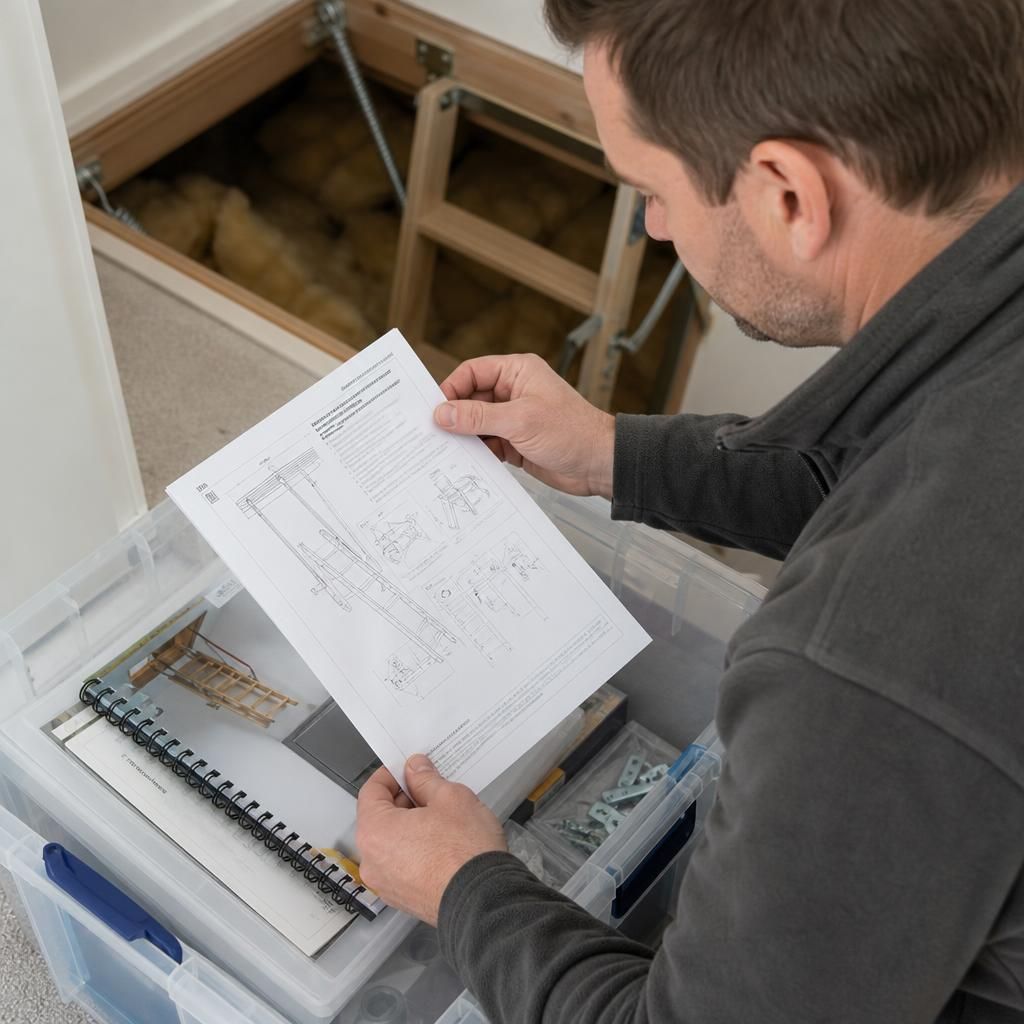
Keep the installation instructions and details of the hatch and ladder with household records. They identify the correct load limit, adjustment points and replacement components for the fitted system.
When a part needs replacing, use a component specified for that hatch or ladder. Mixing springs, catches, hinges or ladder sections from another system can alter movement and stability. A professional can confirm compatibility before carrying out maintenance beyond cleaning and visual checks.