
What weight can a loft hatch with ladder safely support?
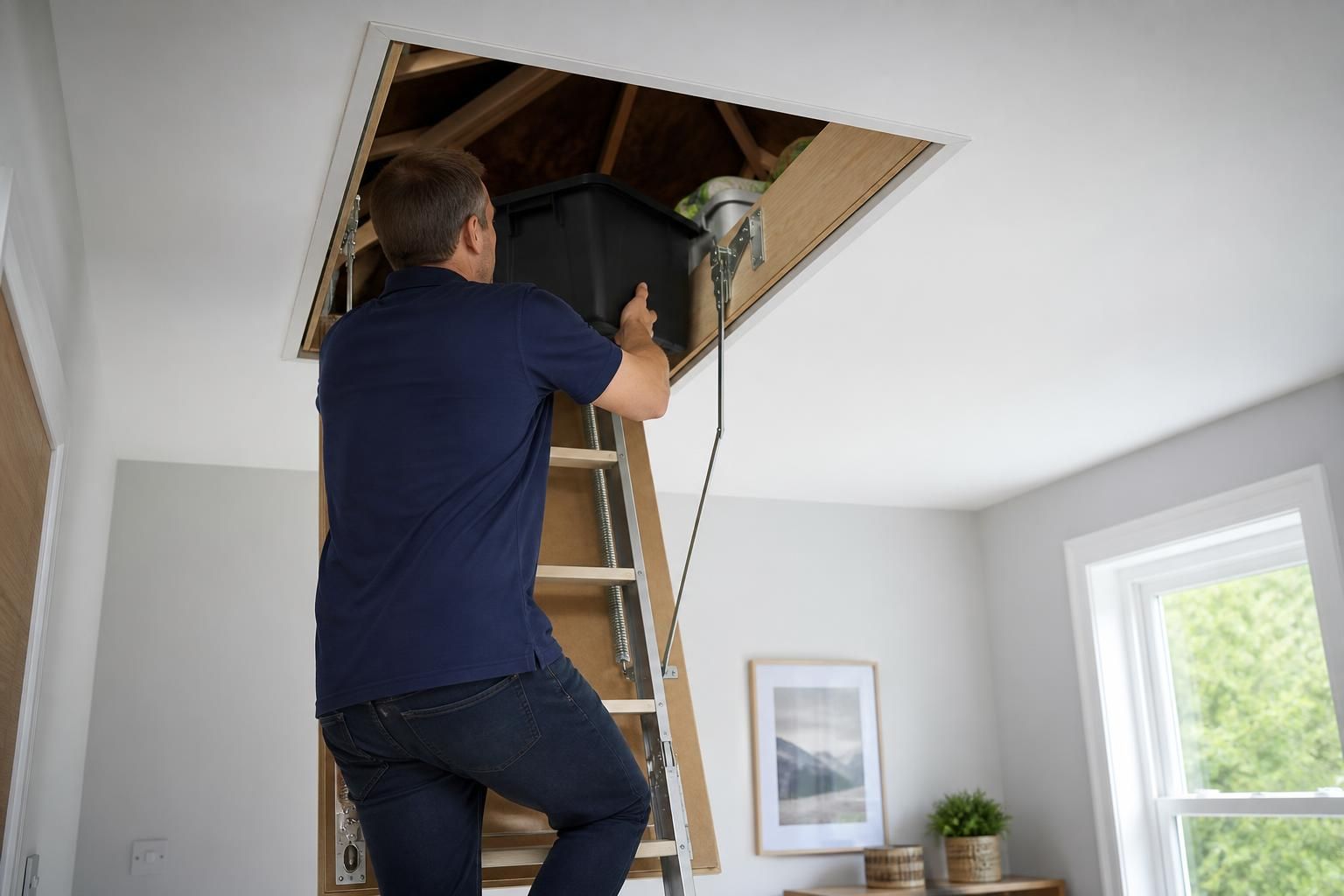
There is no single safe weight for every loft hatch with ladder; the limit depends on the hatch construction, ladder rating, fixings and surrounding ceiling structure. We assess these components during installation and advise how much weight the closed hatch and ladder can safely support, including people using the ladder and items being moved into storage.
The safe load depends on which part you mean. A closed hatch must carry its own weight safely within the ceiling opening, while the ladder must support people climbing and items being carried. The loft floor has a separate load capacity.
Manufacturers normally state a ladder’s maximum user load in the product instructions. That figure includes the person, clothing, tools and anything carried while climbing. You should not treat it as a recommended load for storing boxes on the hatch.
A hatch should not be used as a standing platform unless the product has been specifically designed and approved for that purpose. Place stored items on the loft floor or shelving, not on the hatch panel. Keep the opening clear so the ladder can operate without striking stored belongings.
Several construction details affect the weight a hatch can support:
- The hatch panel: Its material, thickness, size and framing affect stiffness and resistance to bending.
- The frame: The frame transfers forces into the ceiling structure. A larger opening may require additional framing around the joists.
- Hinges and catches: These must hold the panel securely and remain aligned during operation.
- Fixings: Screws and other fixings need suitable support in the surrounding timber. Plasterboard alone cannot provide the required structural connection.
- The ceiling structure: Joist direction, spacing, condition and any alterations around the opening affect how loads transfer through the ceiling.
- The ladder design: Folding, sliding and telescopic ladders transfer climbing forces differently. The ladder must match the hatch frame and its installation position.
Climbing creates movement and changing loads. A person stepping onto the ladder, shifting position or carrying a box does not load the hatch in the same way as a stationary object.
For that reason, the stated ladder rating does not remove the need for correct fitting. Loose fixings, an unsupported frame, damaged hinges or an uneven ladder can make use unsafe, even when the user is below the stated rating.
Use the ladder with both hands where practical, face the rungs and keep items small enough to maintain a secure grip. Do not climb while carrying a bulky box that blocks your view or balance.
Children should not use a loft ladder without appropriate supervision. Keep the hatch closed when the loft is not being accessed, particularly where the opening could present a fall risk.
Weight stored in the loft must also be distributed carefully. Concentrated loads from heavy containers, filled shelving or equipment can place greater stress on individual joists than evenly spread boxes.
Loft boarding can create a stable surface for storage, but it does not automatically increase the structural capacity of the ceiling. Raised flooring provides storage above insulation; it does not make the hatch or joists suitable for unlimited loads.
Tell the installer about intended use, the typical size of stored items and anyone who may use the ladder. This helps determine the appropriate hatch, ladder, frame and fixing arrangement for the loft.
After installation, check that the ladder opens smoothly, each section locks correctly and the hatch closes evenly. Stop using it if you notice movement, cracking, damaged fixings, loose hinges or a change in alignment.
Do not modify the hatch, drill into the frame or attach extra shelving without confirming that the alteration is suitable. Changes can affect the load path and the ladder’s operation.
For a measured recommendation, Loftopia can assess the opening, surrounding structure and intended use before advising on an insulated drop-down hatch, ladder type and fixing arrangement. The appropriate rating should always come from the installed product and its instructions.
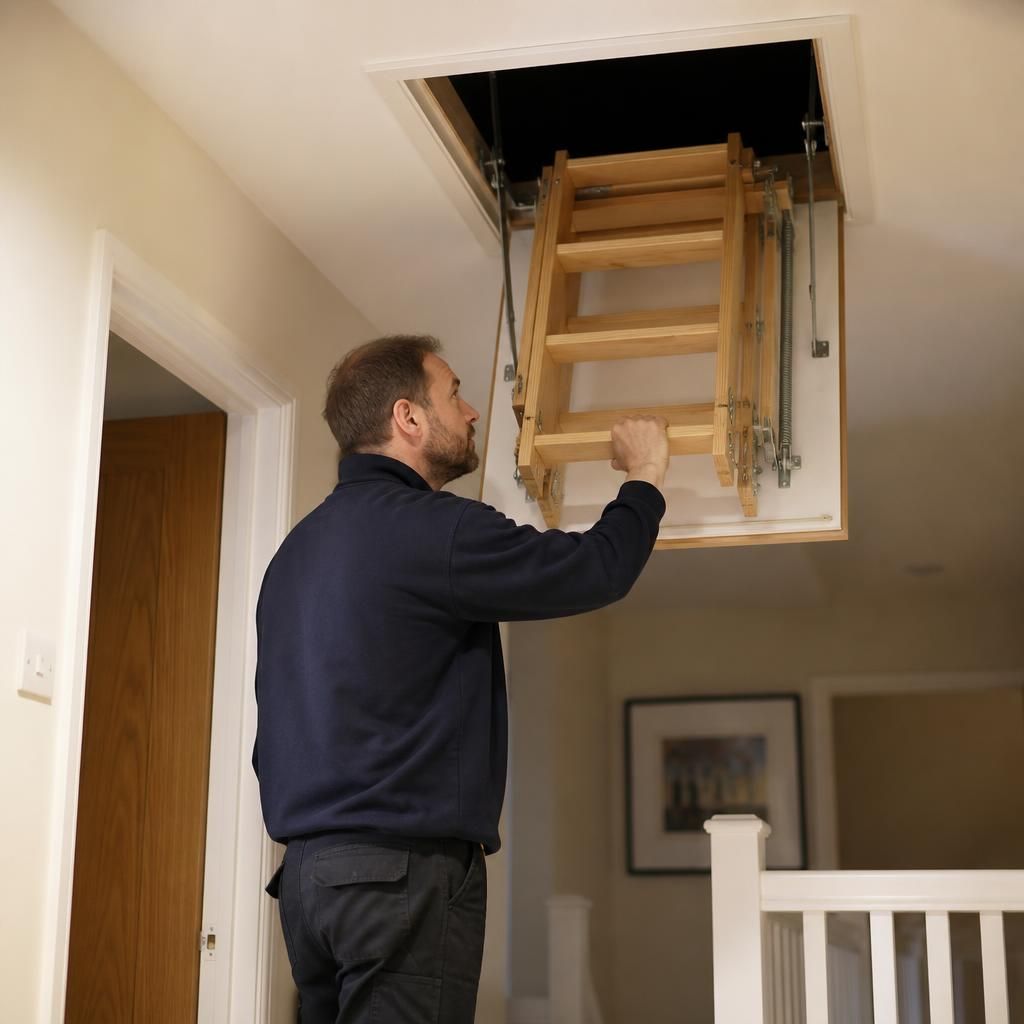
Do not estimate capacity from the hatch’s appearance, size or age. If product instructions are unavailable, the safe limit cannot be confirmed reliably from a photograph or a visual inspection alone.
Keep the installation records and product instructions with your household documents. They identify the fitted ladder’s user rating and provide the maintenance information needed if parts require adjustment or replacement.