
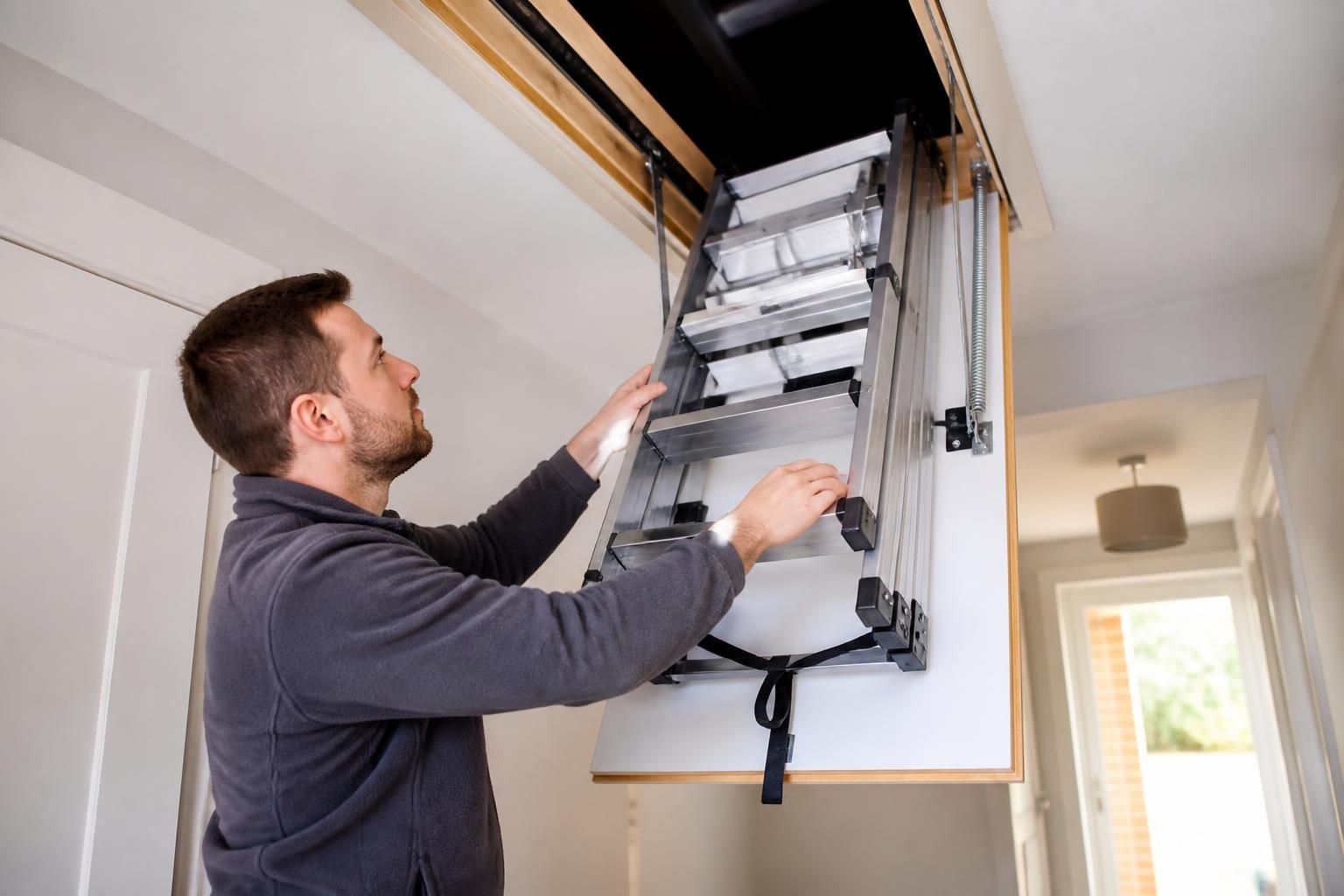
Are heavy duty loft ladders difficult to operate?
Heavy duty loft ladders are not necessarily difficult to operate, but their weight and size can make correct fitting important. An appropriate ladder, adequate clearance and secure fixing points help you deploy and stow it safely.
No. A heavy duty loft ladder should be manageable when the ladder type, hatch position and available operating space suit the loft. It may require more deliberate movement than a lightweight ladder.
Operation depends mainly on the ladder design. Aluminium sliding loft ladders extend in sections, while timber loft ladders may fold or slide into position. Each design has a different movement pattern, so you should follow the operating instructions supplied with the ladder.
A correctly operating ladder should move smoothly without sudden sticking, twisting or uncontrolled dropping. You should be able to open the hatch fully, extend the ladder securely and return it to its stored position without forcing the mechanism.
Several details affect how easy this feels:
- Hatch position: A hatch that opens into a restricted area can make it harder to stand centrally and handle the ladder.
- Operating space: Furniture, light fittings, roof trusses and low eaves can obstruct the ladder during deployment.
- Ladder length: A ladder must suit the distance between the loft floor and the room floor. An unsuitable length can make extension or positioning awkward.
- Access arrangement: A suitable hatch and a clear approach allow you to use both hands and keep a stable stance.
- Condition: Dirt, loose fixings, damaged hinges or worn components can affect smooth operation.
Use the ladder from the side intended by its design, keeping hands away from folding joints and sliding sections. Face the ladder while climbing, keep both feet on the treads and avoid carrying bulky items while deploying it.
If the ladder resists movement, do not force it. Check that the hatch is fully open, the ladder is not caught on an obstruction and the sections are aligned. Persistent stiffness should be assessed before further use.
Heavy duty construction does not automatically mean difficult operation. It normally means the ladder has more substantial components, so handling technique and safe storage matter more than they would with a lighter model.
We can assess the loft opening, access route and operating space before recommending aluminium sliding loft ladders or timber loft ladders. This helps match the ladder to how you intend to enter and use the storage area.
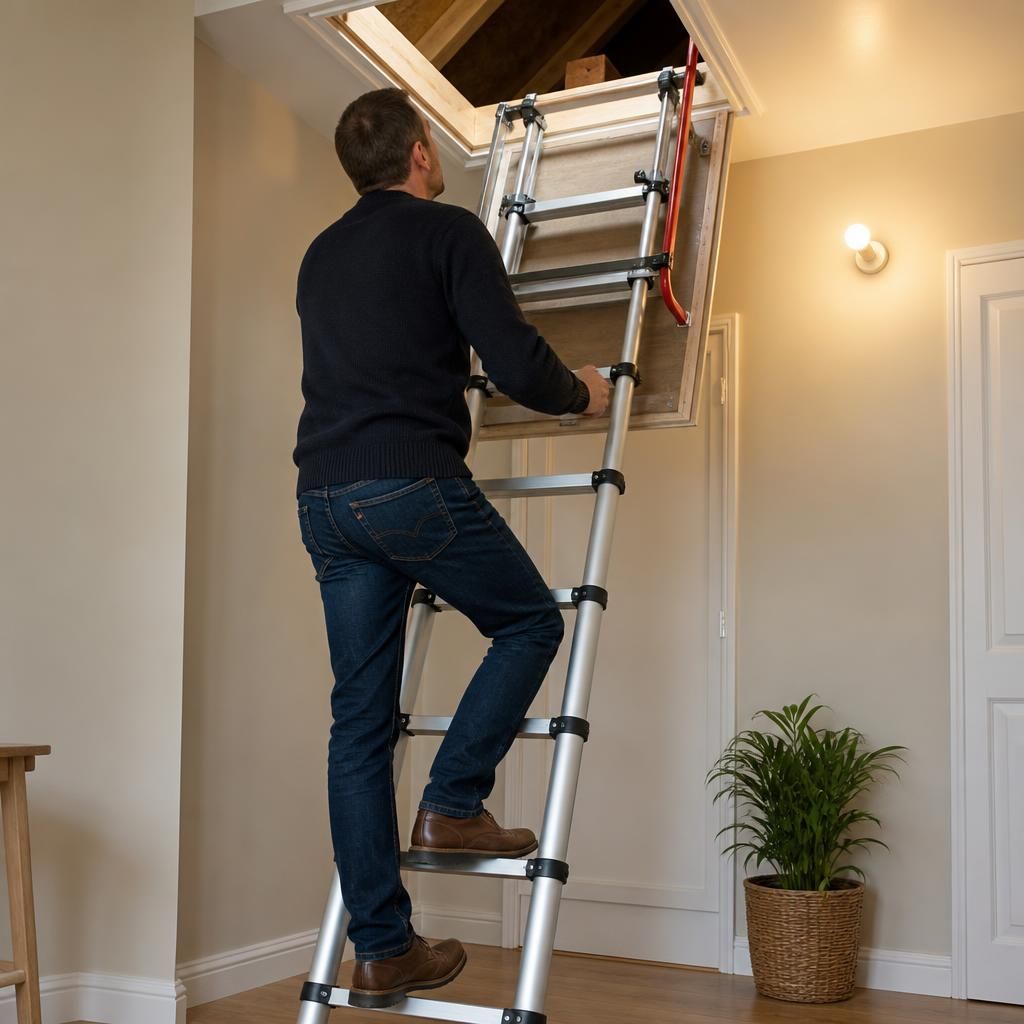
Ease of operation also depends on how the ladder is used after deployment. Keep the landing area clear, use the ladder facing the treads and move stored items separately rather than climbing with bulky loads. This keeps both hands available for balance and helps prevent awkward movements.
Lighting can make the sequence easier to control. Loft lighting should illuminate the hatch, ladder mechanism and landing area, so you can see the release points and place your feet accurately. Loftopia can consider lighting alongside ladder position when assessing how the access arrangement will work in practice.