
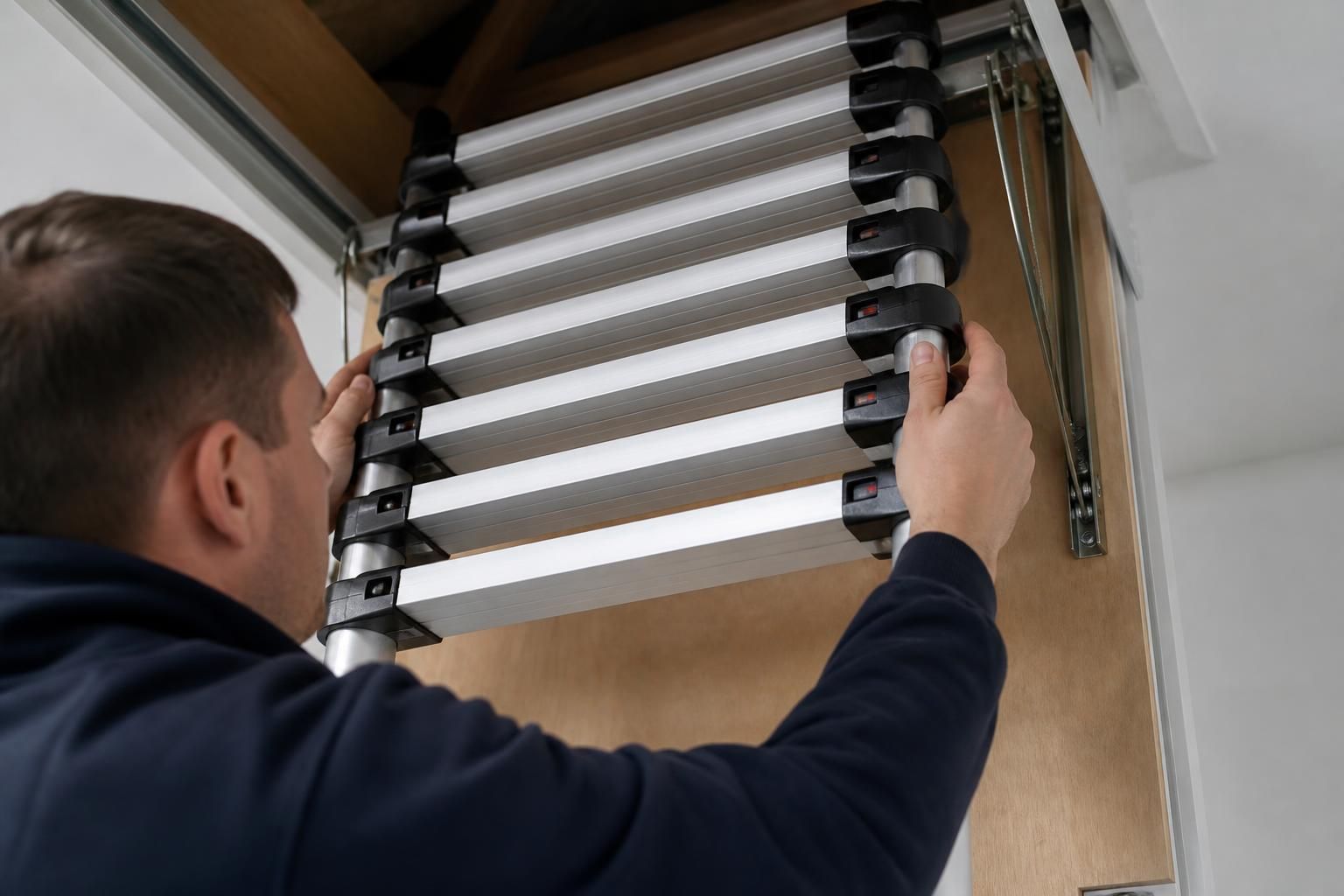
What should I check in a telescopic loft ladder’s locking mechanism?
Check that every section locks fully and evenly, with catches visibly engaged before you climb. The mechanism should release smoothly when operated deliberately, without sticking, excessive force or movement in the ladder during use.
Check the locking mechanism’s design, condition and indicators before buying or using a telescopic loft ladder. Each section should have a clear method of confirming that it is retained.
Start with the manufacturer’s instructions for the specific ladder. They explain how the catches operate, which controls release them and whether the ladder must be opened in a particular sequence.
- Lock indicators: Look for visible tabs, pins or markings showing when each section has reached its locked position. Do not rely only on the ladder appearing extended.
- Complete engagement: Check every locking point individually. One unengaged catch can leave a section unsupported, even when the other sections appear correctly positioned.
- Release controls: Make sure the release handles or buttons are easy to identify and cannot be operated accidentally while climbing. They should not be obstructed by the hatch or surrounding frame.
- Condition of parts: Inspect catches, pins, springs, hinges and mounting hardware for bending, cracks, looseness, corrosion or missing components.
- Alignment: Check that the locking parts meet their receivers correctly when the ladder is extended. Misalignment can prevent the catch from seating properly.
- Section spacing: Look for trapped fingers, damaged stops or anything preventing the sections from opening and closing as intended. Keep hands clear of moving joints during checks.
Test the mechanism from ground level before putting weight on the ladder. Extend it according to the instructions, confirm each indicator and inspect the catches again after positioning it at the hatch.
Never defeat, tie back or remove a locking component to make the ladder easier to operate. Do not drill the ladder, substitute hardware or use parts from another model.
Dust, paint, insulation fibres and stored items can interfere with catches around the loft hatch. Keep the mechanism clear, but use only cleaning or lubrication methods specified by the manufacturer.
Do not use the ladder if a catch does not engage, an indicator is unclear or a release control behaves differently from the instructions. Contact the installer or manufacturer for an assessment before further use.
Installation also affects locking performance. The ladder must sit squarely within the hatch opening, with its frame and fixings suitable for the loft structure. A twisted frame can affect how sections meet their catches.
Ask for the locking method to be demonstrated after installation. You should be able to identify the engaged position, operate the release controls correctly and check the mechanism without standing on the ladder.
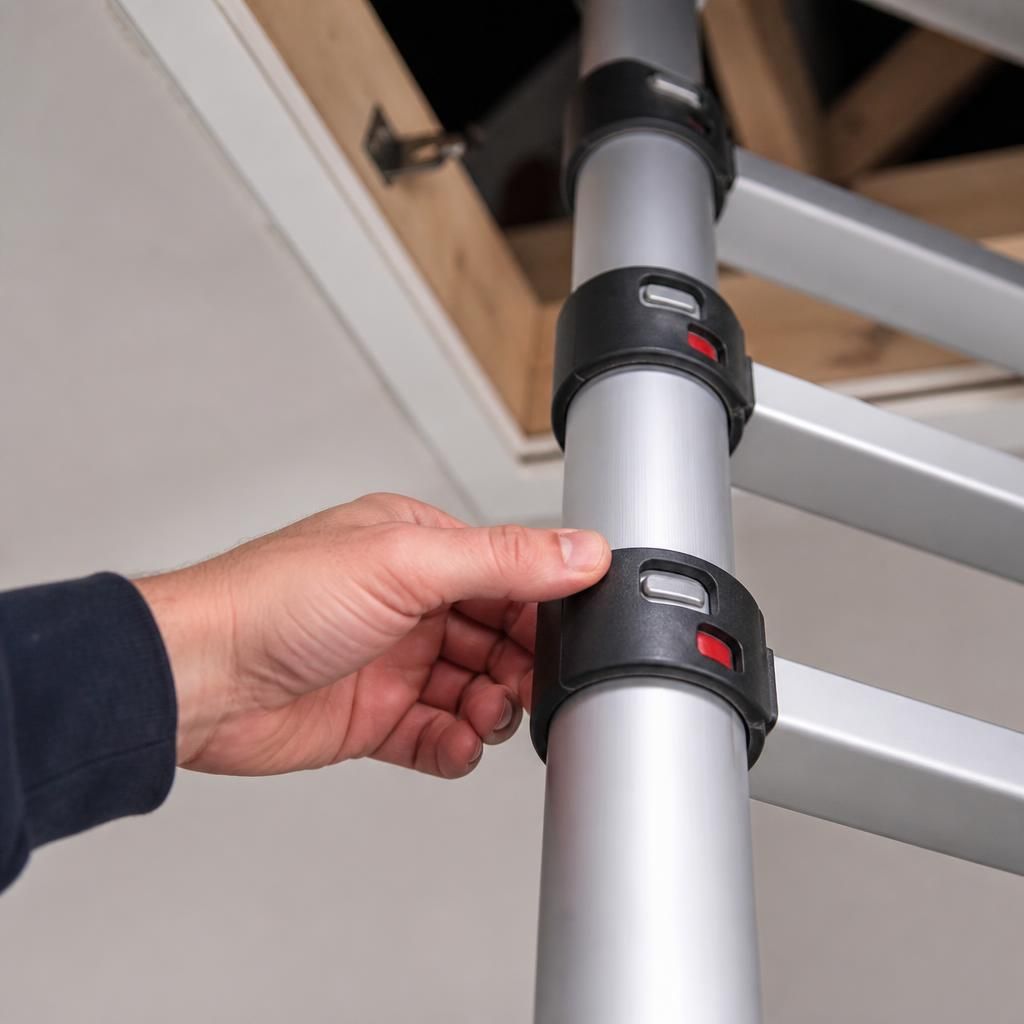
A telescopic ladder should remain supported by its mechanical catches, not by friction between sections or pressure from the hatch frame. When you place weight on a rung, the locking parts should retain the section without settling, slipping or shortening.
Ask for the locking action to be shown with the ladder fully extended and correctly positioned. You should understand which parts carry the load and which controls release them, without needing to hold a lever while climbing.