
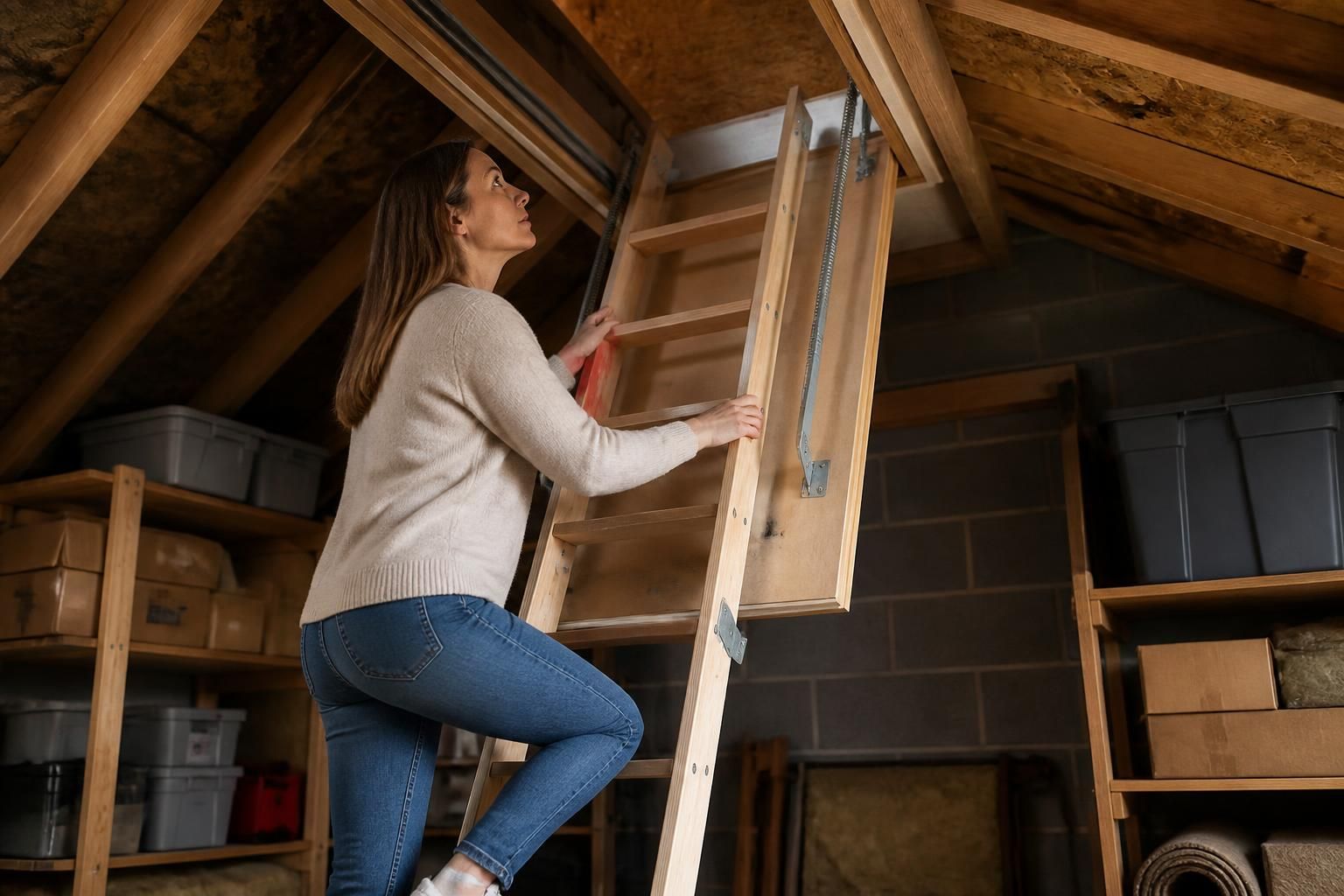
How much weight can a timber loft ladder support?
There is no universal weight limit for a timber loft ladder; the safe capacity depends on its design, installation and stated maximum load. Check the manufacturer’s rating and use the ladder only as intended, keeping both hands available when climbing.
The permitted load is determined by the complete access arrangement, not the timber ladder alone. The stated rating must cover the person, clothing, footwear and anything carried while climbing.
A timber loft ladder may be structurally capable of supporting a particular load, but the hatch frame, hinges, brackets, fixings and surrounding ceiling also need to support the installation. A suitable ladder fitted to a weak or unsuitable opening cannot provide the same level of security.
Check the stated load: Find the maximum load in the product information or installation instructions. Treat this as the total climbing load, rather than the weight of the person alone. Do not exceed it when carrying boxes or other stored items.
- Keep both hands available when climbing wherever possible.
- Carry only light, manageable items that do not obstruct the treads or handhold.
- Pass larger or heavier items through the opening separately, rather than climbing with them.
- Use the ladder in its fully opened and intended position.
- Keep each foot securely on the tread before moving the other foot.
The ladder angle also affects how climbing feels and how loads transfer into the fixings. An installation that is too steep, poorly supported or obstructed at the landing can make a rated ladder difficult to use safely.
The loft opening matters: The hatch frame must be sound, correctly sized and capable of accepting the specified fixings. Timber ladders that fold or slide need enough clearance to open fully without striking insulation, stored items, doors or nearby fittings.
The loft structure matters too: A ladder rating does not confirm that the loft floor, boarding or joists can carry every item taken into storage. Store heavier belongings across suitable supported areas, rather than concentrating them beside the hatch or on a small section of flooring.
Inspect the timber, treads, hinges, brackets and fixings before use. Look for splitting, loosened joints, movement, damaged tread surfaces or changes in alignment. Stop using the ladder if any part feels unstable or shows damage.
Moisture and unsuitable storage conditions can affect timber over time. Keep the loft adequately ventilated and investigate leaks or dampness before they affect the ladder or its fixings. Do not paint, cut or modify structural parts without confirming that the change is permitted.
Professional fitting helps establish whether the opening, landing and surrounding structure suit the selected timber loft ladder. We can assess the access arrangement and specify an installation that matches the loft’s layout and intended household use.
For regular access, the practical choice depends on more than a load figure. Tread depth, handhold position, opening size, landing clearance and the items you expect to carry all influence safe use. A ladder should provide stable access without requiring you to twist, stretch or climb around obstructions.
The ladder is one part of the access system. Loft storage work may also include a suitable hatch, insulation detailing, raised flooring and lighting, so the route into storage remains clear and usable.
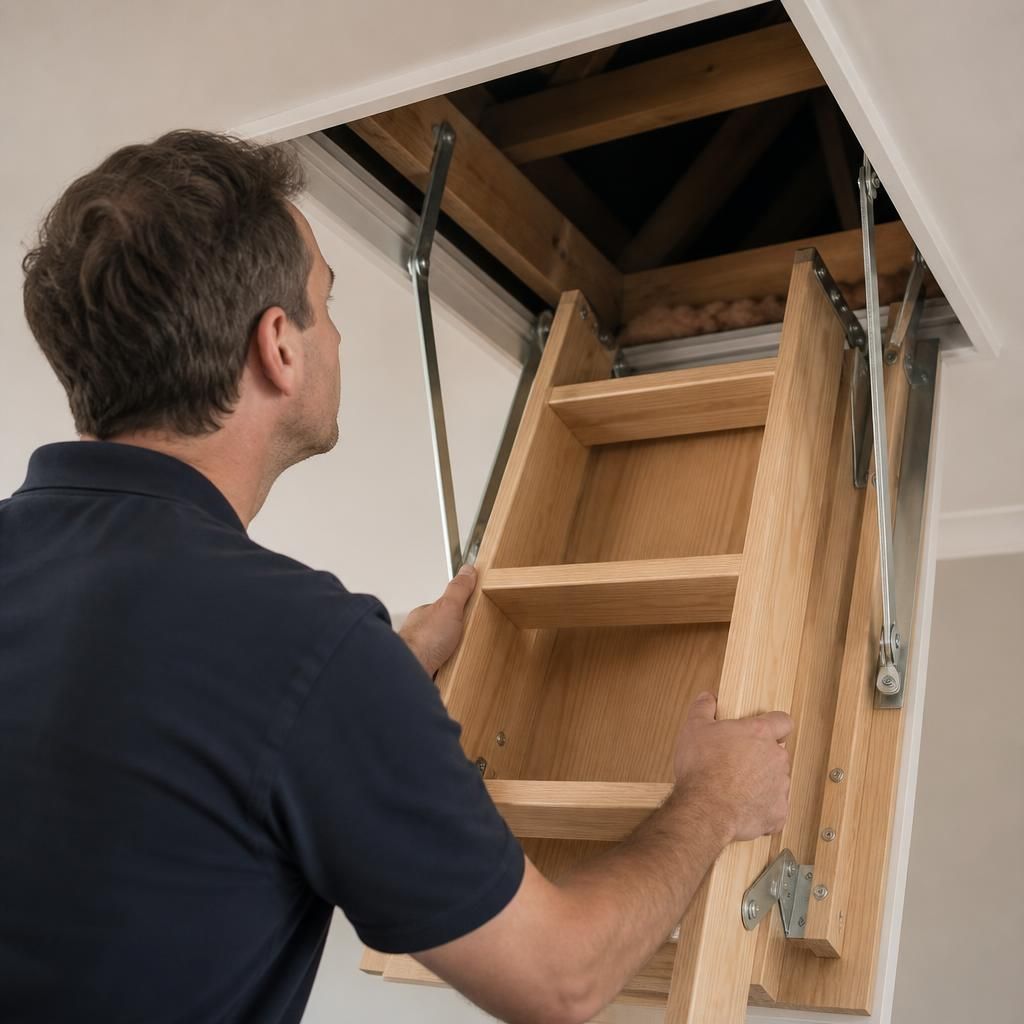
Do not estimate a timber loft ladder’s capacity from the thickness, width or apparent strength of its timber. If the rating is missing, ask for the manufacturer’s instructions before using the ladder.
The stated limit applies to the specified ladder in its approved configuration. Replacing fixings, altering sections or fitting the ladder to a different hatch can change how the load is transferred, so the original rating may no longer apply.