

How can you protect loft shelving from damp and condensation?
Protect loft shelving by controlling moisture, maintaining roof-space ventilation and addressing leaks before installation. Keep stored items dry, leave air around shelving and boxes, and avoid blocking ventilation routes or compressing insulation against the roof.
The best protection comes from identifying the moisture source, keeping the roof space able to dry, and choosing shelving suited to an unheated loft. Shelving cannot correct a roof defect or prevent condensation caused by unsuitable conditions.
Start with the cause of the moisture
Look for staining, darkened timber, peeling surfaces, mould growth or a musty smell before storing anything on the shelves. These signs can indicate rainwater entry, plumbing leaks, damaged roofing materials or condensation.
Rainwater may enter around roof coverings, flashing, valleys, verges or roof windows. Water can also travel along timber before appearing some distance from the original defect. A dry-looking area below a roof slope does not always confirm that the roof is watertight.
Ask a suitable roofing or building professional to investigate active leaks. Do not fit shelving over damp materials, because the structure may deteriorate and stored items may conceal worsening damage.
Understand condensation in a loft
Condensation forms when warm, moist air reaches a surface cold enough for water vapour to turn into droplets. Metal fixings, roof members and the underside of roof coverings can become particularly cold.
Moisture can enter from the home below through gaps around pipes, cables, ceiling fittings, hatches and poorly sealed openings. Everyday activities such as cooking, washing and drying clothes increase indoor humidity.
A ceiling should remain reasonably airtight, but this does not mean sealing over designed roof-space ventilation. Changes to the hatch or ceiling should preserve the intended separation between the home and loft.
Choose shelving materials carefully
Use shelving specified for an unheated roof space rather than assuming that indoor furniture will perform in changing temperatures. Timber-based boards can react to moisture, while metal components may develop surface corrosion in persistently damp conditions.
Follow the shelving manufacturer’s requirements for fixings, spans and loading. Protect cut edges on board materials where the specification requires it, because exposed edges can absorb moisture more readily.
Raised shelving can help keep boxes away from occasional surface moisture, but it does not make a damp loft suitable for storage. Shelves still need secure support from appropriate structural members.
Do not fix shelving into roof coverings, membranes, electrical cables or pipes. Penetrating these elements can create leaks or damage services. A survey should identify suitable fixing points before installation.
Keep air moving around stored items
Allow space between boxes, shelves and nearby roof structures. Air needs a route around stored items so small pockets of humid air do not remain against cold surfaces.
Avoid packing shelves tightly from floor to ceiling. Leave access for inspection, particularly around roof junctions, eaves, plumbing and other areas where leaks or moisture may first appear.
Do not use boxes or stored possessions to cover ventilation openings. Keep insulation and stored items arranged so the roof construction can perform as designed.
Store items that tolerate loft conditions
Use sealed containers for possessions that could be damaged by occasional dust or humidity. Sealed containers are not a substitute for repairing damp, and they should not be packed while contents are wet.
Keep fabrics, books, photographs, electronics and leather goods away from areas with known temperature fluctuations. Inspect vulnerable items periodically instead of assuming that a closed box prevents all damage.
Leave a small amount of space inside containers. Overfilled boxes can restrict air movement and make it harder to identify moisture or mould during checks.
Check the loft after installation
Inspect shelving, fixings, stored boxes and nearby timbers after periods of heavy rain and during colder weather. Look for new staining, corrosion, mould or a change in smell.
Remove affected items promptly and investigate the cause. Cleaning visible mould without correcting the moisture source usually provides only temporary improvement.
Professional loft shelving installation should consider the roof structure, access, insulation arrangement and the position of services. Loftopia can plan shelving as part of Loft Storage & Accessories, with storage positioned for inspection and everyday use.
Good shelving design reduces contact with vulnerable surfaces and keeps possessions organised, but lasting protection depends on a dry roof structure and suitable roof-space conditions.
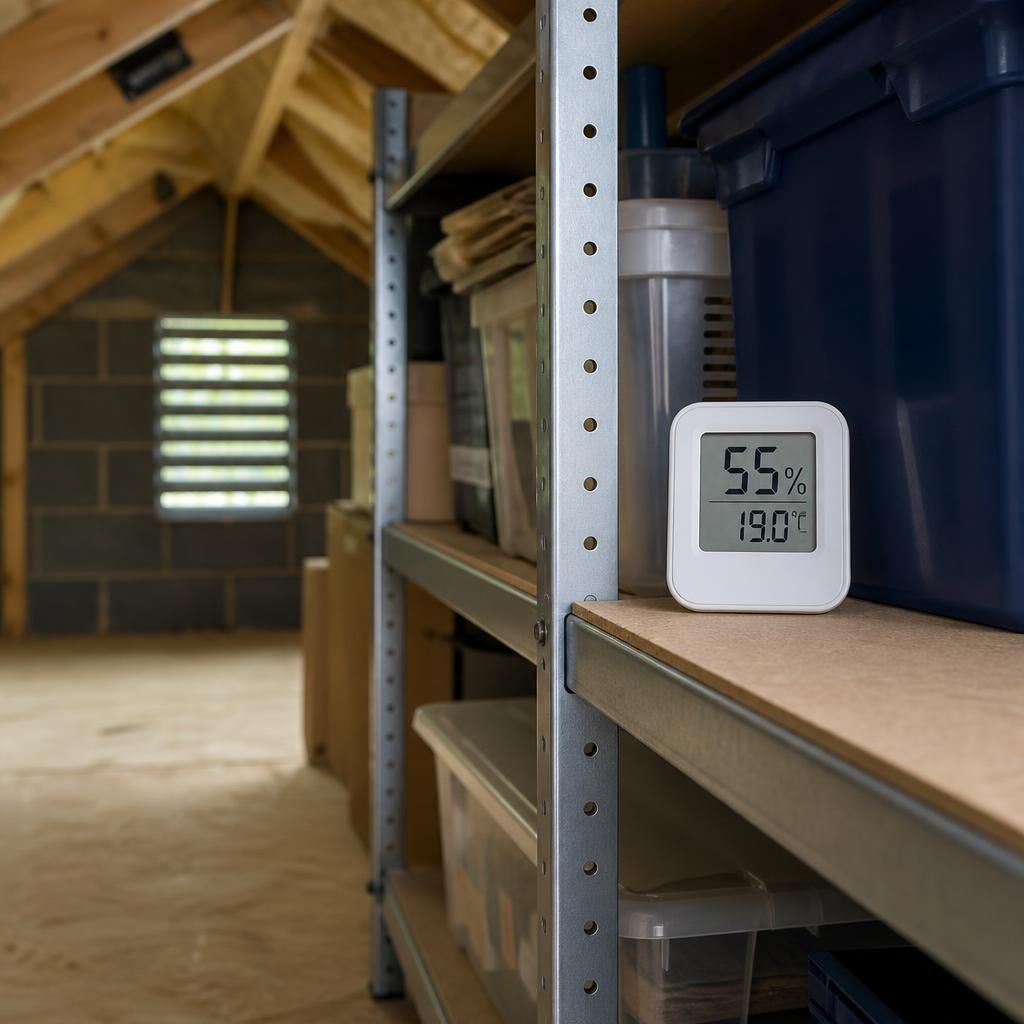
A small hygrometer can help you identify persistent humidity before damp affects shelving or stored belongings. Place it near the shelving, then compare readings across different weather conditions rather than relying on a single measurement.
Investigate consistently high humidity before adding more storage. Loftopia can review shelving placement alongside the loft structure, insulation arrangement and ventilation, helping you avoid creating enclosed areas where moisture remains unnoticed.