
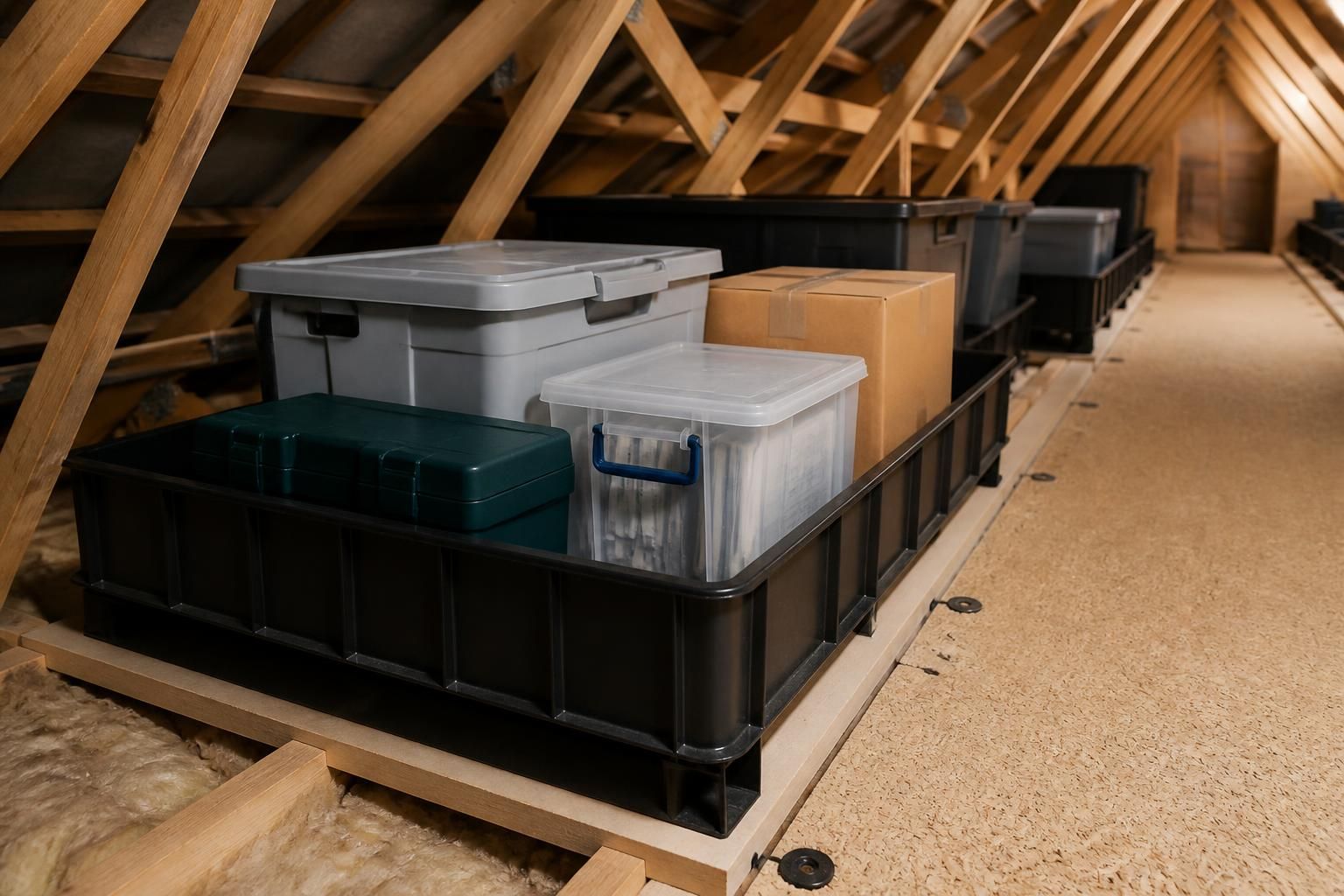
What weight can loft storage trays hold safely?
Loft storage trays do not have one universal safe weight limit: capacity depends on the tray design, supporting structure, fixings and how evenly items are distributed. Check the specified load limit before use, keep heavy items over supported areas, and ask Loftopia to assess the raised flooring where no documented limit exists.
Loft storage trays should carry only the load permitted by their design, supports and fixings. The stated limit may apply to stored contents alone, or to the combined weight of contents and the tray. Confirm what the specification includes before placing items inside.
Weight affects a loft in different ways. A broad, evenly distributed load places less strain on individual supports than one dense item pressing against a small area. Books, tools, tiles and boxed files can therefore create greater local pressure than their size suggests.
Use these checks before filling a tray:
- Read the tray instructions and retain the stated load information.
- Check that every support and fixing remains fully engaged.
- Place dense items over supported areas rather than between supports.
- Keep contents stable so they cannot shift against the tray sides.
- Do not stand, kneel or climb on a storage tray unless it is specifically designed for that use.
- Leave access routes, services and inspection points unobstructed.
Do not treat the insulation beneath a tray as structural support. Deep insulation can conceal the original ceiling structure, while compressing it can reduce its intended thermal performance. Raised flooring can create a suitable level for storage above insulation, but its supporting arrangement still determines how loads should be positioned.
Check the tray after loading. Movement, visible deflection, creaking, damaged fixings or distortion indicate that the arrangement needs review. Remove contents before investigating, and do not add weight to an area showing any of these signs.
Large or unusually heavy items need particular care. A load may be within the tray’s stated limit but still unsuitable for the supporting floor if it concentrates force in one location. Loftopia can assess the raised flooring, tray supports and access arrangements when the available load information is unclear.
Plan storage by weight as well as volume. Keep lighter seasonal items in trays where possible, and place dense belongings only where the supporting structure and tray specification allow them. This approach helps protect the storage system and keeps the loft easier to inspect.
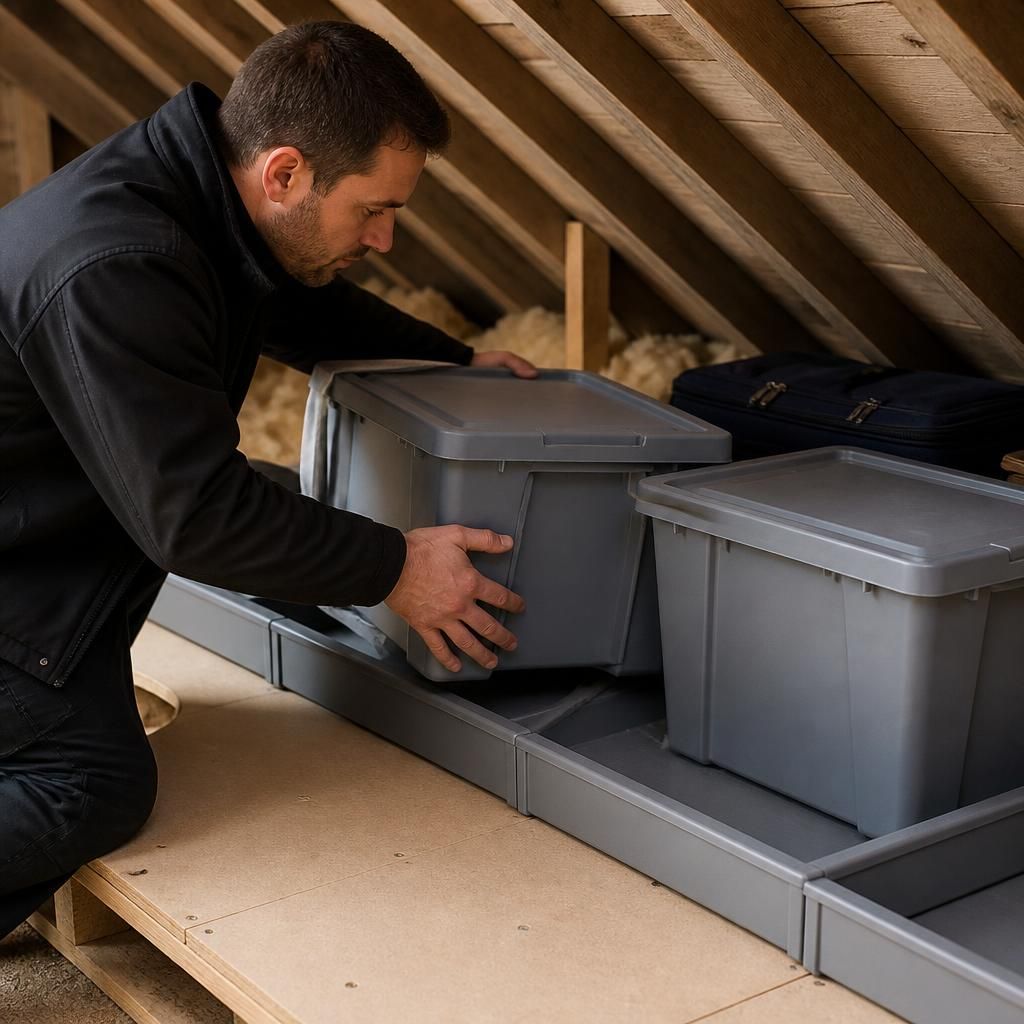
A tray’s stated capacity applies only when it has been fitted as specified. Changes to support spacing, fixings or tray position can alter how the load reaches the raised flooring.
Keep the tray within its documented rating and check the supporting floor separately. If the tray has no clear specification, avoid estimating its capacity from appearance. Loftopia can review the tray, raised flooring and intended contents before you load it.