
How should seasonal items be arranged in a loft?
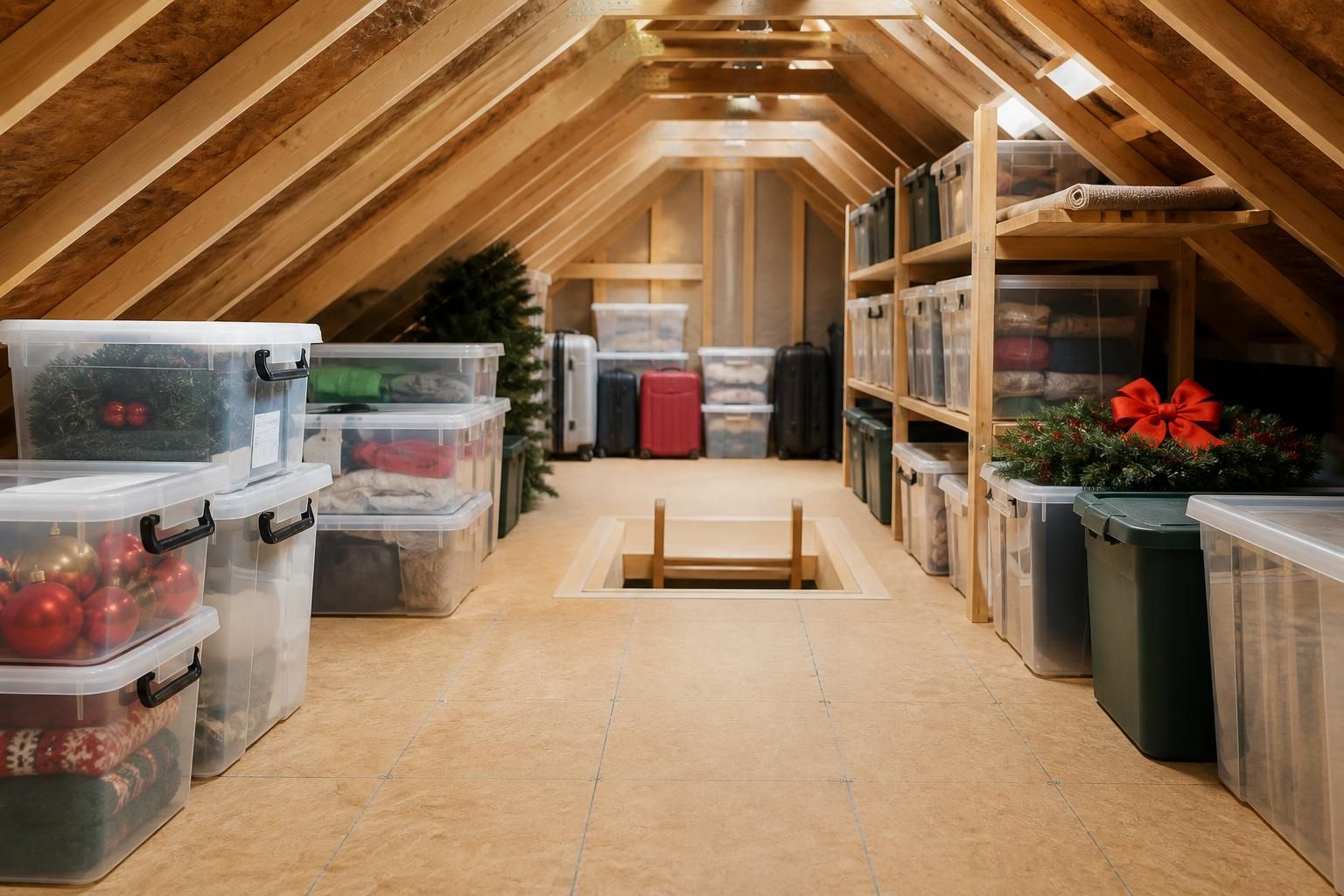
Arrange seasonal items in labelled, lidded containers, grouping them by use and placing current-season belongings in the easiest-to-reach positions. Keep heavier containers low, maintain clear access routes, and avoid covering household services or restricting ventilation.
Arrange seasonal items in defined storage zones, then rotate those zones as the year changes. Keep an inventory so you can find each group without opening every container.
Start by dividing belongings according to when you use them. Useful groups might include:
- Christmas decorations and wrapping materials
- Winter clothing, blankets and outdoor equipment
- Summer clothing, camping equipment and garden accessories
- Suitcases and travel items
- Children’s seasonal toys, costumes and school materials
Give each group a consistent place on the loft floor. This creates a simple storage map and prevents items from becoming mixed together after several changes of season.
Place items needed soon after a seasonal change where they can be reached without moving other groups. For example, winter coats can move towards the access point in autumn, while garden accessories can take that position in spring.
Use the container type to suit the contents. Rigid plastic boxes protect decorations and equipment from knocks, while fabric storage bags can suit clean clothing when they are kept closed and dry. Avoid relying on ordinary cardboard for items that could be affected by damp or condensation.
Separate delicate items inside larger containers. Wrap glass decorations, ornaments and other breakable objects individually, then keep their contents from shifting during handling. Do not store liquids, aerosols or other unsuitable household chemicals in the loft.
Seasonal clothing needs preparation before storage. Wash and dry garments fully, remove anything needing repair, and use breathable garment storage where appropriate. Check items when they return to regular use, rather than putting damaged belongings back into the loft.
Make the inventory practical rather than detailed for its own sake. Record the container location and its main contents, using a note on your phone or a printed list kept near the loft entrance. Add a reminder to update it after each seasonal change.
Consider access during the whole year, not only when the loft is first organised. A boarding layout gives containers a stable surface, while shelving can keep smaller seasonal groups separated from larger items.
Loftopia can assess the storage area and discuss raised flooring, shelving and Loft Storage & Accessories where the existing layout does not support safe, organised access.
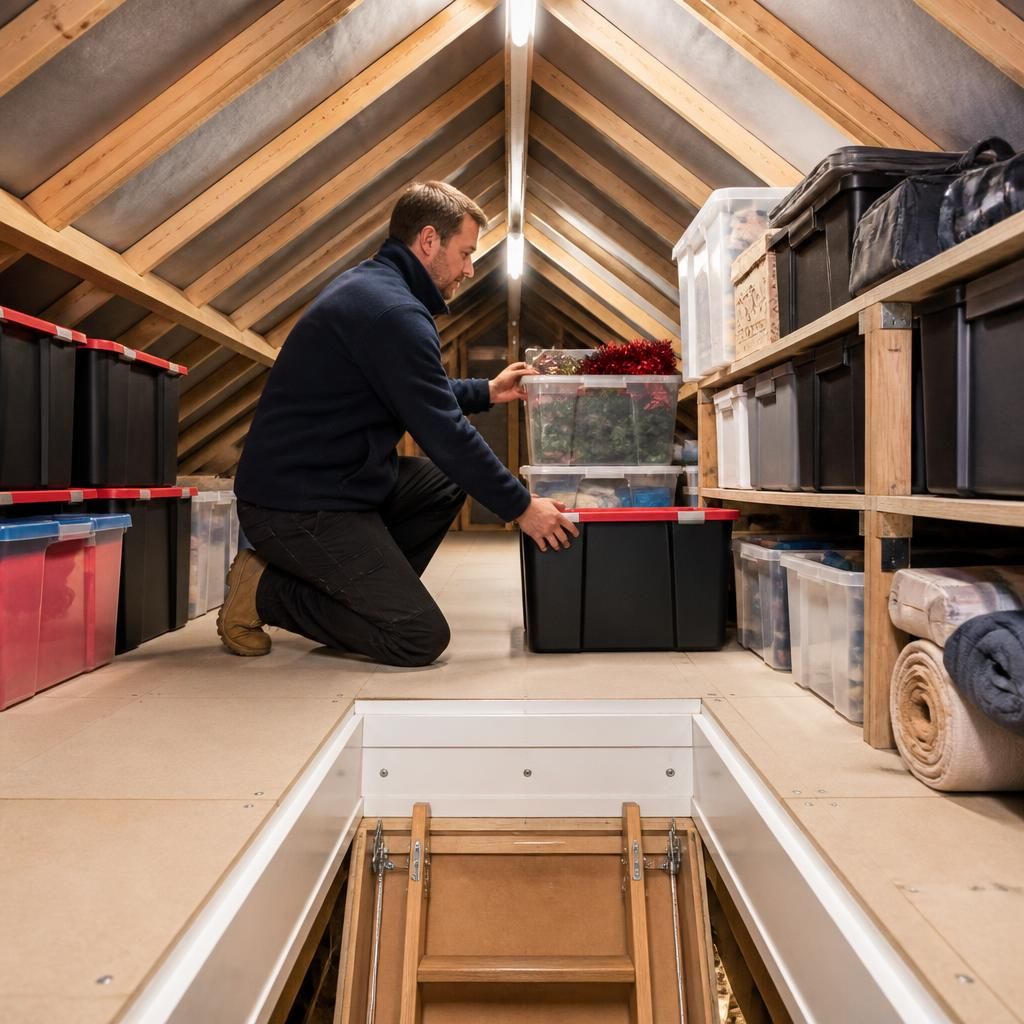
Rotate seasonal storage in stages rather than emptying the loft at once. Bring the next group towards the access point, remove the outgoing group, then return remaining containers to their marked positions.
Keep a temporary sorting area clear beside the access route. This prevents loose decorations, clothing or equipment from blocking the hatch while you exchange containers.
Before returning each group, check for damaged boxes, dampness or items needing repair. Replacing unsuitable containers during rotation prevents small storage problems becoming harder to manage later.