

What lighting suits low loft storage?
LED strips and compact surface-mounted LED fittings suit low loft storage because they provide useful light without hanging into limited headroom. Position lighting to cover the hatch, access route and storage areas, while keeping cables and fittings clear of stored items.
The best lighting for low loft storage is a low-profile LED arrangement planned around the storage layout, access route and available power. The fitting should provide even illumination while remaining clear of heads, boxes and roof timbers.
Choose fittings that suit the headroom. Recessed fittings can reduce obstructions, but their installation must suit the roof construction and insulation arrangement. Slim surface-mounted lights, compact LED panels and small spot fittings can provide a practical alternative where recessed installation is unsuitable.
LED strips work well where continuous light is useful. A strip fitted inside a suitable channel can illuminate shelving, eaves cupboards or a narrow walkway without creating separate dark patches. A diffuser can soften glare and protect the strip from knocks, dust and contact with stored items.
Compact directional fittings can help with particular tasks, such as reading labels or finding items on shelving. Aim them towards storage faces rather than directly towards the hatch, because direct glare can make climbing into the loft uncomfortable.
Plan the light around movement. A well-lit loft should allow you to see the first step, the full access route and the areas where boxes will be handled. Lighting only the centre of the boarded area can leave the eaves and shelving in shadow. Low roofs also make shadows more noticeable, so several modest fittings may work better than one bright fitting.
- Place a control where you can reach it before stepping fully into the loft.
- Use separate switched zones when the storage area has distinct sections.
- Keep switches and fittings away from likely contact with boxes or ladder components.
- Check that open hatch movement will not strike the fitting or catch the cable.
Mains-powered lighting suits regular use. It avoids relying on removable batteries and can be incorporated into a wider loft storage installation. A qualified electrician should assess the supply, wiring route and protective measures before connecting new lighting.
Battery-powered lights can help inside a small cupboard or in an area where permanent wiring is not practical. They need regular checking, however, and should not become the only light relied on for frequent access if battery condition may be uncertain.
Low lofts often contain insulation, timber framing and stored household materials. We keep cables secured, protect them from abrasion and prevent them from being trapped beneath stored items. Fittings must remain accessible for inspection and replacement, with installation following the manufacturer’s instructions and applicable electrical requirements.
Lighting should also suit the loft environment. Enclosed fittings can help where dust or accidental contact is likely, while fittings must remain compatible with the surrounding insulation and roof construction. The installer should confirm that the chosen product is suitable for the location rather than selecting it solely for its size.
During a survey, we can assess headroom, hatch position, ladder movement, boarding layout, shelving and the likely storage zones. That assessment helps determine whether strip lighting, compact fittings or a combination will provide the clearest coverage without reducing usable space.
Loftopia can include lighting with raised flooring, shelving, an insulated drop-down hatch or an aluminium sliding loft ladder where those items form part of the planned storage work. Lighting improves visibility, but the loft remains storage space rather than a habitable room.
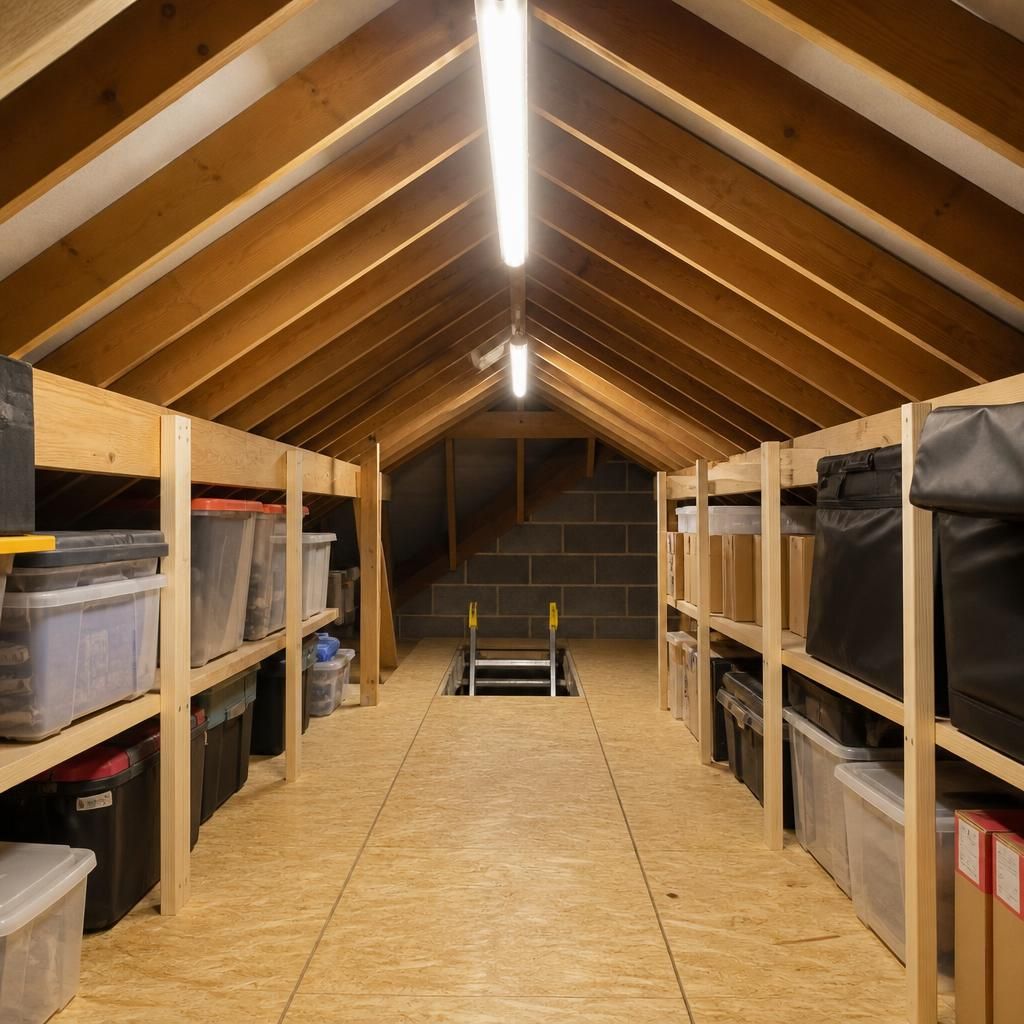
Low loft storage benefits from light that shows labels, shelf edges and floor changes clearly. A neutral white LED with diffused output can make stored items easier to distinguish without creating harsh contrasts beneath the roof slope.
Use the storage layout to assess colour and brightness before choosing fittings. Pale shelving and reflective surfaces can spread light, while dark boxes or enclosed eaves areas may need dedicated illumination. We can assess these details alongside raised flooring and Loft Storage & Accessories.