
How are electrical cables protected during loft boarding?
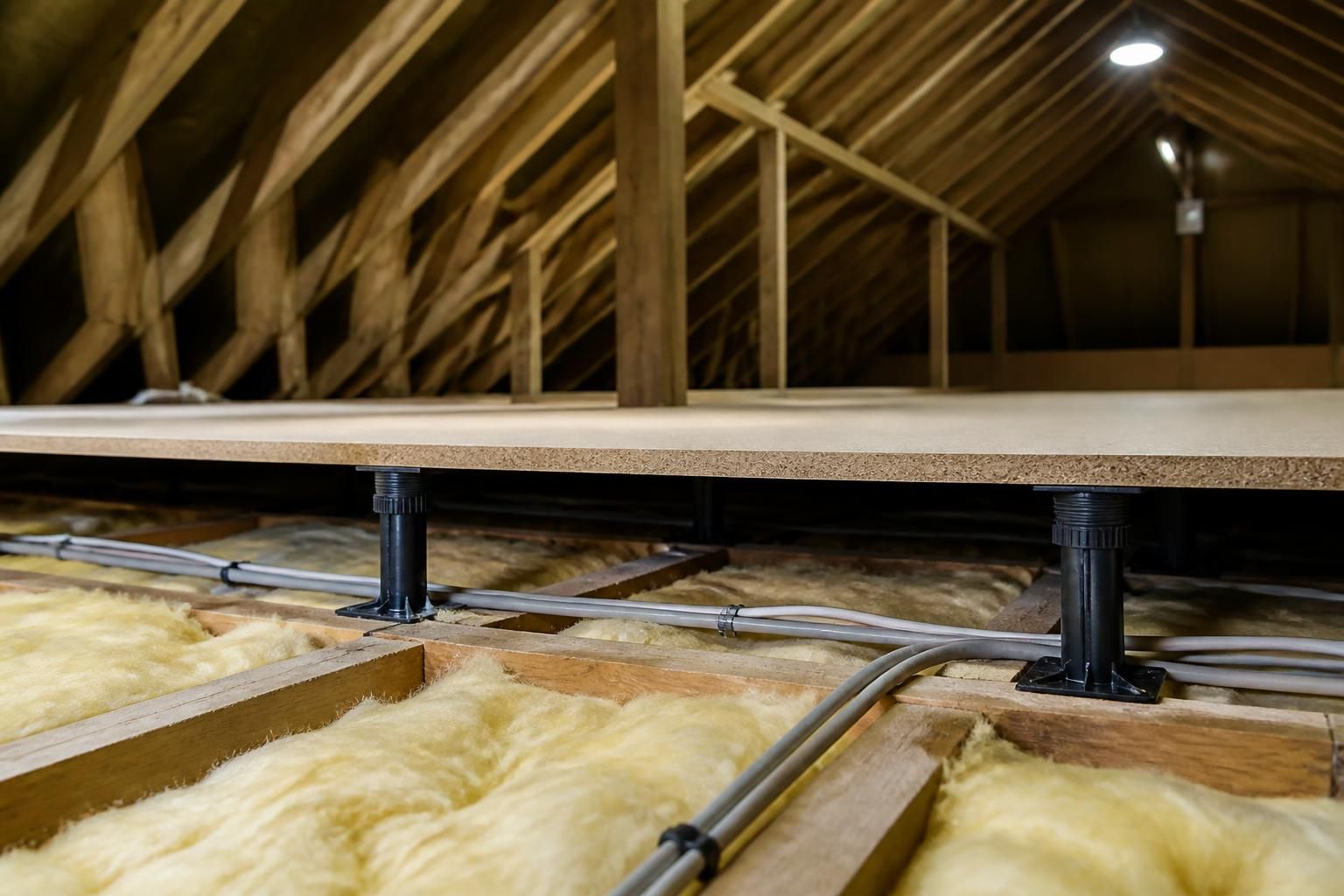
We identify cable routes before work and keep them clear of fixings, boards and stored loads. LoftZone raised flooring creates storage above insulation, allowing cables to remain accessible rather than being trapped beneath the boarding.
Loftopia protects electrical cables by planning the flooring around their routes, avoiding damage during installation and preventing stored items from pressing on vulnerable wiring.
Before raised flooring is fitted, we assess where cables enter the loft, cross the joists and connect to equipment. We look for wiring serving lighting, sockets, extractor fans, heating controls and other parts of the home.
This assessment helps us position supports and boards without drilling into cables or trapping them beneath flooring. We also consider cables that run close to joists, pass through holes or change direction near the proposed storage area.
- We keep fixings away from identified cable routes.
- We avoid placing boards directly across wiring where this could cause crushing or abrasion.
- We allow cables to remain visible or reachable where the layout requires future inspection.
- We keep stored loads from resting on cables, connections or electrical equipment.
- We avoid using cables, conduits or junction points to support any part of the raised flooring.
LoftZone raised flooring creates a planned level above the insulation. This separates the storage surface from services below, provided the cable routes and support positions have been assessed correctly.
Raised flooring does not make unsafe wiring safe. We do not cover damaged insulation, loose connections or exposed conductors. If we find an electrical defect, we explain the issue and recommend assessment by a suitably qualified electrician before the affected area is enclosed or used.
We also avoid making unplanned changes to existing electrical installations. Moving a cable, extending a circuit or installing new lighting requires electrical work beyond the boarding installation. A qualified electrician should complete that work where necessary.
Lighting needs particular care because fittings, switches and their cables can sit within the proposed storage area. The flooring layout must leave equipment accessible and prevent boxes or stored belongings from striking fittings.
Electrical cables can also be affected by later DIY work. After installation, avoid drilling, screwing or cutting into the raised floor without checking the cable routes. Keep records or photographs of the completed layout where these help identify services in the future.
The finished storage area should therefore be used with sensible loading and organisation. Shelving and storage boxes should stand on the planned flooring, not on exposed services or areas reserved for access.
During the survey, tell us about known cable routes, previous electrical work and any lighting you want to retain or add. This information helps us design the boarding around the loft’s existing services rather than treating the floor as an empty surface.
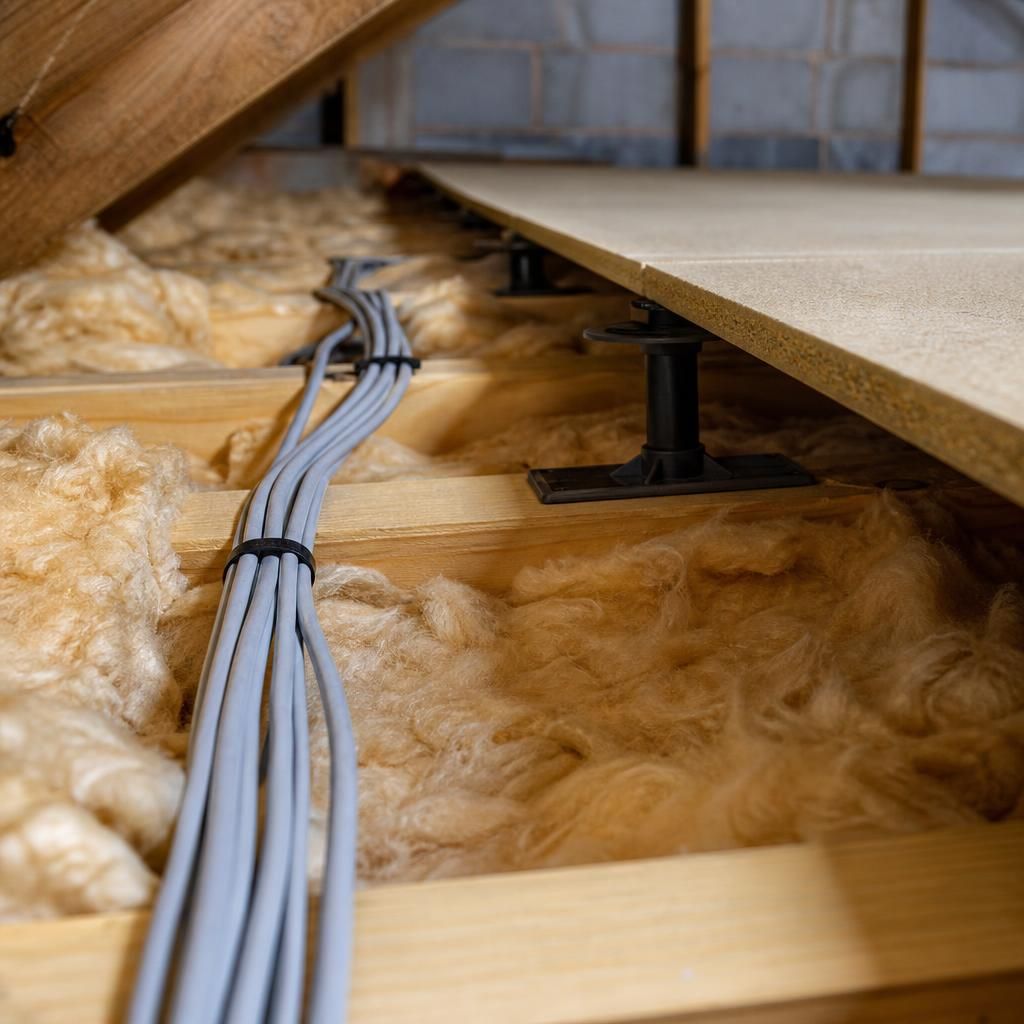
Cable protection also involves considering how insulation surrounds existing wiring. Cables buried beneath deep insulation may dissipate heat differently, depending on the circuit and installation.
We do not alter circuit design or certify electrical capacity as part of loft boarding. If the survey identifies a concern about cable loading, insulation coverage or an existing installation, we recommend assessment by a suitably qualified electrician before the area is enclosed.