
Can loft storage accessories be adapted for changing storage needs?
Yes. Loft storage accessories can be adapted as your storage needs change, provided the boarding, access and loft structure can support the adjustment.
We can assess shelving, storage trays, boxes and lighting so additions remain practical without obstructing access or ventilation.
Yes. Loft storage accessories can accommodate changing storage needs when the layout allows items to be moved, replaced or added without compromising safe access. The most adaptable arrangements separate storage into manageable areas rather than relying on one fixed installation.
Storage needs often change as households grow, children become independent or rarely used belongings move between rooms. Christmas decorations, suitcases and seasonal clothing may need different amounts of space at different times. A flexible loft layout makes those changes easier to manage.
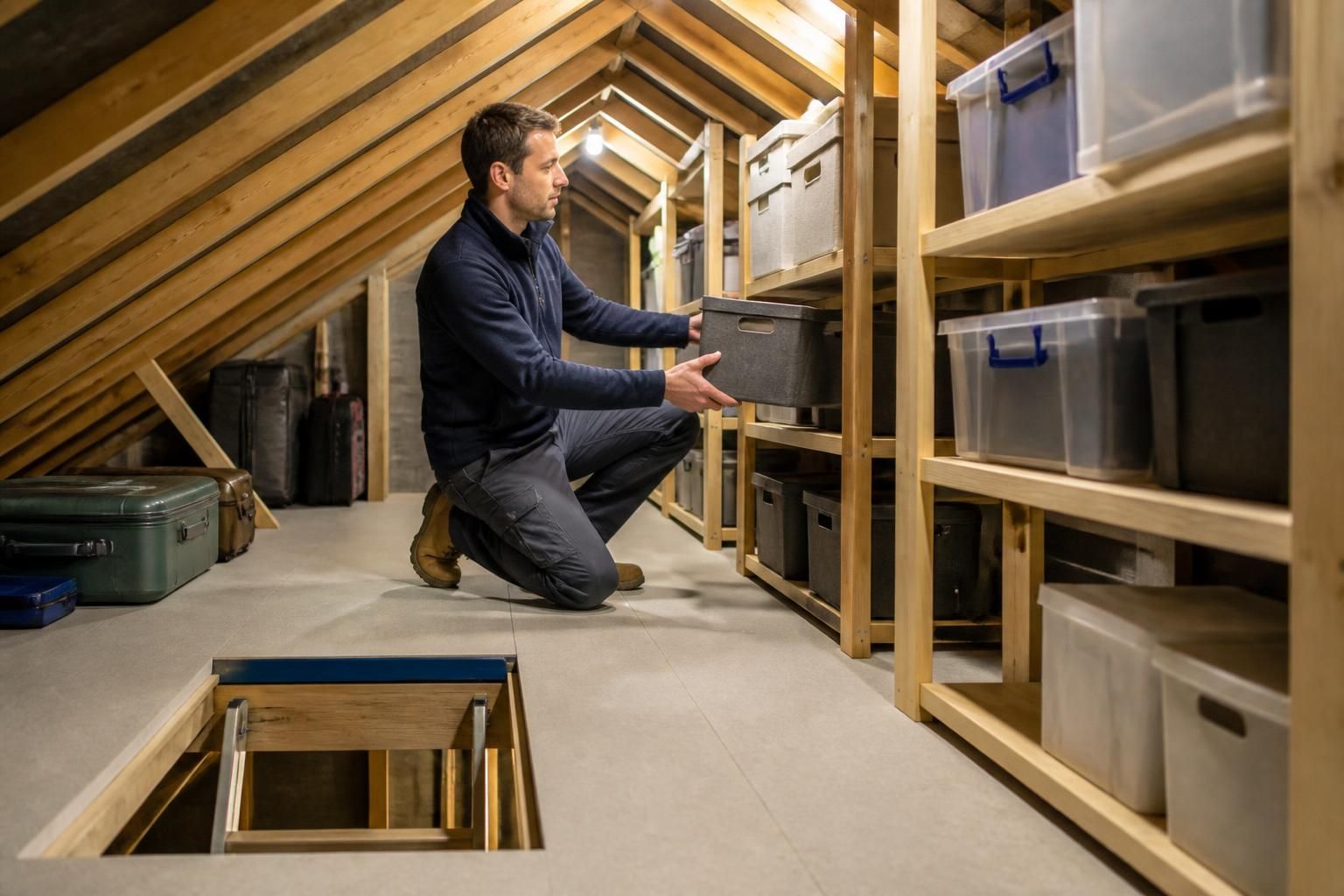
Modular shelving supports changes. Shelving can divide storage into sections for boxes, bags and smaller items. Adjustable positions can accommodate different container heights, while removable sections can create room for larger belongings. We plan shelf positions around the items you expect to store, rather than treating every area as identical.
Fixed shelving can still be appropriate where you store similar items regularly. However, the installation should leave sensible routes through the boarded area. Shelves positioned too close to the hatch, ladder or stored items can make later changes inconvenient.
Storage boxes and trays provide another layer of flexibility. You can group belongings by season, room or frequency of use. Standardised boxes usually stack more predictably than mixed containers, making it easier to reorganise a section without removing everything. Loft storage trays can also use space beneath sloping roof areas where taller boxes would not fit.
Choose containers that you can lift safely through the hatch and carry while using the ladder. Large boxes may hold more, but smaller containers can be easier to handle and rearrange. Labels or transparent panels can reduce the need to open several boxes when you need one item.
Lighting should support a layout that may change. A single light near the hatch may not illuminate shelving or storage beneath the roof slopes. We can consider the position of lighting in relation to walkways, shelves and areas where boxes are likely to be placed.
Lighting may need reviewing after storage is rearranged. New shelving can cast shadows, and stacked boxes can reduce the light reaching lower areas. Keeping the fitting and its controls accessible helps you alter the storage layout without creating dark working areas.
Access arrangements can affect long-term flexibility. An aluminium sliding loft ladder or timber loft ladder can make regular access more practical than using a portable step ladder. An insulated drop-down hatch can also provide a more finished entry point where the existing opening is unsuitable.
The hatch opening must remain clear when you change the storage arrangement. Bulky boxes should not be stored where they need to pass over shelving or around the ladder. We consider the route from the hatch to each storage area before positioning accessories.
Raised flooring can influence which accessories remain practical. LoftZone raised flooring creates a storage deck above insulation, allowing the boarded area to be arranged as storage needs develop. We can review the available boarded space before adding shelving or storage containers.
Accessories should not be placed simply because an empty area is available. You also need room to kneel, lift containers and inspect the surrounding loft. A layout that uses every possible corner may become difficult to change or maintain.
Plan the arrangement in zones. A useful approach is to keep frequently accessed belongings near the hatch and place seasonal items further away. Leave one clear route between the access point and the main storage areas. Reserve suitable areas for taller items, low containers and belongings that require careful handling.
- Keep regular-use items at an accessible height.
- Use lower areas for shallow trays and labelled boxes.
- Place bulky belongings where they can be lifted without twisting.
- Leave clearance around the hatch, ladder and walking route.
- Keep lighting visible from the access point.
Changes should be checked before accessories are moved. Adding shelves, heavier boxes or new fittings can alter how the space is used. We can review the boarding, access arrangements and proposed positions before you make a significant change.
Do not drill into boarding, joists or other parts of the loft structure without understanding what lies beneath. Some accessories may stand on the boarding, while others may require suitable fixing. The correct approach depends on the accessory, its load and the construction of the loft.
Loft Storage & Accessories can therefore develop in stages. You might begin with storage boxes, then add shelving, improved lighting or a more convenient ladder as your priorities change. Planning the first arrangement around clear access gives later additions more scope without requiring a complete reorganisation.
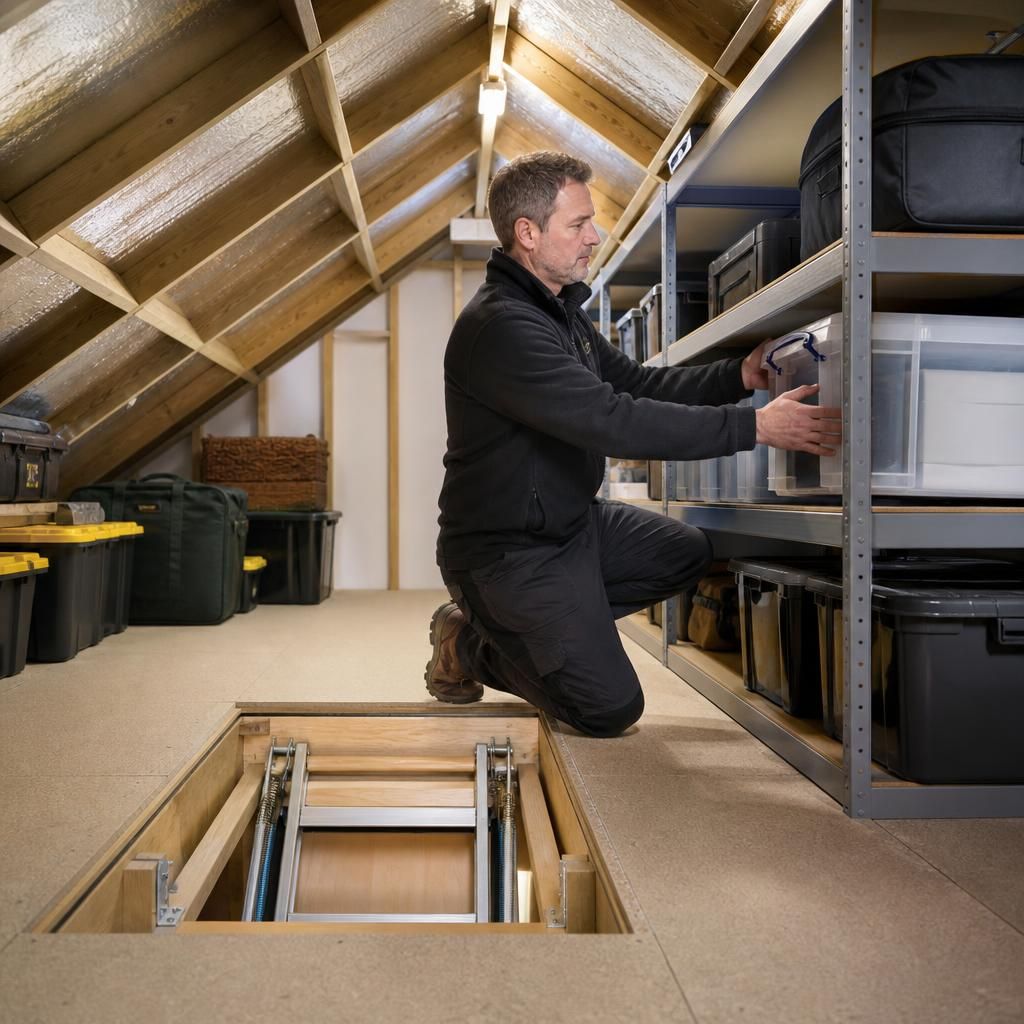
Adaptability depends on matching each accessory to the way the loft is built. Shelving can often be reconfigured, while ladders, hatches and lighting usually need a fixed position that preserves safe entry.
When storage needs change, we can assess the proposed arrangement before accessories are altered. This check considers the boarding, fixing points, available headroom and the route from the hatch, helping you change the layout without making access awkward.