

Loft Storage Boxes
Loft storage boxes help you group seasonal decorations, clothing and household items, keeping the loft storage area easier to organise. We can discuss suitable sizes and placement alongside Loft Storage & Accessories for practical access.
Specialist guidance for loft storage boxes
Our loft storage work considers how boxes will be carried through the hatch, positioned on raised flooring and removed without disturbing surrounding items. This helps keep stored belongings accessible rather than creating tightly packed areas that are difficult to manage.
We look at box dimensions, lid clearance and floor layout alongside the loft’s access arrangements. Advice can account for shelving, lighting and ladder position, so storage boxes work with the space instead of obstructing essential routes.
Loftopia brings this practical assessment into Loft Storage & Accessories planning, helping you choose storage boxes that suit the finished loft. We can also identify where raised flooring, insulation protection or improved access should come first.
Choose loft storage boxes by what you store
The right loft storage box depends on what you store, how often you retrieve it and how much space each item needs. Clear labelling and suitable lids can make seasonal belongings easier to identify, while consistent sizes help keep groups together.
The options below match common household storage needs with practical box features, so you can compare before choosing.
Find the right box for each storage need
Mixed household items
Choose consistent box sizes for toys, household accessories and less frequently used belongings. Matching formats make grouped storage easier to locate.
Clothing and textiles
Use lidded boxes for spare bedding, seasonal clothing and soft furnishings. Folded contents need enough room to avoid overfilling and crushing.
Decorations and keepsakes
Smaller boxes suit ornaments, decorations and keepsakes that need careful separation. Labels help identify each group without opening several boxes.
Paperwork and records
Rigid boxes help prevent documents from bending or being compressed. Keep paperwork away from roof edges and leave access routes clear.
Large or awkward items
Measure bulky belongings before selecting a box. Shallow formats can pass through the hatch more easily and fit beneath sloping roof areas.
Avoid wasting space around storage boxes
Loft conditions can expose belongings to dust and changing temperatures. Choose enclosed boxes suited to their contents, with rigid sides for fragile decorations and clean interiors for fabrics or paperwork.
Box weight matters as much as capacity. Smaller containers can make heavier belongings easier to handle, while strong bases and stable shapes reduce the risk of stacked boxes shifting.
Boxes work best alongside fixed storage rather than replacing it. Use them for loose seasonal items, and keep regularly handled belongings on shelving where you can see and reach them more easily.
Key points when comparing loft storage boxes
Compare boxes by opening style, handle design and dimensions, then match those features to the route through the loft. A box that fits the available space and can be carried comfortably is more practical than one with unused capacity.
Plastic boxes for general loft storage
Plastic boxes suit decorations, toys and household items that need protection from dust. Their smooth surfaces also make them easier to wipe clean.
Cardboard boxes for lightweight items
Cardboard boxes can suit lightweight belongings that you access occasionally. Keep them away from areas where insulation or roof moisture could affect the contents.
Clear boxes for quick identification
Clear sides let you identify contents without opening each box. This can reduce unnecessary handling when you are looking for seasonal items.
Opaque boxes for light-sensitive contents
Opaque boxes keep contents out of direct light and make mixed storage look less visually distracting. Add a clear label showing what each box contains.
Lidded boxes for dust control
A close-fitting lid helps limit dust entering the box. Check that the lid closes properly and does not interfere with nearby roof timbers or insulation.
Boxes matched to access frequency
Place rarely used boxes in the less accessible parts of the boarded area. Keep boxes you handle regularly near the loft hatch and access route.

Label boxes before placing them in the loft
An image of a loft storage box beside the hatch can show how placement affects everyday access. Keep the route from the opening clear, and leave enough room to lift a container without stretching across the boarded area.
Use boxes in groups that match how you retrieve belongings. Place occasional-use items farther from the hatch, while containers opened more often should remain within a straightforward reach. This arrangement reduces unnecessary movement when you are using the loft.
Check the box position after adding other items. Containers should not press against roof components, obstruct ventilation routes or sit where the lid cannot open fully. A simple layout drawing can help you plan placement before carrying boxes upstairs.
Loft Storage Boxes: Common Questions Answered
Which materials are best for loft storage boxes?
Plastic boxes can resist dust better than cardboard, but contents still need protection from condensation. Choose lidded containers carefully, and dry damp items completely before placing them inside for storage.
What size loft storage boxes should you choose?
Match box capacity to contents rather than filling empty volume. Low, stable boxes suit shelving, while taller containers may use vertical space but require more clearance above them when stacked.
Do loft storage boxes need ventilation?
Most enclosed boxes do not need ventilation holes, but they should not block loft airflow. Keep them clear of eaves and ventilation routes, and avoid placing damp belongings inside them.
Are loft storage boxes suitable for storing clothes?
Yes, provided clothes are clean and completely dry. Use lidded boxes, fold items carefully, and consider breathable fabric bags inside them to reduce dust and protect delicate garments during storage.
How should loft storage boxes be lifted into a loft?
Keep each box light enough to handle safely. Use the loft ladder with both hands, maintain three points of contact, and ask someone below to pass items once positioned.
Specialist knowledge for practical loft storage
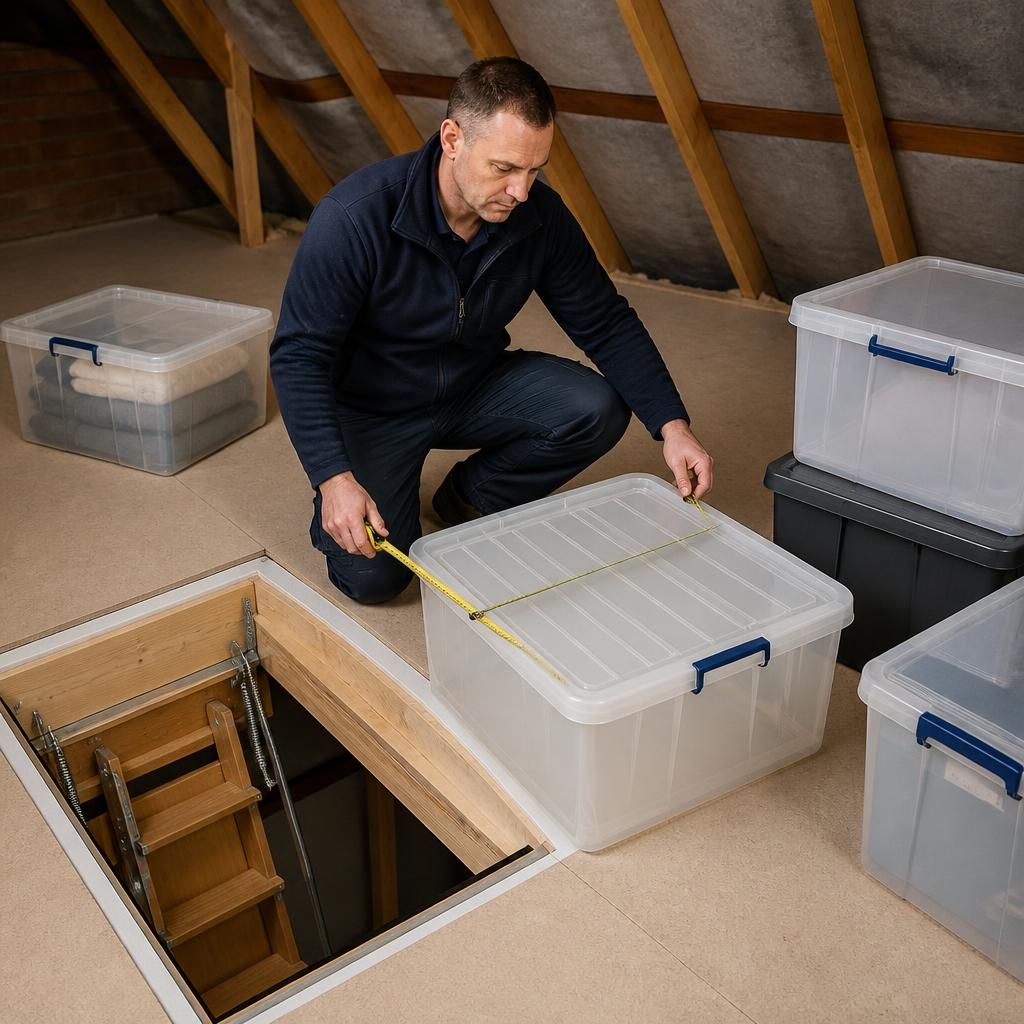
Measure boxes against the access route
We assess box dimensions against the hatch opening, ladder position and available flooring. This prevents containers reaching the storage area but becoming difficult to remove.

Match box design to the contents
We consider the items stored before recommending box types. Lidded containers suit dusty environments, while breathable options may better suit belongings needing airflow.
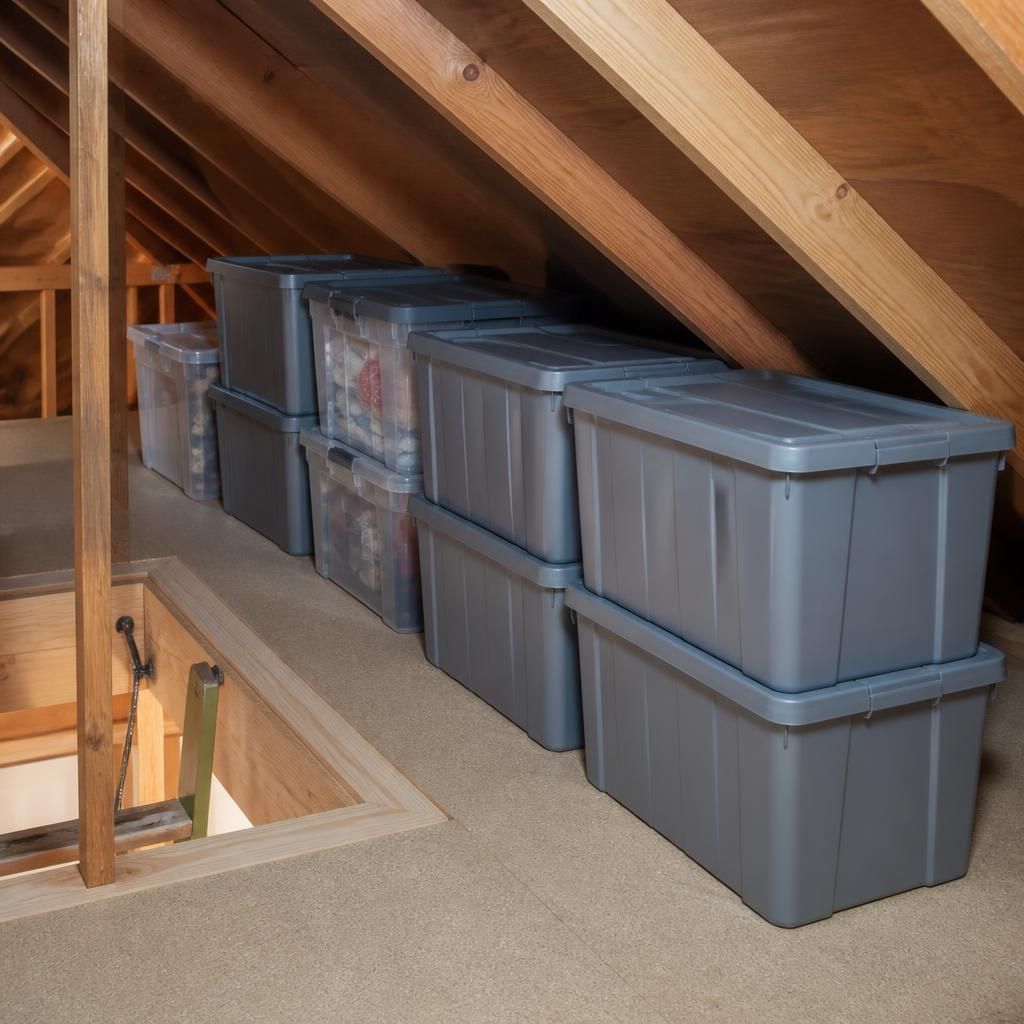
Allow for the roof structure
We check box height beneath sloping roof sections and around timbers. This keeps containers clear of the roof structure and preserves practical access across the boarded area.

Combine boxes with fixed shelving
We position boxes where they complement shelving rather than block it. Shelves can hold frequently handled belongings, while boxes keep occasional-use items contained.
Plan Storage Early
Review box requirements before purchasing containers, so sizes, access routes and storage positions work together efficiently within the loft space.
Questions to consider before choosing loft storage boxes
Are stackable loft storage boxes practical for your space?
Choose sturdy, lidded containers sized for planned contents rather than maximum capacity. Clear labels and manageable weights make retrieval easier, while stackable designs can use vertical space without blocking access.
Do loft storage boxes need a load-bearing floor?
Yes, storage boxes need a suitably supported boarded area. We assess joists, access and intended contents, then specify raised flooring that distributes loads without compressing insulation beneath the storage area.
How can you check the safe load for loft storage boxes?
Safe load depends on joist structure, raised flooring specification and stored contents. We assess these together, then explain practical limits so you can avoid overloading boxes or the flooring itself.
What damp risks should you check before using loft storage boxes?
Check for roof leaks, condensation, staining or damp timbers before placing boxes. We can identify ventilation concerns and recommend repairs or improvements before stored items are introduced to the loft.
Can loft storage boxes obstruct roof inspections?
Yes, boxes can obstruct roof timbers, ventilation paths and junctions requiring inspection. Keep sightlines clear, and move containers whenever maintenance requires access to concealed roof areas in the loft itself.