
Heavy Duty Loft Shelving
We install heavy-duty loft shelving to organise boxes, luggage and seasonal items above the boarded area. Adjustable layouts help you use vertical space while sturdy supports keep stored belongings accessible without covering insulation or restricting loft access.
Specialist Experience in Heavy Duty Loft Shelving
We treat heavy-duty loft shelving as part of the storage layout, not as a separate item of furniture. Our installers consider the boarded area, roof structure, insulation depth and access route before setting out each installation.
This assessment helps us position supports where they suit the loft’s construction and the way you intend to store belongings. We can account for box dimensions, available headroom and movement around the shelving, rather than applying one standard arrangement to every property.
Our specialist loft storage work brings shelving, boarding and access improvements into a coordinated plan. That measured approach helps you understand how the installation will use the available space before work begins.
Heavy Duty Shelving for Different Storage Needs
Heavy-duty loft shelving can serve different storage patterns, from labelled household boxes to larger luggage and equipment. The suitable arrangement depends on item weight, dimensions and how often you need to reach it.
Use the options below to compare choices for your loft. Each addresses a storage need, helping you identify suitable shelving for different items.
Heavy-Duty Shelving for Different Items
Grouped household boxes
We use shelving to separate labelled boxes by room, category or season, making stored belongings easier to identify and reach.
Equipment and tools
Shelving keeps toolboxes, decorating equipment and household supplies off the main floor, leaving clearer routes through the boarded area.
Long or awkward items
We plan shelf widths around longer belongings and available headroom, helping you store awkward items without blocking access around the loft.
Documents and smaller items
Shelving creates separate levels for files, archive boxes and smaller containers, reducing loose items across the storage area.
Frequently accessed storage
We position regularly used belongings where you can reach them without moving several containers, while less-used items can occupy higher or less accessible shelves.
Why Shelf Loading Matters in a Loft
Heavy-duty loft shelving can affect airflow around the roof edges if sections are placed too close to eaves. We position shelving with ventilation routes and inspection points in mind, rather than filling every available corner.
Shelf height also changes how easily you use stored belongings. Items handled regularly need a clear reach, while less frequently used possessions can occupy higher shelves. This simple distinction can prevent storage becoming difficult to manage.
The shelving arrangement should also allow for changing household needs. Adjustable levels can accommodate different box sizes over time, so you can reorganise sections without replacing the complete installation.
Heavy-Duty Shelving by Storage Requirement
The options below distinguish shelf capacity, fixing method and usable clearance. Consider how much weight each section will carry, where supports can be placed and how the framework will interact with the boarded floor before selecting an arrangement.
Load Requirements
We assess the weight of stored belongings before selecting shelving. Books, tools and filled boxes require stronger supports than lightweight seasonal items.
Support Fixings
We choose fixing points that suit the loft structure and avoid placing unnecessary loads on boarding panels. Secure supports help keep shelves stable during use.
Clearance Above Flooring
We leave sufficient space beneath lower shelves for cleaning and inspection. This also keeps the storage arrangement practical when you need to move boxes across the boarded area.
Box and Container Sizes
We set shelf widths and depths around the containers you already use. Matching the framework to stored items reduces wasted space and prevents boxes from overhanging.
Access Around Shelving
We keep routes to the hatch, ladder and stored belongings clear. A heavy-duty shelving layout should increase usable storage without making other parts of the loft difficult to reach.

How Heavy-Duty Loft Shelving Uses Vertical Space
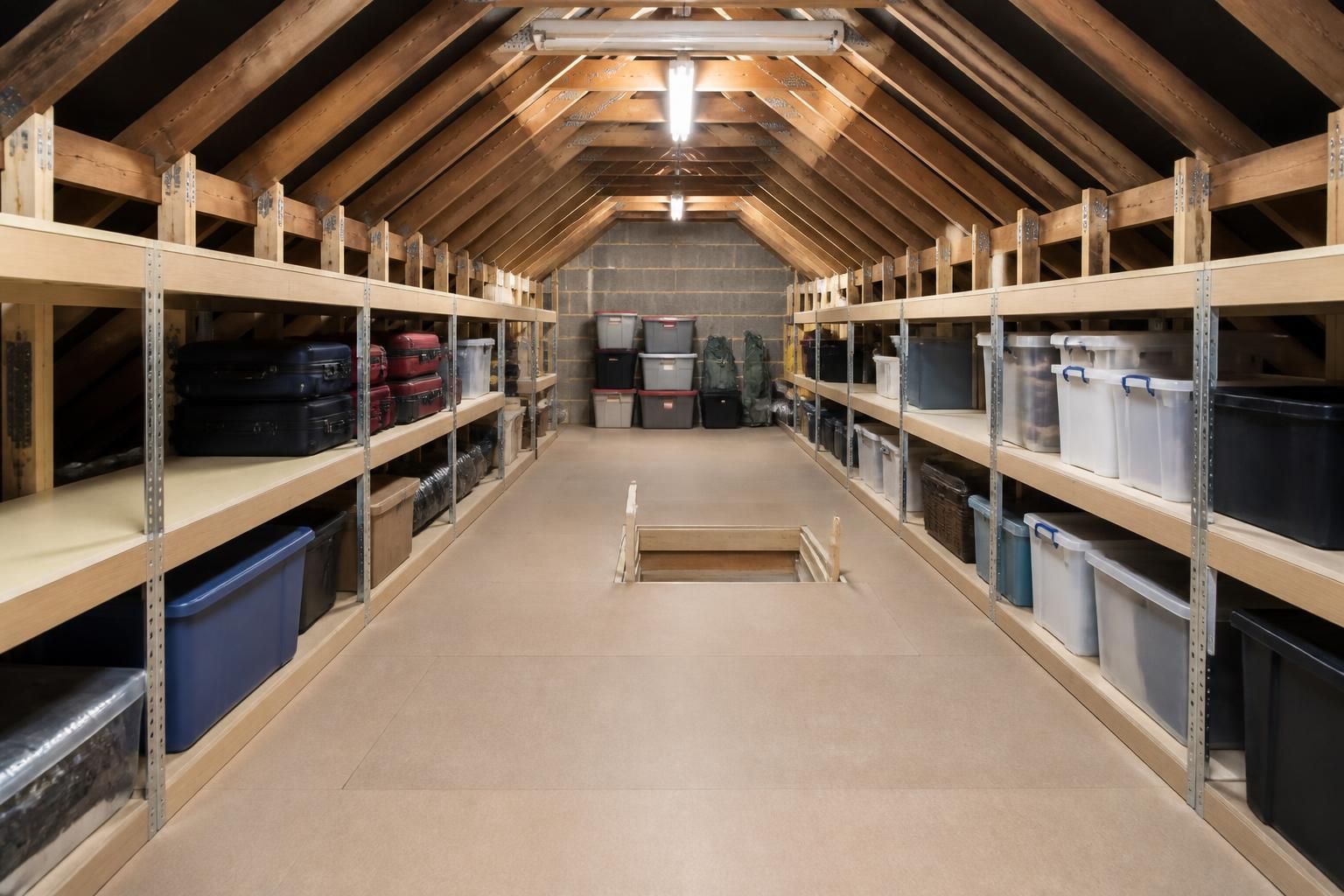
The image shows how heavy-duty loft shelving can be arranged as a storage bay above the boarded floor. The frame keeps boxes off the walking route, so the central area remains available for reaching different sections.
We consider the shelf span, support positions and expected contents before fixing the framework. This helps prevent long shelves carrying unnecessary loads and gives heavier boxes a defined location.
Clear separation between bays also makes labels easier to see and boxes easier to remove. Shelving should complement the boarded layout, leaving the hatch, ladder and inspection points unobstructed during normal use. The arrangement supports orderly storage without turning the loft into a crowded floor area.
Heavy-Duty Loft Shelving Questions
How much weight can heavy-duty loft shelving support?
Heavy-duty shelving suits heavier boxes when supports and spans are planned accordingly. We assess the loft structure, fixing points and access route before recommending shelf positions and load distribution carefully.
How is heavy-duty loft shelving fixed securely?
We fix shelving to suitable structural members using appropriate brackets and supports, checking alignment and stability before loading. Fixings remain clear of services, insulation and access routes during installation work.
Can heavy-duty loft shelving be fitted in any loft?
Most lofts can accommodate shelving, but we first check available headroom, roof structure, insulation depth and access. Some layouts require smaller bays or alternative positioning to maintain safe clearance throughout.
Can heavy-duty loft shelving be adjusted later?
Later changes depend on the shelving framework and fixing positions. We inspect the installation before moving levels, ensuring altered spacing remains stable and keeps surrounding access routes clear during use.
What should you store on heavy-duty loft shelving?
Store boxed decorations, luggage, archived paperwork and occasional-use household items on heavy-duty shelving. Keep heavier containers at reachable levels, label bays, and avoid unstable or leaking items above boarded floor.
Specialist Knowledge in Heavy-Duty Loft Shelving

Measured Around Loft Access
We measure the usable loft footprint before planning each shelving bay. The layout keeps the hatch opening, ladder route and working space clear, so you can reach stored items without moving several boxes first. Our assessment also identifies awkward roof slopes and low sections that could restrict shelf use. This measured approach helps match the arrangement to the actual loft, rather than applying the same layout to every home.

Planned Load Distribution
We plan shelving bays around the type and quantity of items you intend to store. Grouping heavier boxes lower down can make handling more manageable and reduces unnecessary lifting. We also consider how contents will be placed across each section, rather than treating the shelf surface as one undivided area. Clear planning gives each category a defined place and helps prevent one bay becoming overloaded while others remain unused.

Considered Around Insulation
We position shelving carefully around existing insulation, keeping the framework from pressing into areas that need to remain undisturbed. This matters particularly in lofts with deeper insulation, where standard floor-level storage can create clearance problems. Our installers examine the available height and surrounding construction before agreeing the arrangement. Shelving then adds storage capacity without requiring the insulation to be removed or flattened across the loft.

Checked During Installation
We check each shelving section as the installation progresses, including upright alignment, shelf level and the connection between adjoining bays. These checks help identify movement or uneven positioning before stored items are added. We also review the completed framework against the agreed layout, so the finished installation reflects the storage plan discussed beforehand. This method gives you a clear basis for using each section safely and practically.

Integrated With Raised Boarding
We coordinate shelving with raised boarding so the storage arrangement works with the loft floor, rather than competing with it. The framework sits within the planned storage area while the main route remains available for inspection and retrieval. This is especially important where the boarded section has a defined footprint. Considering both elements together helps avoid fitting shelves where later access work or boarding changes would be restricted.

Organised For Regular Use
We can arrange shelf bays around how often you use different belongings. Seasonal decorations, luggage and archived household items do not need identical positions or access arrangements. Placing frequently handled boxes where they are easier to reach can reduce unnecessary movement around the loft. Grouping similar items also makes the available shelving easier to review, helping you see which areas are occupied and which remain available.
Make Space
Reviewing shelving needs now helps you reserve space before stored items accumulate and make access harder to manage at home.
Questions to Ask Before Choosing Heavy-Duty Loft Shelving
What shelf depth suits heavy-duty loft shelving in a loft?
Check the shelving’s stated load capacity, fixing method and compatibility with the boarded structure. We confirm these details before installation, helping you avoid unsuitable components or concentrated weight on shelves.
Does heavy-duty loft shelving need regular safety checks?
Check shelf fixings and supports periodically for movement, damage or sagging. Remove excess weight and report concerns before use. We can review arrangement if storage changes or access becomes restricted.
Can heavy-duty loft shelving be installed without compressing insulation?
We position shelving supports on suitable structural points, keeping the framework above insulation rather than pressing it down. A planned layout also preserves ventilation and access for routine inspection points.
Can heavy-duty loft shelving be removed without damaging the loft?
We assess fixings before removal and dismantle shelving in a controlled sequence. This helps limit disturbance to the boarded layout, allowing components to be repositioned or stored if requirements change.
How do you measure a loft for heavy-duty shelving?
We measure usable length, width and height around trusses, access points and obstructions. This records clearances and identifies shelf positions, helping the agreed layout fit the loft without restricting movement.