
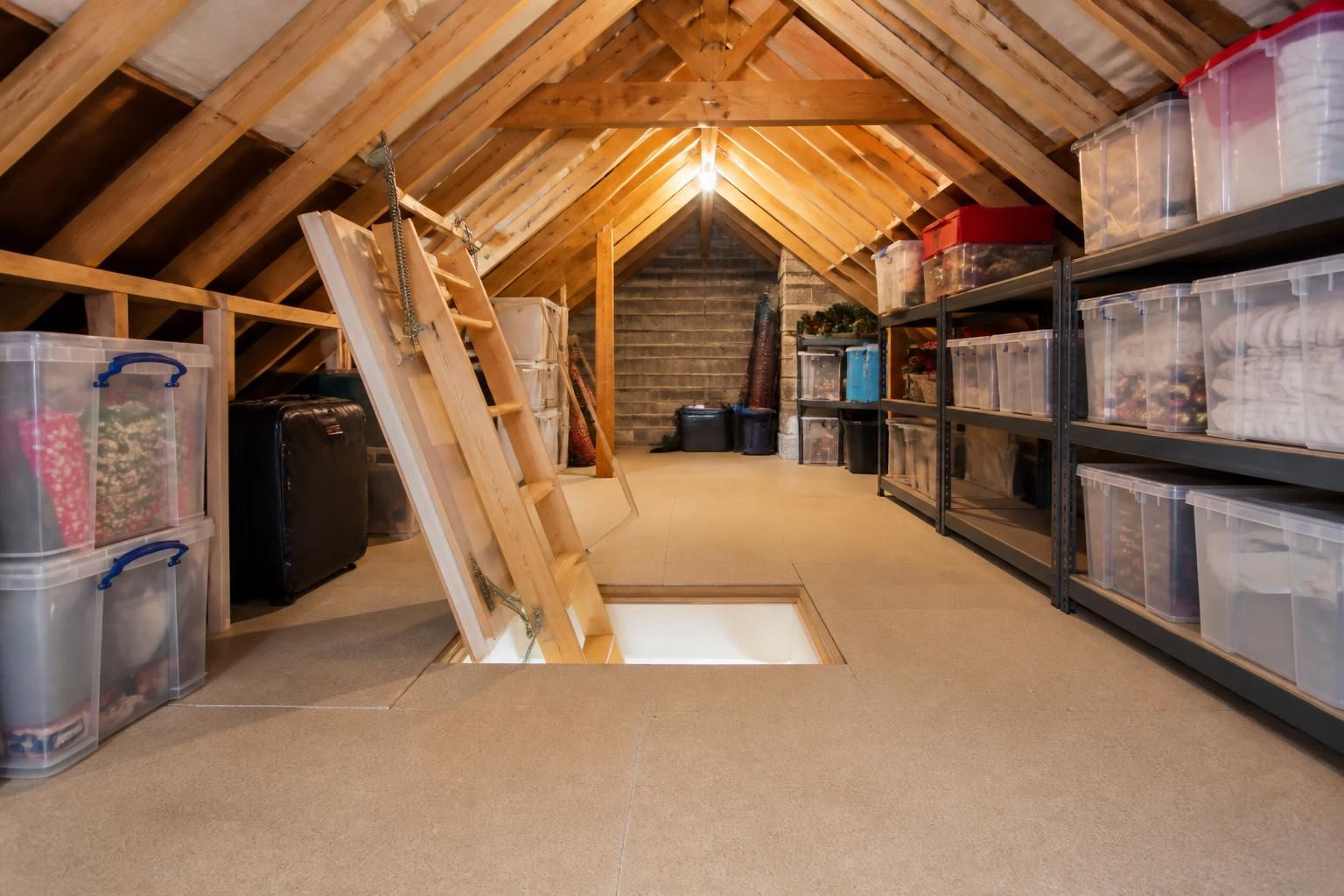
How to Organise a Loft
Organising a loft starts with deciding what you store, then planning safe access, suitable boarding and clear zones. We can combine raised flooring, shelving, lighting and ladder options so everyday storage remains easier to find and reach.
Specialist Loft Storage Planning
Loftopia’s specialist focus is storage rather than habitable conversion. We assess the roof structure, insulation depth, access points and usable areas before recommending work.
Our experience includes older properties and newer homes with deeper insulation. We account for roof supports, eaves, tanks, pipes and cables, so storage planning reflects the loft’s actual layout.
We explain the practical choices clearly and match the installation to how you intend to use the space. This measured approach helps you understand what the loft can accommodate before work begins.
Choose Storage for How You Use the Loft
Group belongings by use and frequency. Keep regular-access boxes near the hatch, label containers clearly and leave routes between storage areas. This reduces unnecessary handling.
Bulky cases, seasonal decorations and smaller items need different arrangements. The sections below match each situation with practical placement and access considerations, helping you plan an organised loft.
Match Each Storage Need to the Right Arrangement
Overflowing cupboards
Raised boarding creates storage above insulation for seasonal decorations, suitcases and household items that currently occupy living areas.
Deep insulation below
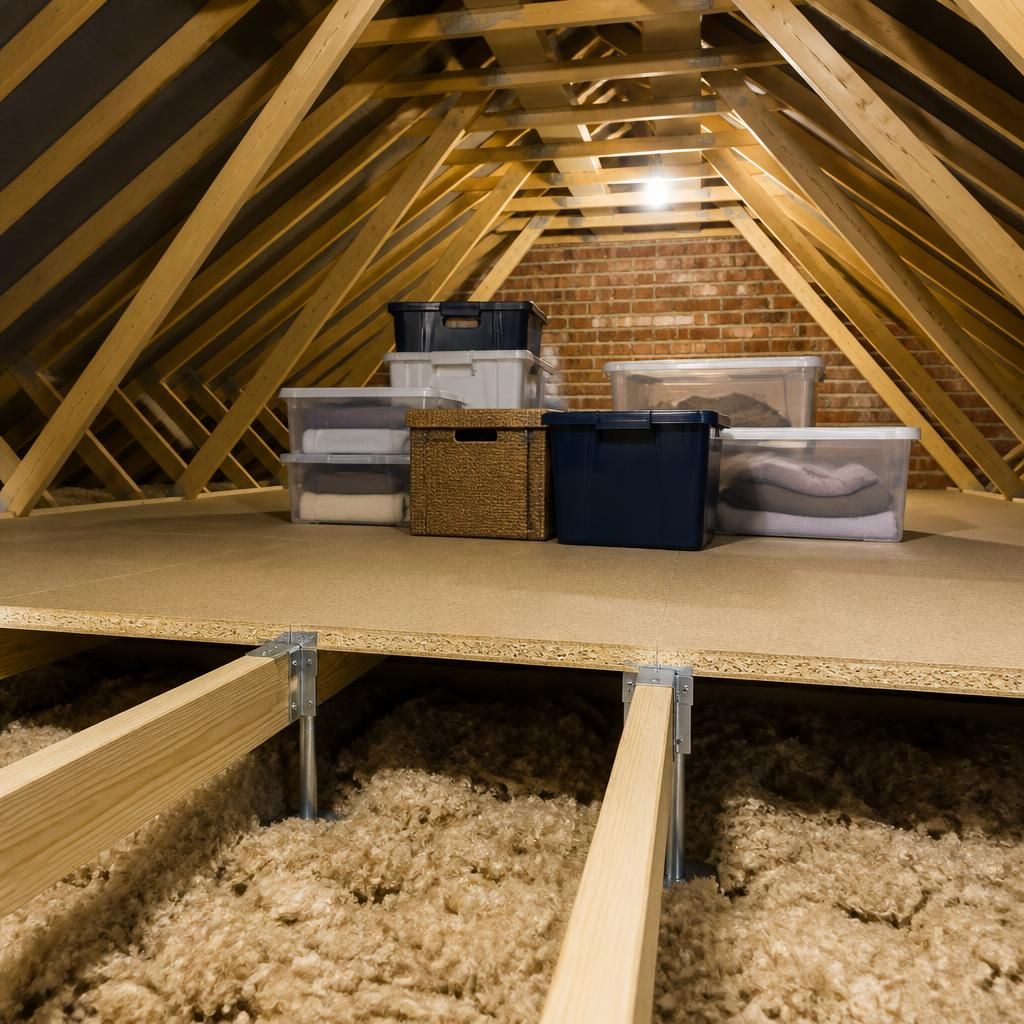
LoftZone raised flooring keeps the storage surface above deep insulation, helping protect insulation depth while making more of the loft usable.
Awkward loft access
An aluminium sliding loft ladder or timber loft ladder provides a more controlled route into the loft than a loose step ladder.
Poor visibility
Loft lighting makes labels, shelf contents and access routes easier to see when you are organising or retrieving stored items.
A loft needing a complete sort
Loft Storage & Accessories can combine raised boarding, shelving, lighting, an insulated drop-down hatch and a suitable ladder.
Keep Inspection Areas Clear
Storage containers need to suit the route into the loft, not just the space inside it. Measure the hatch and ladder opening before buying boxes, because oversized containers can make an organised layout difficult to use.
Floor space is not the only storage opportunity. Shelving can use the roof’s available height for smaller items, while suitable lighting helps you identify contents without moving several boxes first.
Plan an inventory before filling the loft. Record where less frequently used belongings sit and review the list when items change, so storage remains manageable rather than becoming another area to search through.
Choose Storage Arrangements by Item and Access
The best arrangement depends on the loft’s shape, boarding coverage and access equipment. The list below compares practical choices, showing where each works well and what to check before adding containers, shelving or other storage features.
Divide the loft into clear zones
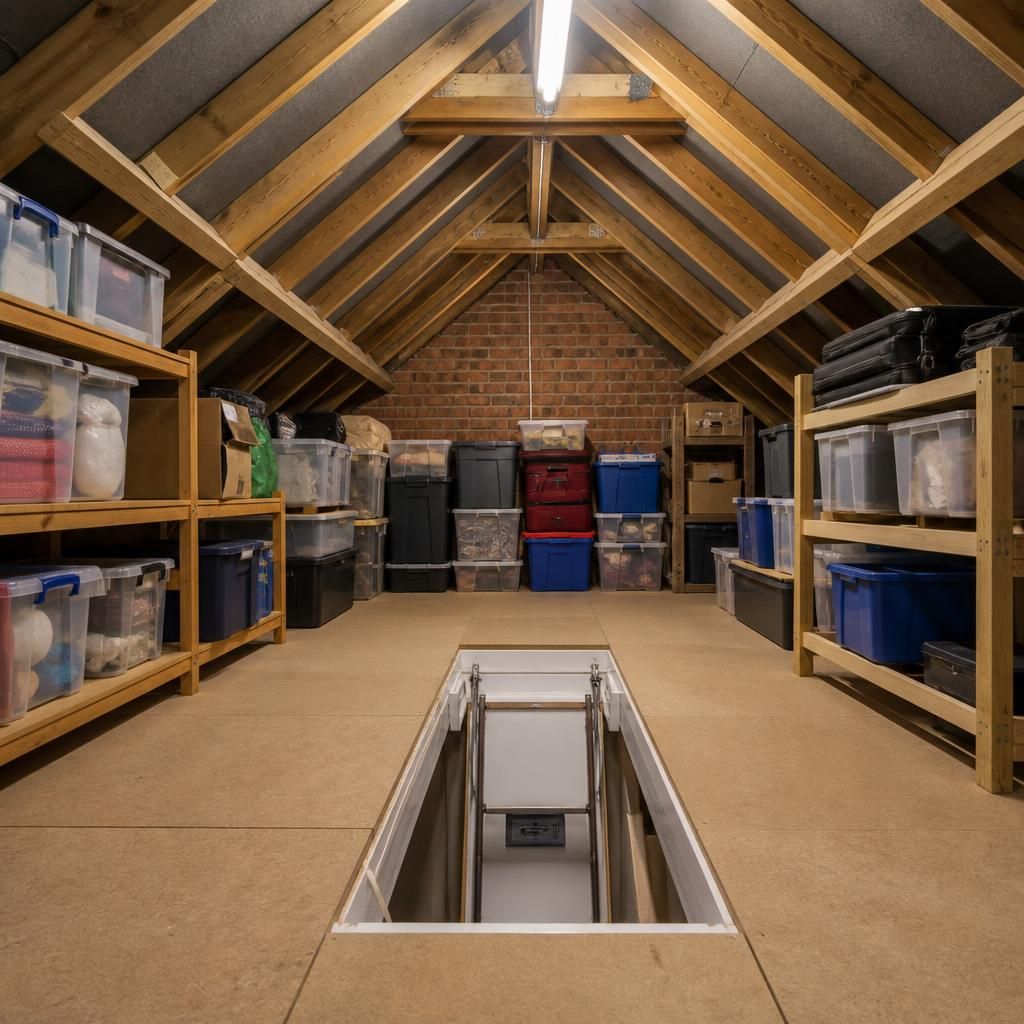
Group decorations, luggage and rarely used belongings into separate areas. Keep a clear route from the hatch to each zone, so access does not depend on moving several boxes.
Board only the storage areas you need
Plan boarding around the amount and type of storage required. We install LoftZone raised flooring to provide storage above insulation while keeping the layout focused on usable areas.
Make access part of the layout
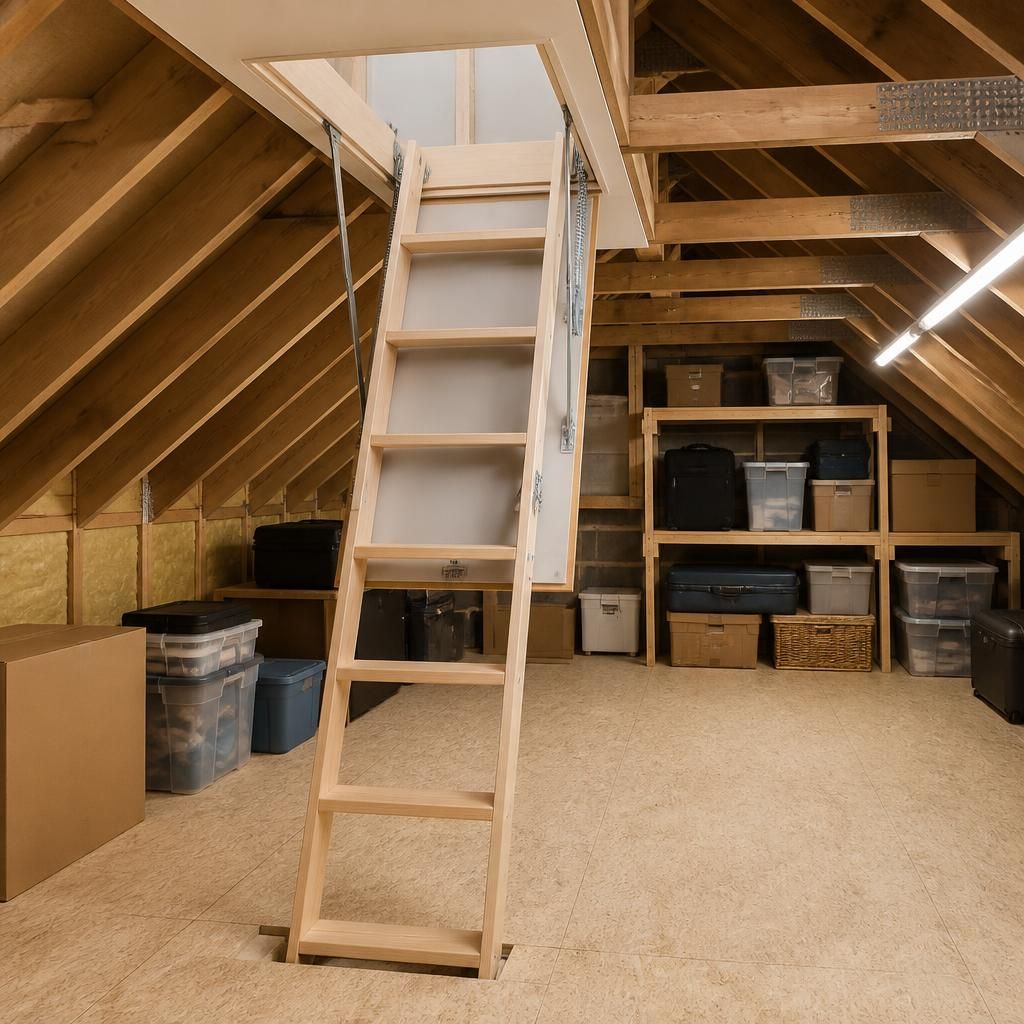
Check how the hatch and ladder position affect movement inside the loft. Aluminium sliding loft ladders, timber loft ladders and suitable hatch sizes can make entry and removal of stored items safer.
Use the loft’s height carefully
Shelving can organise smaller belongings without spreading boxes across the floor. Place shelving where it does not narrow the access route or obstruct the roof structure.
Keep frequently used items accessible
Position seasonal belongings and suitcases near the entry point, while less frequently used items can occupy harder-to-reach areas. This reduces unnecessary movement around the loft.
Combine practical upgrades where appropriate
A complete arrangement may include raised flooring, an insulated drop-down hatch, a ladder, shelving and lighting. We can help you compare individual upgrades with a coordinated Loft Storage & Accessories package.
Create Storage Above Insulation
Deep insulation should not be compressed beneath ordinary boards. LoftZone raised flooring creates a storage surface above the insulation, helping retain its depth and performance.
The supporting structure leaves space between the insulation and boarding. This gap helps maintain airflow beneath the floor, while the boards provide a stable surface for storage containers and other belongings.
Before installation, we assess insulation depth, joist layout, cables, pipes and obstructions. We can then recommend suitable boarding coverage and position access points so the finished arrangement remains practical to use.
Questions About Organising a Loft
How can a loft storage layout accommodate changing needs?
Group belongings by frequency of use, then place occasional items furthest from the hatch. Label matching containers clearly, leave walking routes unobstructed, and keep access to services available for inspection.
How can eaves improve loft organisation?
Use eaves for labelled, low-clearance containers or shelving, keeping heavier items accessible and leaving inspection routes clear. We can assess these spaces, avoiding blocked ventilation, cables, pipes or roof edges.
How can you organise a loft with limited floor space?
Board only the area needed for storage, then use wall-mounted shelving or compact containers around a clear route. We can plan access, load distribution and retrieval without overcrowding the loft.
How should seasonal items be arranged in a loft?
Keep seasonal items together, placing Christmas decorations, suitcases and occasional clothing in labelled containers near a clear route. Put fragile belongings securely, and keep heavier boxes low for safer retrieval.
How can shelving make a loft easier to organise?
Use shelving to separate categories and keep smaller items visible without stacking boxes too high. Adjustable shelves can accommodate different-sized containers, while labels identify contents before you move anything else.
Specialist Planning for Organised Loft Storage
Divide Storage into Clear Zones
Group belongings by frequency of use before placing them in the loft. Keep seasonal items together and leave less-used possessions towards the edges or rear of the boarded area.We plan movement routes around stored items, so you can reach regular-use containers without shifting everything nearby. Clear zones also make future sorting more straightforward.
Plan Access Around Storage
The hatch and ladder position affects how easily you can carry boxes into the loft. We consider the opening, landing space and route across the boarding before recommending an arrangement.Aluminium sliding loft ladders and timber loft ladders provide different access characteristics. We explain the available options in relation to the loft layout and the items you expect to store.
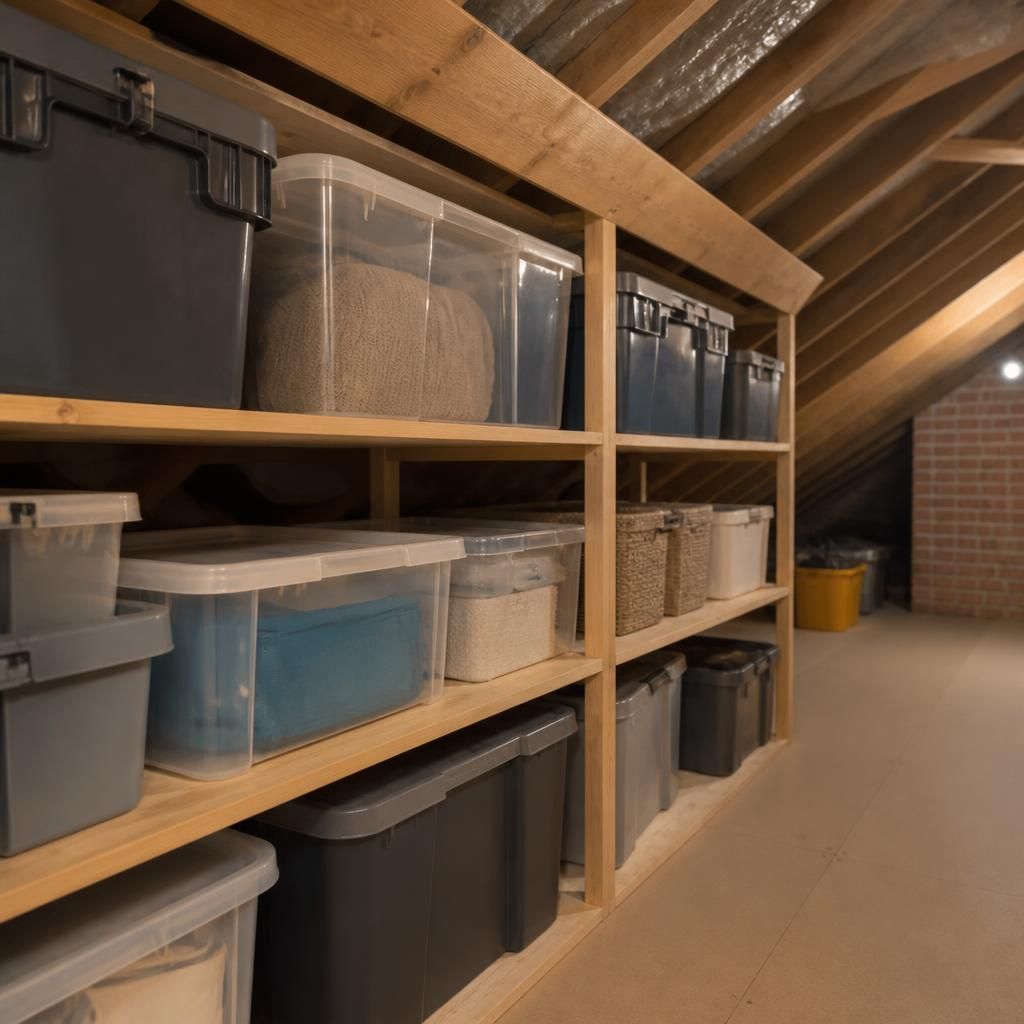
Use Shelving for Smaller Items
Shelving can separate smaller belongings from larger boxes and use space beneath the roof slope. We position shelves where they remain reachable without narrowing the main route through the loft.Labelled shelves support a simple inventory, particularly when several household members use the storage area. We also consider roof timbers, stored loads and access when discussing placement.
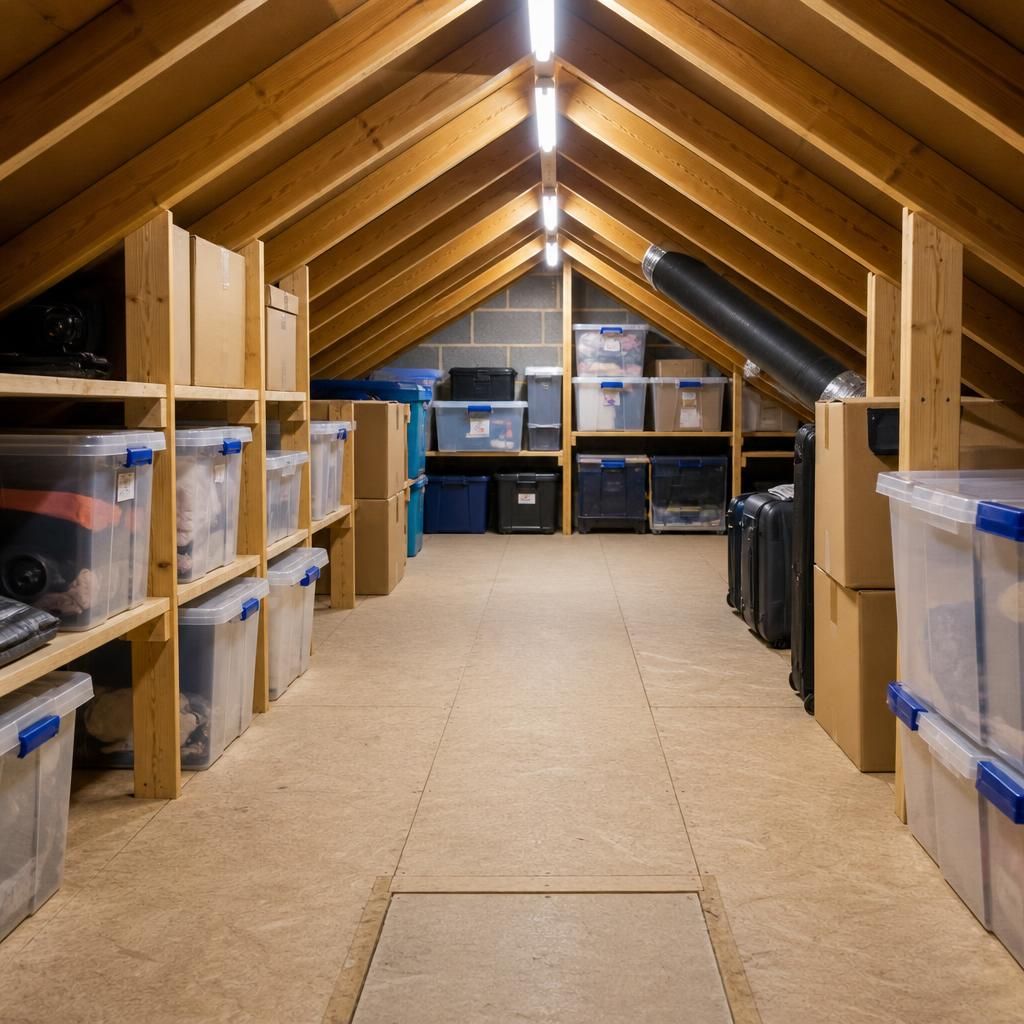
Light the Areas You Need to Reach
Good lighting helps you identify labels, check stored items and move through the loft more carefully. We assess the position of existing fittings and the areas that require clearer visibility.Loft Storage & Accessories can include lighting alongside boarding, shelving and access work. Coordinating these elements helps keep fittings and cables clear of storage zones.
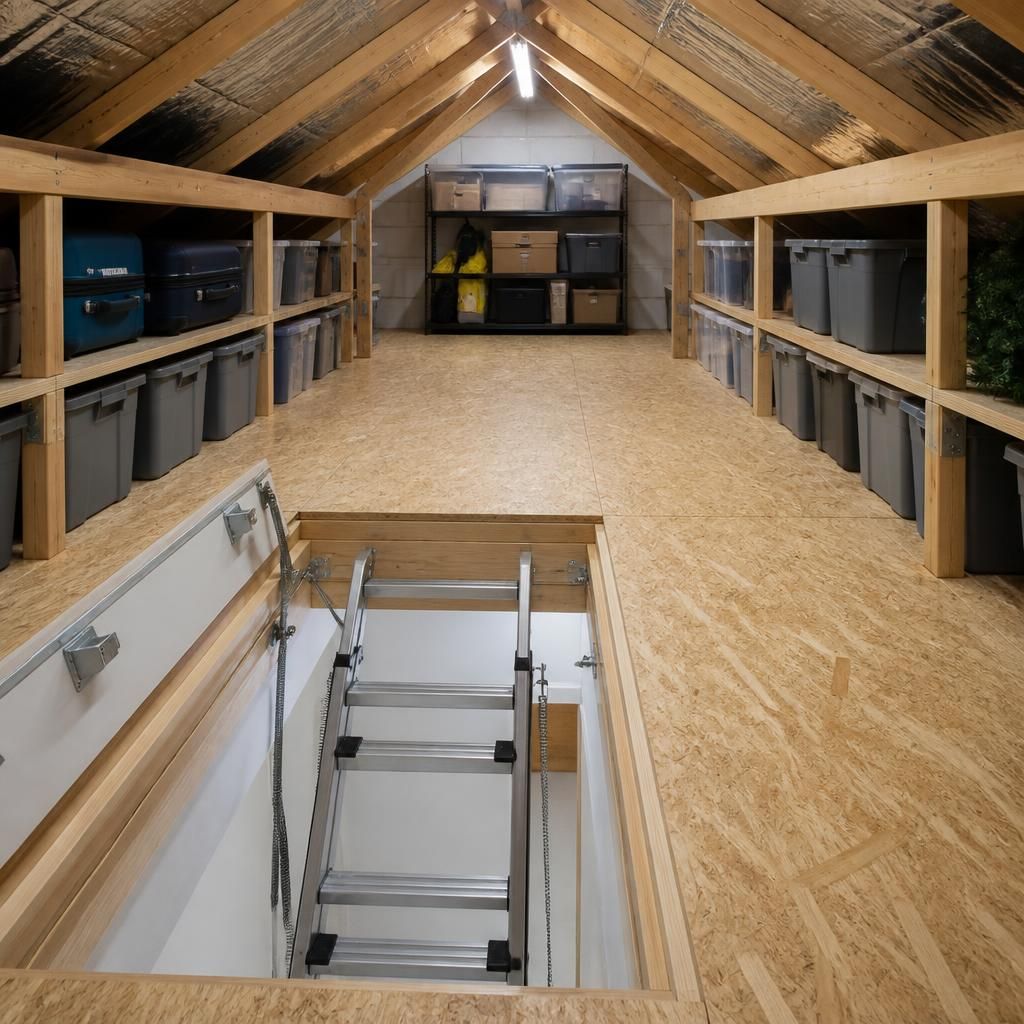
Coordinate the Complete Arrangement
A loft becomes easier to organise when boarding, access and storage features are considered together. We check the relationship between the hatch, ladder, walkways, shelving and lighting before work begins.An insulated drop-down hatch can improve the access arrangement where the existing opening needs upgrading. We set out the recommended coverage and equipment so you can compare a complete loft storage package with individual improvements.
Plan Ahead
A clear inventory prevents forgotten items from accumulating, so plan storage zones now and keep future loft sorting more manageable.
Questions to Ask Before Organising a Loft
What should a loft organisation plan include?
Group belongings by frequency of use, size and fragility. Place regularly needed items near the hatch, heavier containers over suitable supports, and label every box clearly for straightforward retrieval later.
How does loft lighting affect organisation?
Planned lighting helps you identify labelled containers, check shelf contents and move safely between storage areas. We position fittings to illuminate access points and working areas without obstructing stored belongings.
How should loft storage preserve access to household services?
Keep stopcocks, tanks, junction boxes and other service points reachable by leaving clear routes and avoiding fixed storage over inspection areas. We mark restricted zones during planning and explain them.
Which storage containers work best in a loft?
Rigid, stackable containers protect contents and use vertical space efficiently. Choose lidded boxes suited to loft conditions, avoid overfilling, and label sides clearly where roof angles limit visibility from below.
What should you check before fixing storage to a loft floor?
Check the joists, boarding thickness, fixing points and intended loads before attaching storage. We assess the structure and recommend freestanding or secured shelving where floor construction requires additional care first.