
Does Loft Boarding Reduce Insulation Performance?
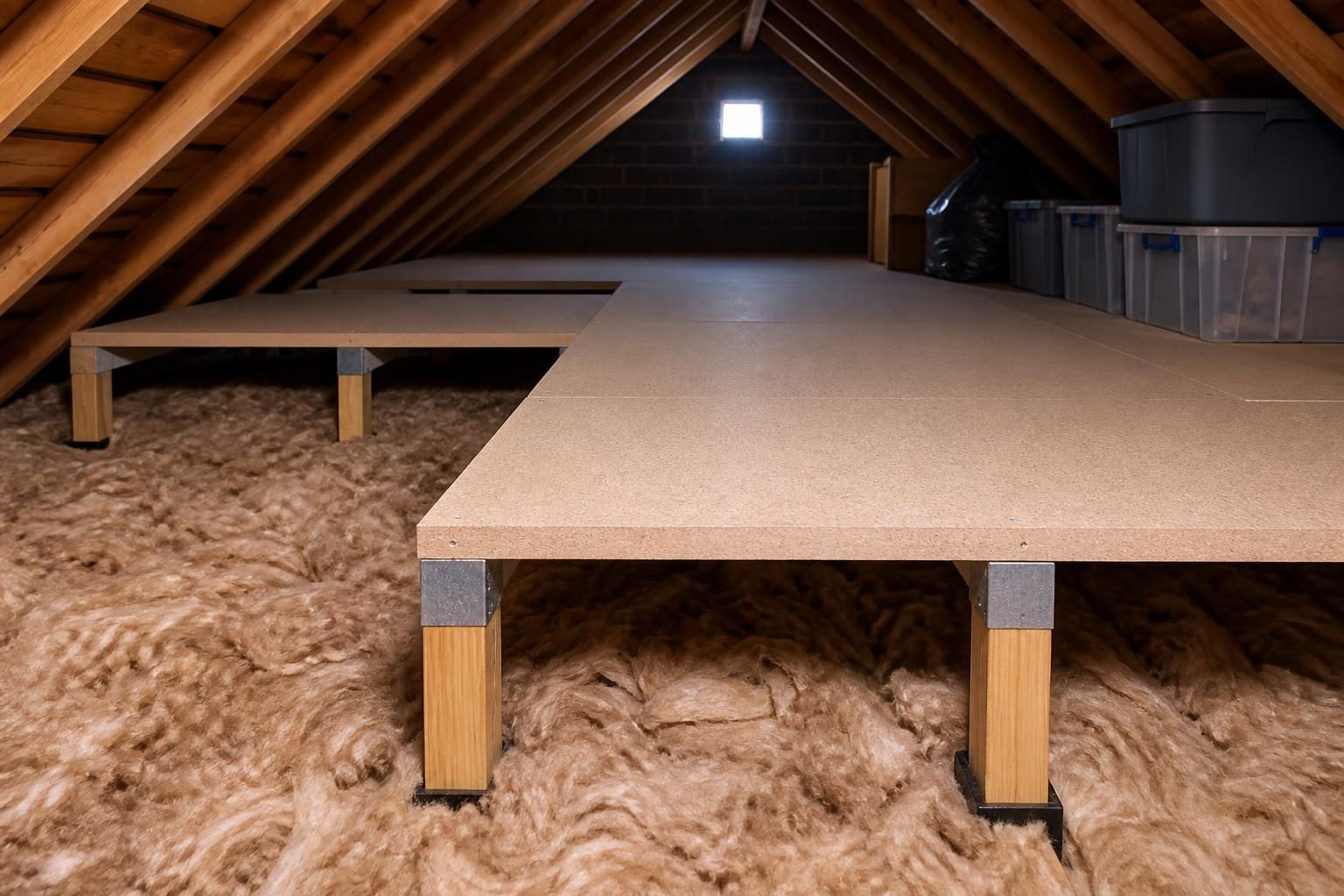
Loft boarding does not have to reduce insulation performance. Raised flooring keeps boards above the insulation, helping retain its depth while creating stable storage space and maintaining suitable airflow through the loft.
Specialist Knowledge of Insulation and Raised Boarding
Our specialist focus is loft storage, so we assess insulation as part of the boarding plan rather than treating it as an obstacle. We consider insulation condition, depth, joist layout and the proposed storage area before specifying the raised floor height.
LoftZone raised flooring creates a separate support structure above the insulation. This allows the insulation layer to remain at its designed depth, while the boarding provides a firm surface for stored household items.
Our installation approach also considers inspection and maintenance access. We can identify areas requiring attention before boarding, helping you understand how the proposed storage floor will interact with existing insulation and the loft structure.
Match the Boarding Approach to Your Loft
Some lofts need only a defined storage area; others need insulation work before boarding. Restricted access, uneven insulation or an irregular structure may also change the recommendation.
Use the boxes below to compare these scenarios and see which checks matter before work begins, helping you assess how boarding can support storage without overlooking insulation.
Key Considerations Before Boarding
Storage above insulation
LoftZone raised flooring supports boards above the insulation, allowing the insulation layer to retain its depth beneath the storage floor.
A defined storage area
We can plan boarding for the area you need, rather than covering the whole loft and changing more of the insulation than necessary.
Insulation checks first
We check insulation condition and coverage before boarding, identifying areas that may need attention before the storage floor is specified.
Insulation top-ups
Where insulation is insufficient or uneven, we can discuss insulation work before boarding so the finished floor does not conceal an unresolved issue.
Airflow around the roof
We consider ventilation routes when planning raised flooring, helping maintain suitable airflow around the insulation and roof structure.
Access without disturbance
Restricted hatch access or an irregular loft layout can affect the boarding plan, so we assess how people and stored items will enter the finished area.
Insulation Depth Is Only Part of the Picture
Insulation performance depends on more than the material beneath the boards. Gaps around the loft hatch, eaves and service openings can create weak points in the thermal layer.
Raised boarding should therefore be planned alongside the access arrangement. An insulated drop-down hatch can help limit heat transfer at the opening, while careful detailing avoids disturbing insulation around the supporting structure.
Storage planning also matters after installation. Shelving and stored items should leave relevant edges and access points usable, so future inspection or insulation work does not require unnecessary disruption to the boarded area.
Features That Help Protect Insulation Performance
The points below explain how specific installation details influence insulation performance, so you can distinguish between features that protect the thermal layer and features that simply improve access or storage.
Measured insulation assessment
We assess the existing insulation before specifying raised flooring, so the boarding arrangement accounts for its depth and condition.
Raised clearance beneath boards
LoftZone raised flooring keeps boards clear of the insulation, preventing the flooring from compressing the thermal layer.
Insulation top-ups before boarding
We can add insulation where required before boarding, helping the loft retain heat without leaving the storage area unfinished.
Defined boarding footprint
Planning the boarded area around your storage needs avoids covering more of the loft than necessary and keeps unboarded sections accessible.
Careful service detailing
We detail supports around pipes, cables and other openings to reduce gaps that could interrupt the insulation layer.
Careful Work Around Your Loft
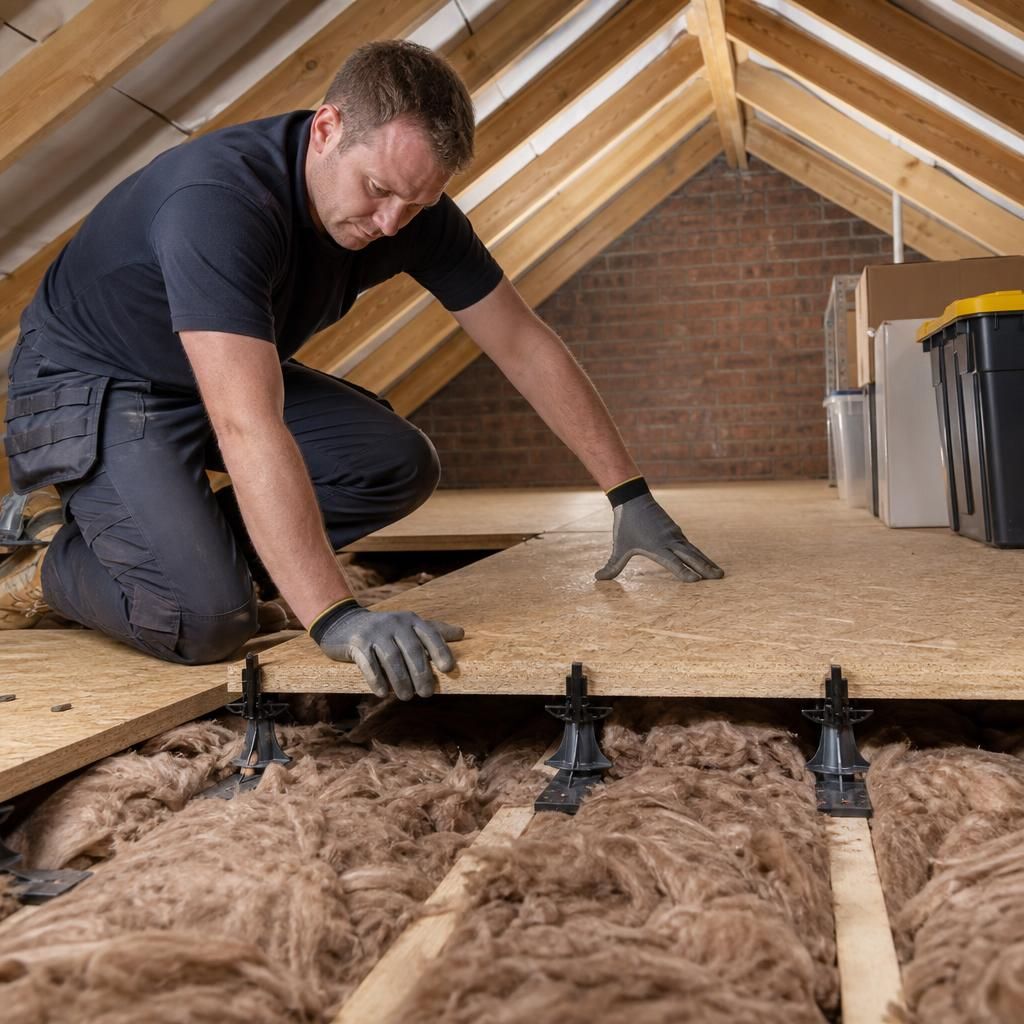
Every loft differs, so we begin by looking at the existing insulation, joists, access and intended storage use. We discuss what the space can reasonably accommodate before work begins, rather than treating every loft as identical.
During installation, we work methodically around the loft, keeping materials and movement controlled. We fit the raised support system carefully, check the finished boards sit correctly, and avoid unnecessary disturbance to the surrounding area. That attention matters when insulation performance is the reason you are considering raised boarding.
Afterwards, we explain what has been installed and how the storage area should be used. We can also discuss access, shelving or lighting where these affect the way you use the space. Clear advice helps you make practical decisions without losing sight of the insulation beneath.
Questions About Loft Boarding and Insulation Performance
Does compressing loft insulation affect its performance?
Performance is generally preserved when raised supports keep boards above insulation, preventing compression. Poorly fitted boards can reduce its effectiveness, so installation must consistently maintain depth, continuity and ventilation throughout.
Can raised loft boarding preserve insulation performance?
Yes. Correctly designed raised boarding can preserve insulation performance by maintaining its intended depth, limiting gaps, and keeping the thermal layer continuous beneath usable storage areas within the loft space.
Can loft boarding create gaps in the insulation layer?
Incorrectly positioned supports, fixings or service routes can interrupt insulation. A measured installation identifies these areas, preserves continuity where possible, and avoids leaving uninsulated strips beneath the finished storage floor.
Does loft boarding affect insulation around the loft hatch?
The hatch forms part of the thermal boundary, so its fit and surrounding insulation matter. An insulated design reduces a cold spot while allowing safe movement into loft storage space.
Can stored items affect insulation performance after loft boarding?
Stored items should remain within the intended storage area and not press against eaves, insulation or ventilation paths. Sensible loading helps prevent disturbance and keeps the loft’s thermal arrangement accessible.
Details That Support Insulation Performance

Storage Above Insulation
LoftZone raised flooring creates a higher boarding level, allowing insulation to retain its depth beneath the storage surface.

Insulation Depth
We assess insulation depth before boarding and raise the floor accordingly. This avoids compressing the material simply to create a level surface.
Clearance At The Edges
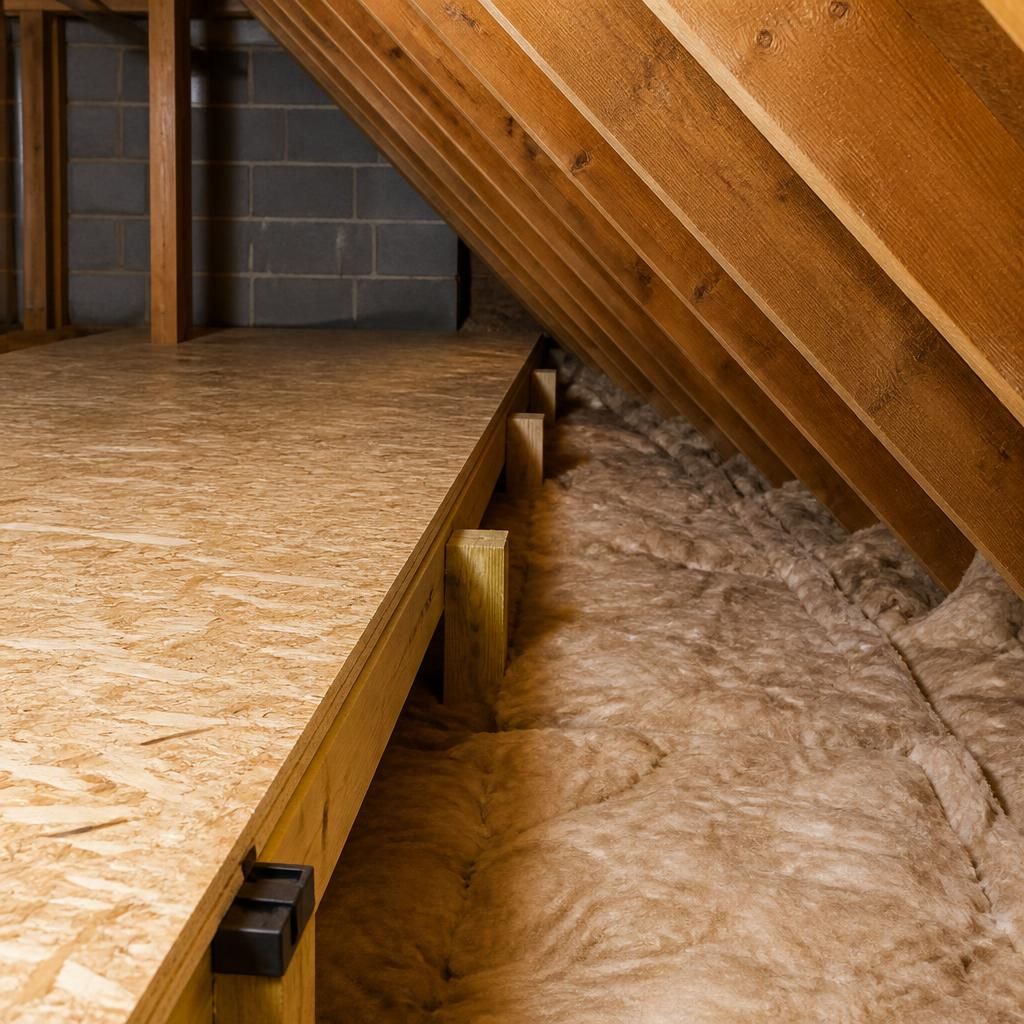
We maintain suitable clearance around the roof edges where required. This helps preserve airflow and keeps insulation from being pushed into unsuitable areas.

Accurate Board Fitting
We measure and cut boards around supports, cables and other fixed features. Accurate fitting reduces unnecessary gaps without disturbing the insulation below.
Planned For The Loft
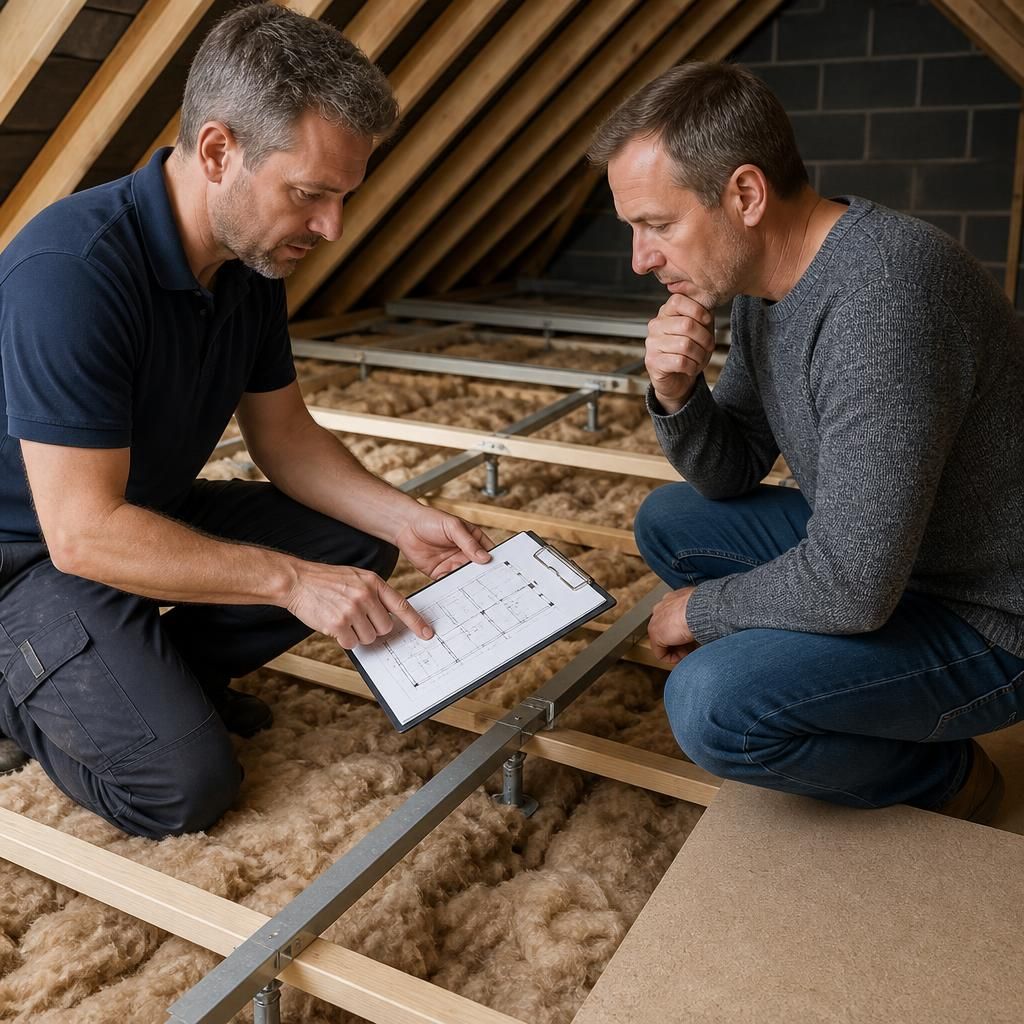
We consider the existing insulation, roof structure and intended storage use together. This helps determine an appropriate raised boarding arrangement before installation begins.
Insulation Protected
Raised loft boarding preserves insulation depth, helping maintain thermal performance while giving you stable, accessible storage above the existing insulation.
Questions About Loft Boarding and Insulation
Can loft boarding affect future insulation upgrades?
Ask whether the design preserves insulation depth, allows ventilation, and avoids compression. Request an explanation of support heights, board positioning, and any limitations identified during the assessment of the loft.
What signs suggest loft boarding has affected insulation performance?
Check for exposed or flattened insulation, gaps at edges, condensation, or unusually cold ceilings. These observations warrant professional assessment, since comfort changes can also reflect draughts or heating issues elsewhere.
Can loft boarding affect insulation at the eaves?
Raised boarding should stop short of eaves where necessary, leaving insulation undisturbed and ventilation paths clear. We assess edge details so stored items do not obstruct airflow or disturb insulation.
Can loft boarding create thermal bridges through the insulation?
Raised supports can create small conductive paths through the insulation, but their effect depends on layout and material. Proper spacing limits disruption, while continuous compression presents greater concern to performance.
What should a loft boarding assessment measure for insulation performance?
An assessment should record insulation depth, continuity, compression, moisture, gaps and clearance around services. It should also establish support heights and board coverage, showing whether the design preserves thermal resistance.