

Partial Loft Boarding
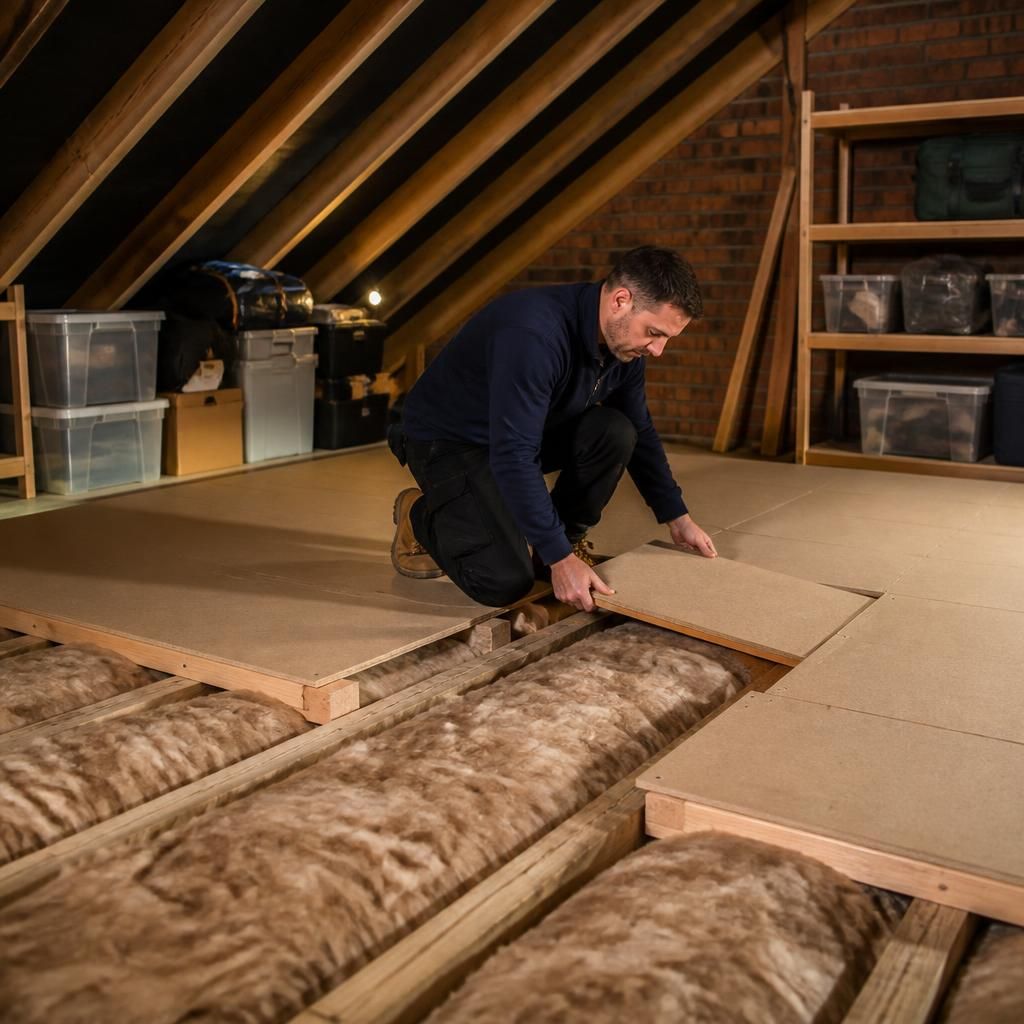
Partial loft boarding creates a defined storage area without flooring the entire loft. We install LoftZone raised flooring where needed, keeping insulation beneath the deck and leaving other areas accessible for services and inspection.
Specialist judgement for partial loft boarding
We begin by assessing the loft structure, insulation depth, access route and the area you want to use. This determines where partial boarding is appropriate.
Our installers set out raised flooring around fixed features and service points, keeping the storage area practical without treating the whole loft as usable floor space.
Careful setting-out matters when installing loft flooring in an existing home. We check levels, fastening points and the finished access route before completing the partially boarded loft.
Match the boarding area to your storage needs
The choices below reflect common storage priorities, from keeping everyday items off the landing to creating a more orderly place for seasonal belongings. Use them to consider how much boarded space makes sense before discussing the layout with us.
Partial boarding suits homeowners who need storage for selected items and prefer to keep the project focused on a specific part of the loft.
Choose the partial boarding arrangement that fits your storage needs
Seasonal belongings
A defined raised deck gives suitcases, decorations and occasional items a consistent place without boarding unused loft areas.
Household overflow
Board the area nearest the hatch for household boxes, keeping frequently accessed belongings within a practical storage zone.
A measured storage area
A measured section can suit a compact loft or modest storage list, keeping the project focused on space you expect to use.
Shelving within the boarded area
Shelving can divide the boarded section for smaller items, helping you use the available storage area more methodically.
A smaller boarded area still needs careful load planning
A partially boarded loft can become difficult to use if stored items spread beyond the defined deck. Grouping seasonal belongings, luggage and less frequently needed boxes helps keep the remaining loft clear.
The unboarded areas still need to remain accessible for inspection and household services. A clear boundary between storage and service space makes it easier to identify where items can be placed without treating the whole loft as flooring.
Planning the storage area around the entry point can also affect how practical it feels. Items used more often should sit within easy reach, while shelving or labelled containers can keep the boarded section orderly as storage needs change.
Features to consider for partial loft boarding
The features below set out practical details that influence the design of a partially boarded loft. Considering them early helps you compare layouts, understand what the work includes and discuss suitable choices during a quotation.
Defined storage footprint
A measured boarded area creates usable storage without covering the entire loft. We plan the footprint around the belongings you need to store.
Insulation protection
Raised flooring keeps the storage deck above existing insulation, helping avoid unnecessary compression and preserving the loft’s insulation depth.
Clear service areas
Leaving selected sections unboarded maintains access around cables, pipework and other household services that may require inspection.
Planned loading
The type and arrangement of stored items influence the boarded area. We consider intended use when discussing the layout and storage position.
Safe movement around the deck
A defined route between the loft entrance and storage area helps you reach stored items without stepping across insulation or unsuitable surfaces.
Adaptable storage layout
Partial boarding leaves scope for shelving, containers or other Loft Storage & Accessories within the decked area, keeping belongings grouped and easier to manage.
A considered approach to partial loft boarding
Every loft has its own shape, access point and collection of stored belongings. We look at how the space is used before suggesting which area should receive raised flooring. This keeps the discussion practical and connected to your home.
We explain what partial boarding will and will not provide, including the distinction between a storage deck and the unboarded areas around it. If insulation depth, roof timbers or services affect the layout, we include those details in the recommendation rather than glossing over them.
Our installers work carefully around the existing loft, keeping materials and tools organised as the boarding takes shape. We leave you with a defined storage area that is easier to understand, use and maintain, without presenting a partially boarded loft as anything more than storage.
Partial Loft Boarding FAQs
How much loft space should I have partially boarded?
Partial boarding creates a defined storage deck where needed, leaving the remaining loft unboarded. We assess access, insulation depth, roof structure and household storage requirements before recommending a suitable layout.
Is partial loft boarding suitable for deep insulation?
We can install LoftZone raised flooring above deep insulation, creating storage without compressing the quilt. We check available height, ventilation and structure before confirming whether partial boarding suits your loft.
Can I choose which part of my loft is boarded?
Yes, we can plan the deck around access, roof timbers, services and storage priorities, so the boarded area follows the loft’s usable shape instead of covering every available section unnecessarily.
What can I store on a partially boarded loft?
Store seasonal decorations, suitcases, boxed belongings and other household items on the raised deck. We assess loading considerations during planning; the boarded area remains storage, not a habitable room space.
Can a partially boarded loft be extended later?
A partially boarded loft can be extended later if structure, insulation depth, access and services allow. We reassess the layout before adding raised flooring to maintain safe storage use.
Features of a partially boarded loft

Storage above insulation
LoftZone raised flooring creates a usable deck above insulation without extending boarding across the whole loft. The layout can match the storage area you need.

Space for inspection and services
Leaving selected areas unboarded helps retain access around roof timbers, cables and household services. The deck should not block areas that need future inspection.

A defined storage footprint
Partial boarding separates stored belongings from the remaining loft space. This makes the intended storage area easier to identify when boxes and seasonal items are added.

Practical access from the hatch
Positioning the deck in relation to the loft hatch affects how easily you can carry and place stored items. We consider the entry route when planning the boarded section.

Organisation within the boarded area
Shelving can use vertical space within the deck and keep smaller belongings grouped. This reduces loose items spreading into the unboarded parts of the loft.
Focused Storage
Partial loft boarding creates practical storage above insulation, giving you floor space without boarding areas that need to remain accessible.
Questions to Ask Before Choosing Partial Loft Boarding
Does partial loft boarding affect loft ventilation?
Ask how the proposed deck accommodates insulation depth, roof timbers, access points and services. A clear plan should identify boarded boundaries, loading considerations and areas intentionally left unboarded for inspection.
Does partial loft boarding need a supporting frame?
Raised flooring needs a supporting system suited to the loft structure. We assess joists, insulation depth and intended storage, then specify LoftZone components that keep the deck elevated above insulation.
How are the edges finished on partial loft boarding?
We define boarded edges with secure framing and suitable edging, keeping the deck stable and reducing exposed board corners. This creates a clear boundary between storage and remaining loft areas.
What should a partial loft boarding quote include?
A clear quote should identify the proposed boarded area, LoftZone components, board type, access requirements, preparation, finishing details and any exclusions, so you can compare scope rather than headline pricing.
Can partial loft boarding affect a new-build warranty?
Check the builder’s warranty terms before installing loft flooring. We can document the proposed raised system and installation, helping you discuss insulation, loading and alterations directly with the warranty provider.