
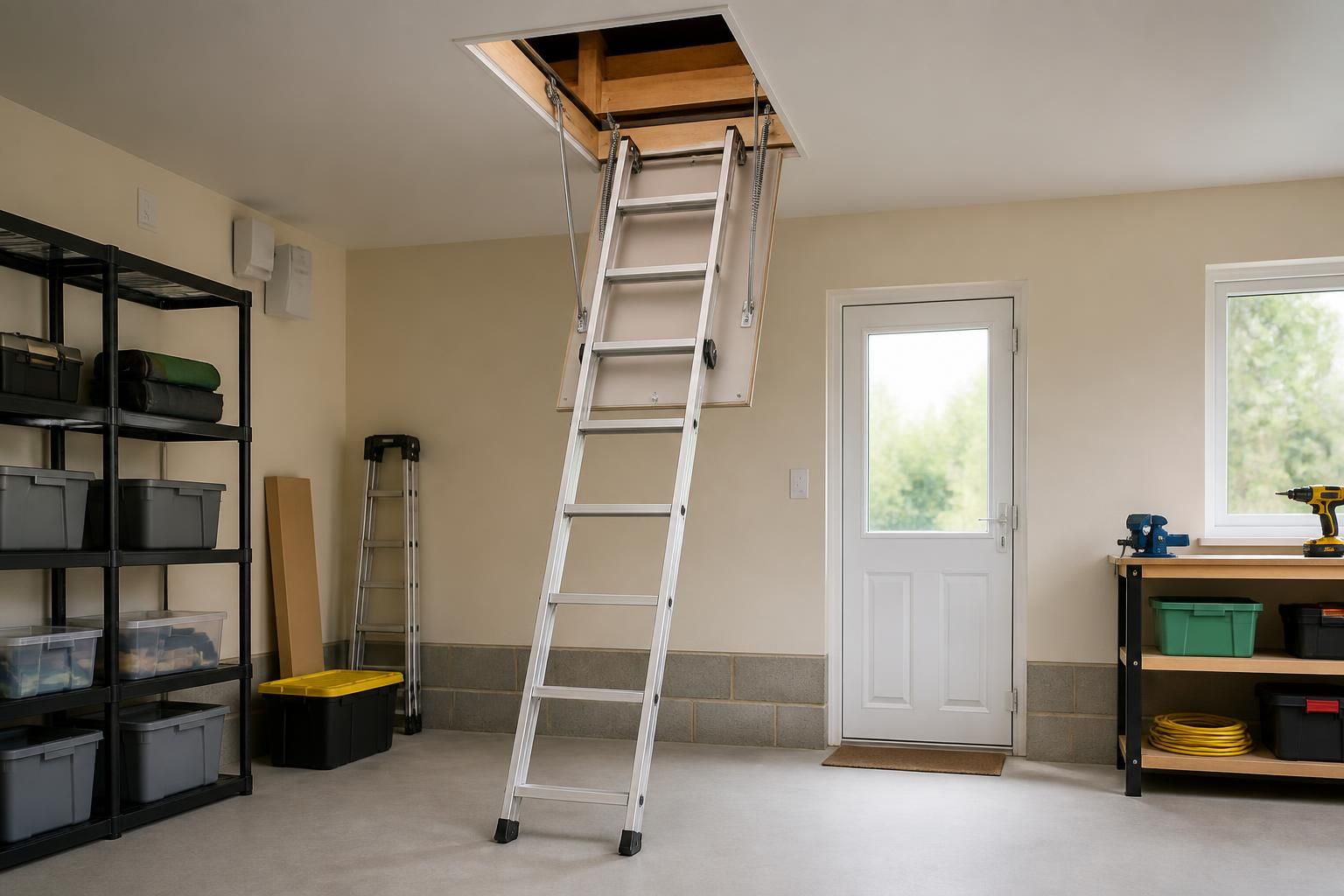
Types of Loft Ladder
Loft ladders differ in how they fold, slide, extend and support your weight. This guide compares common types, helping you consider hatch size, landing space, ceiling height and how often you use loft storage.
Specialist Guidance on Loft Ladder Selection
Loftopia’s specialist assessment considers ladder geometry, tread depth, handrail position, hinge movement and the final ladder angle. These details affect climbing comfort and how the ladder stores above the opening.
We check the surrounding joists, hatch frame and insulation depth before specifying an aluminium, timber, concertina or sliding model. This ensures the fittings suit the existing access arrangement.
We align the ladder, hatch and loft floor during installation, keeping the route clear of stored items. We explain each recommendation in practical terms, helping you compare access arrangements for storage use.
Choose a Loft Ladder by Access Need
The right loft ladder depends on climbing frequency, hatch opening and available landing space. Compare folding, sliding, concertina and fixed designs against household access needs.
Choose compact concertina models for restricted space, aluminium folding ladders for regular storage access, or timber and fixed loft stairs where the layout permits. We can also consider handrails, insulation and hatch design.
Match the Loft Ladder to Your Access Needs
Regular storage access
Aluminium folding loft ladders suit frequent trips into boarded storage areas where the landing allows the sections to fold clear of the hatch.
Restricted landing space
Concertina loft ladders gather above the opening, making them suitable where a conventional folding ladder would obstruct the room below.
Straightforward hatch access
Sliding loft ladders extend from the hatch and store in line with the opening, provided the ceiling and surrounding area allow that movement.
Timber ladder preference
Timber loft ladders provide a different finish from aluminium models and can suit storage access where the hatch frame and landing permit folding sections.
From awkward hatch access to a practical loft ladder
A small hatch and a moveable ladder can make loft storage awkward to reach. Carrying and positioning it each time can make occasional access less convenient, while the opening remains visually unfinished.
After an assessment, we install a ladder type that matches the access arrangement. An aluminium sliding loft ladder provides a defined route from the landing, while a folding loft ladder stores above the opening when space is limited. An insulated drop-down hatch can complete the arrangement and help retain heat.
The finished access is easier to understand and use: the ladder folds or slides into position, then stores neatly when the loft is closed. You gain a practical route into storage without changing the loft into a room. We explain why one type suits the opening and ceiling height before you choose.
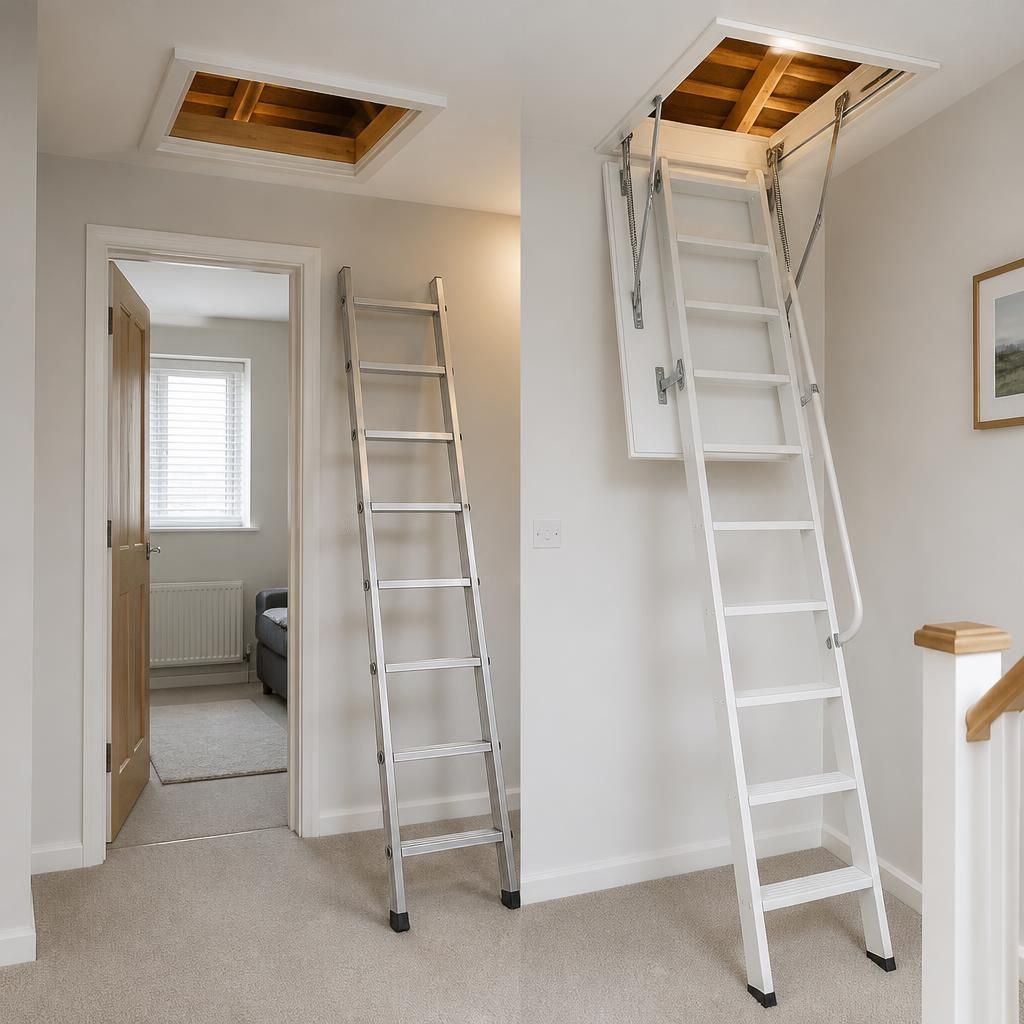
Plan Ahead
Reviewing loft ladder types now can reveal access constraints before storage plans progress, helping you avoid choosing an unsuitable model.
Compare Loft Ladder Designs
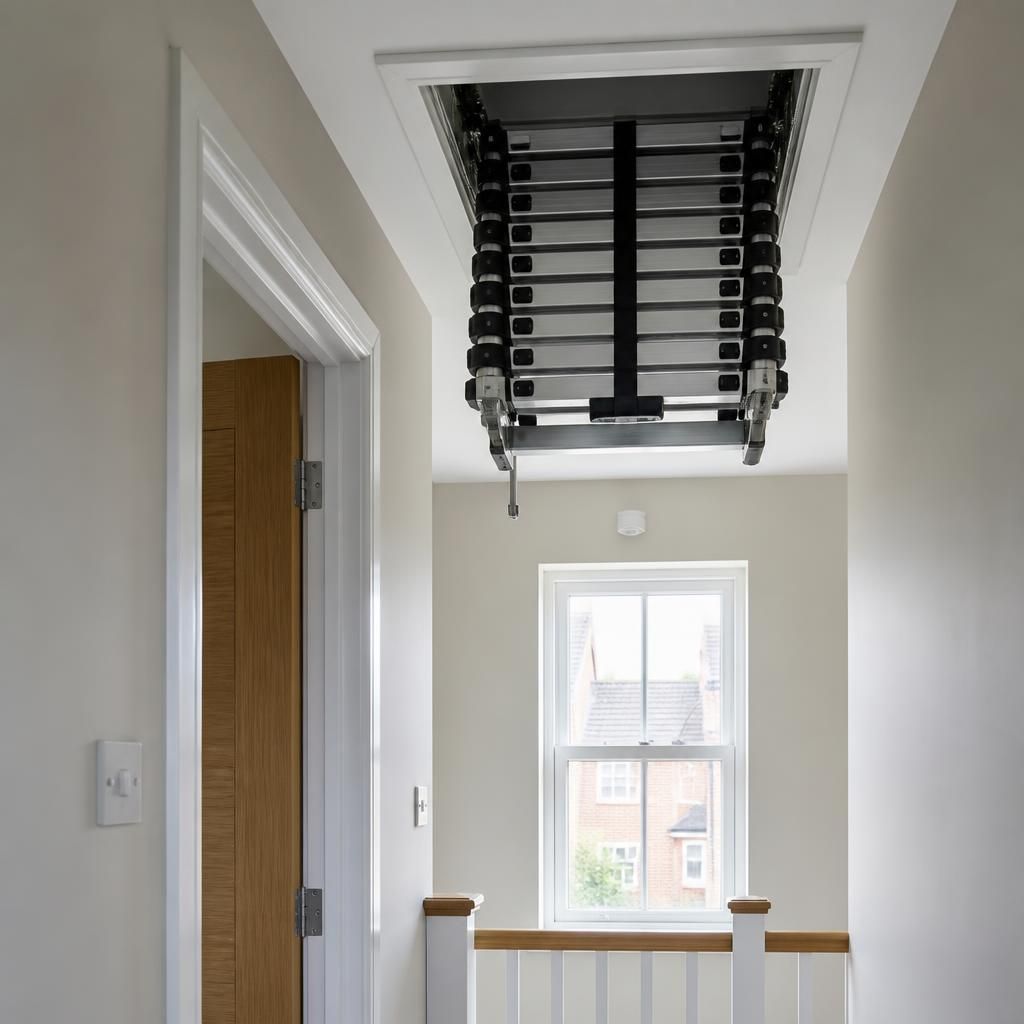
Telescopic ladders for restricted landing space
A telescopic loft ladder retracts into shorter sections beneath the hatch, reducing the clearance needed on the landing. The opening, ceiling height and ladder angle still require checking before selection. This type can suit storage areas where a longer ladder would obstruct doors, furniture or circulation routes. We assess how the sections lock and whether the hatch position allows comfortable use.
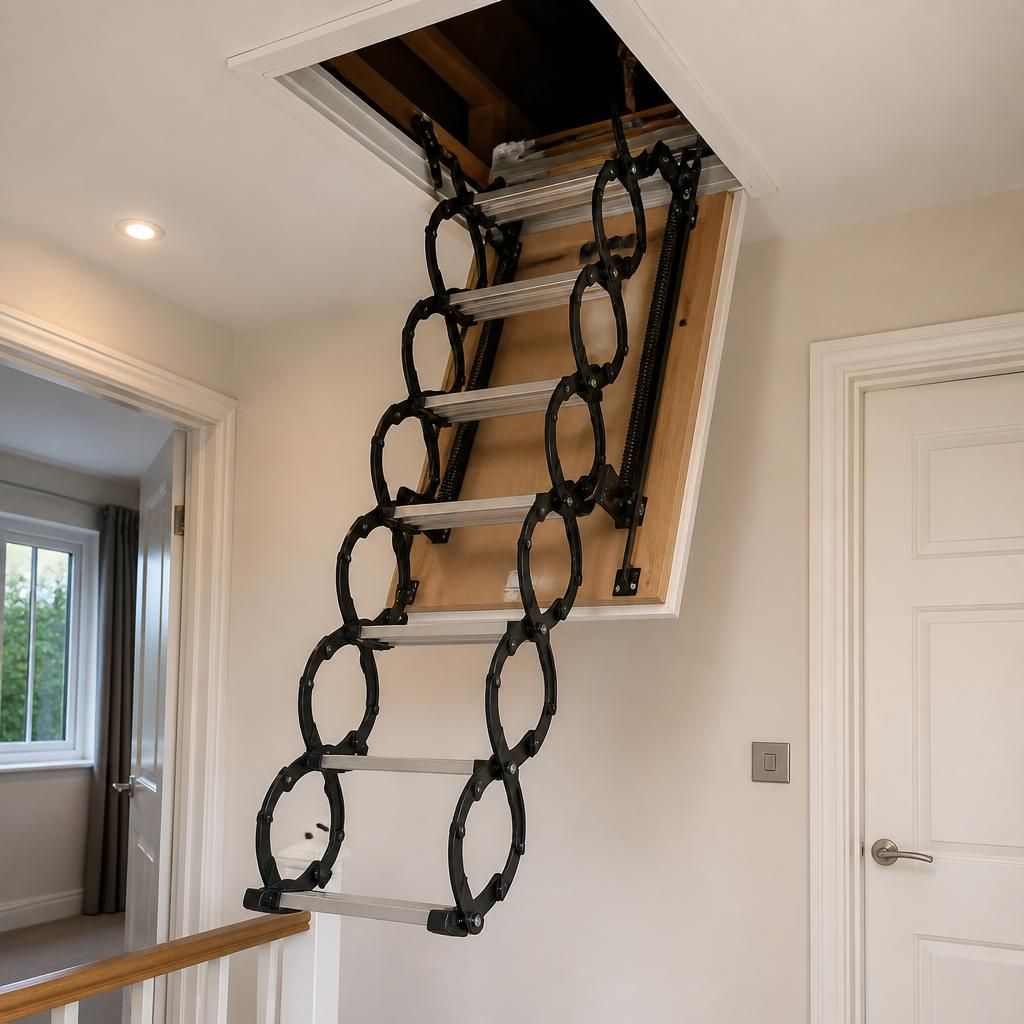
Concertina ladders for compact access arrangements
A concertina loft ladder folds into a compact stack above the opening, making it suitable where the hatch has limited surrounding space. Its joints and treads need regular visual checks because the design relies on several moving sections. We consider the available landing area, opening dimensions and handrail position before recommending this arrangement.
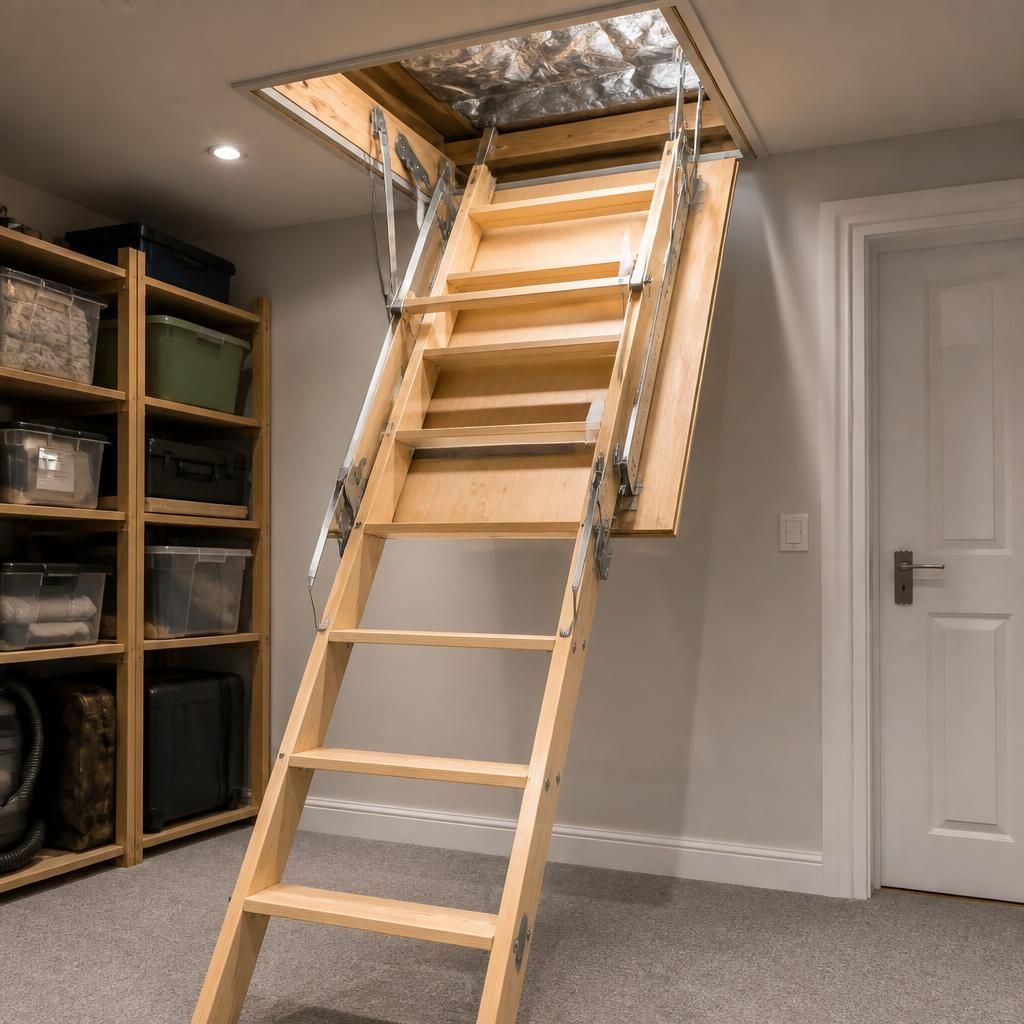
Timber loft ladders with a substantial feel
Timber loft ladders use folding sections to create a solid-feeling route into storage. They need enough room above and below the hatch for the sections to move without striking stored items or fixtures. We check the opening, ceiling height and landing clearance so the ladder can be opened, climbed and folded away as intended.
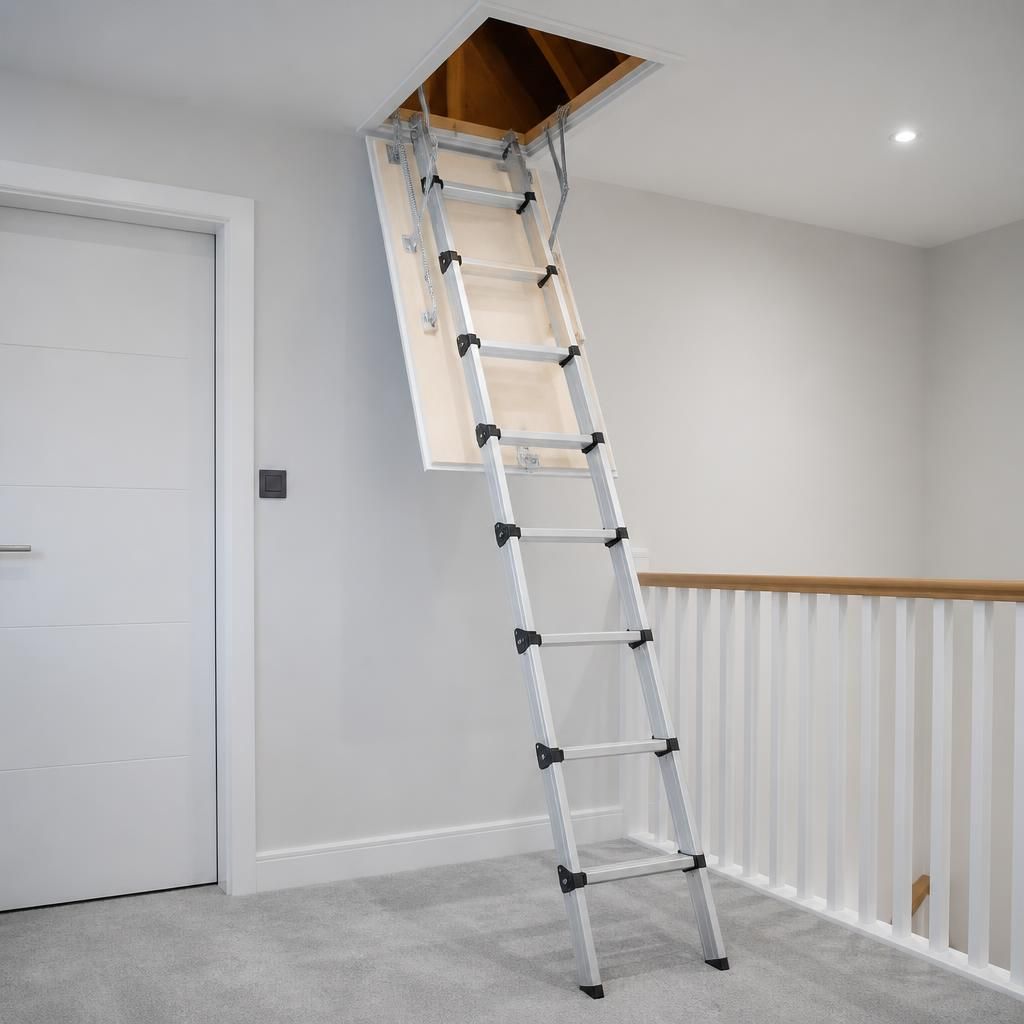
Aluminium folding ladders for regular storage access
An aluminium folding loft ladder combines folding sections with a lighter structure that can be positioned without the bulk of timber. The ladder still needs a suitable hatch, clear landing and secure contact with the floor. We match the design to the access route, then explain how it opens and stores above the loft opening.
Questions About Loft Ladder Types
What is a concertina loft ladder?
A folding or sliding ladder suits available landing space; a concertina model helps where clearances are restricted. We assess opening dimensions, ceiling height and access frequency before recommending one carefully.
What is the difference between folding and sliding loft ladders?
Folding ladders use hinged sections that fold into the loft, while sliding ladders move along rails or telescope. The better choice depends on storage clearance, hatch position and ceiling height.
Which loft ladder suits a high ceiling?
For taller spaces, an extra-long or telescopic loft ladder may provide the required reach. We check its angle, landing clearance and hatch position before recommending suitable loft access equipment where appropriate.
What is a fixed loft ladder?
A fixed loft ladder remains in position, offering a permanent access route. It needs adequate landing space and secure supporting structure, so we assess the opening and climb angle carefully.
What is an insulated loft ladder?
An insulated loft ladder combines access with an insulated hatch, helping retain heat between the home and loft. We check opening dimensions, clearance and ladder operation before making a recommendation.
Specialist Assessment of Loft Ladder Types
Loftopia focuses on loft access, so we assess ladder types as part of the opening and surrounding structure rather than treating them as standalone products. We check fixing points, dimensions and the route below before recommending a model.
Our installers distinguish a light, occasional-use folding ladder from a fixed loft ladder or folding loft stairs intended for more frequent movement. They also consider tread spacing, handrail position and how the ladder meets the floor, helping reduce awkward transitions.
This measured approach explains why a three-section aluminium loft ladder, timber folding ladder, concertina ladder or extra-long model may suit different homes. We set out the relevant trade-offs clearly before installation.
What the Right Loft Ladder Type Adds to Loft Access
Comparing ladder types helps you identify the access arrangement that suits the opening, ceiling height and available clearance. The right choice can provide steadier footing, simpler positioning, easier carrying, and storage access that fits how you use the loft.
A ladder that fits the available clearance
We compare folding, sliding and concertina designs against the landing space, so the ladder can open without obstructing the route below.
A suitable reach for the ceiling height
We check the distance between the hatch and loft floor before recommending a standard or extra-long ladder, helping you avoid an awkward final step.
Access matched to how you use storage
We explain the differences between aluminium sliding loft ladders, timber loft ladders and folding loft stairs, so you can compare occasional and regular access.
A neater closed position
We select a ladder that stores appropriately above the hatch when closed, keeping the access area more orderly between visits to the loft.
Clearer choices before installation
We set out the relevant dimensions, fixing points and clearance requirements for each ladder type, helping you understand why one model suits the opening.
Questions to Ask Before Choosing a Loft Ladder Type
How much weight should a loft ladder support?
Electric or automatic ladders add controls and moving parts, so they need suitable power, clearance and maintenance. For most storage access, a manually operated ladder is simpler for everyday use.
What hatch size does a loft ladder require?
Requirements vary by ladder design, so measure the structural opening, ceiling height and landing clearance. We confirm compatibility before installation; enlarging an opening may require additional structural work and making-good.
Does a loft ladder need a handrail?
A handrail can provide extra support while you climb, particularly where the ladder meets the landing. We assess its position, clearance and fixing requirements before recommending a suitable access arrangement.
Does a loft ladder need professional installation?
Correct fitting secures the ladder to suitable points, maintains alignment and protects the hatch opening. We check surrounding structure, insulation clearance and secure floor contact, then make adjustments when required.
What affects the price of a loft ladder?
Price depends on the ladder material, mechanism, length, hatch specification and fitting requirements. Structural alterations, insulation clearance and access constraints can add work, so we itemise installation details before quoting.