

Loft Board Types
Loft boards differ in strength, moisture resistance, weight and handling. Chipboard panels suit many storage areas, while OSB and plywood offer alternative properties. We can help you compare board types with insulation depth, supports and intended loading in mind.
Specialist Guidance on Loft Board Selection
Board selection forms part of a wider storage-floor assessment. We consider panel dimensions, joint positions, hatch openings, roof timbers and service routes before recommending a board layout.
Our loft storage work distinguishes boards intended for supported flooring from general timber sheets. We explain how each option will be cut, joined and fixed within the available space.
Loftopia focuses specifically on improving lofts for storage. That specialist experience helps us relate board selection to the finished floor, access arrangements and the way you expect to use the boarded attic.
Choose Loft Boards for Your Storage Needs
Different loft board types suit different storage demands, access routes and support arrangements. The right choice depends on how often you use the space, what you store and how boards will be carried through the hatch.
Compare chipboard loft panels, OSB loft boards and plywood below. We can explain where moisture-resistant loft boards or timber sheets fit the storage plan.
Board Types for Different Storage Requirements
Chipboard loft panels
Chipboard loft panels suit many storage floors, with panel sizes that can simplify carrying, positioning and joint planning through the loft hatch.
OSB loft boards
OSB provides an alternative to chipboard where the layout, cutting requirements and support arrangement make this sheet material suitable.
Plywood loft boards
Plywood can suit storage layouts requiring careful cutting around roof timbers, hatch openings or service routes.
Moisture-resistant boards
Moisture-resistant loft boards can be considered where conditions require additional moisture tolerance, but they still need suitable support and protection.
Boarding Should Not Hide Essential Loft Checks
Moisture resistance is often misunderstood when comparing loft boards. P5 chipboard and other moisture-resistant loft boards tolerate higher humidity than standard chipboard, but they will not correct roof leaks or condensation. Damp conditions should be investigated before boards are selected.
The board surface can affect everyday storage. OSB loft boards have a visible strand pattern, while plywood loft boards show layered timber edges. Chipboard loft panels provide a more uniform finish, but exposed edges still need careful handling during installation.
Price can also disguise practical differences between cheap loft boards and boards intended for repeated storage use. Board weight, stiffness and edge strength affect how panels handle during fitting and how the boarded attic feels when accessed. Comparing these characteristics helps match boards for loft space to the way you use it.
How Different Loft Boards Support Storage
The list below separates board features that influence storage planning, including panel format, edge design and fitting requirements. Each point explains what the specification means when you select boards for a particular loft layout and pattern of use.
Chipboard loft boards
Chipboard panels provide a consistent surface for boxes and containers. Their familiar format suits many storage layouts when supports and insulation depth are assessed first.
OSB loft boards
OSB panels use oriented wood strands to form a rigid board. The textured surface can provide a practical finish where appearance is less important than storage use.
Plywood loft boards
Plywood panels have layered timber construction and can offer a clean, stable surface. They may suit layouts requiring careful cutting around loft features.
Panel dimensions
Board length and width affect handling, cutting and the number of joints across the loft. Smaller panels can help when access is restricted or the layout is irregular.
Board thickness
Thickness affects how a panel performs across its supports and how much height the boarded area uses. We assess it alongside support spacing and intended storage loads.
Joint design
Some loft boards have profiled edges that help panels meet neatly. Correct joint support reduces movement and leaves a more consistent walking surface.
Cutting around access points
Boards often require careful cuts around hatches, ladders, cables and roof supports. Accurate fitting preserves access and avoids unnecessary gaps across the storage area.
Choosing loft boards with your storage needs in mind
When we assess a loft, we look beyond the board label. We check how panels reach the hatch, where joints fall and how you plan to use the boarded attic. This helps match the specification to the space.
At Loftopia, we explain differences in plain terms and relate board choice to the existing structure. We discuss access, storage layout and areas that should remain clear, so you can compare options without relying on a generic recommendation.
Our team works carefully around the loft during installation and leaves the finished storage area ready for shelving or boxes. We explain the reasoning behind the recommendation, because board types should reflect the loft, the access route and the way you store belongings.

Questions About Loft Board Types
What type of board is best for loft storage?
Board choice depends on the supporting framework, access route and intended storage load. We assess these conditions before recommending panels, rather than automatically selecting boards from thickness or price alone.
How does OSB compare with chipboard for loft boarding?
OSB uses compressed wood strands, giving panels a textured surface and consistent structure. Chipboard uses wood particles, usually offering smoother faces. Both require suitable supports, secure fixing and dry conditions.
What are P5 loft boards?
P5 loft boards are moisture-resistant chipboard panels designed for humid conditions, but not leaks or condensation. We still check the loft, supports and ventilation before specifying them for storage use.
Are MDF loft boards suitable for storage?
MDF is generally unsuitable for loft boarding because it is heavy and can swell when exposed to moisture. It may suit lightweight, dry shelving, but not primary storage flooring alone.
Are plywood loft boards suitable for loft storage?
Plywood can suit loft storage when specified for the supports, span and loading. Its layered construction gives stable panels, but we still secure joints and protect edges carefully during installation.
Compare Loft Boards by Their Practical Properties

Chipboard for practical storage areas
Chipboard loft boards provide a consistent surface for boxes and everyday storage. Panel size and joint positions still need checking around joists, supports and hatch openings.
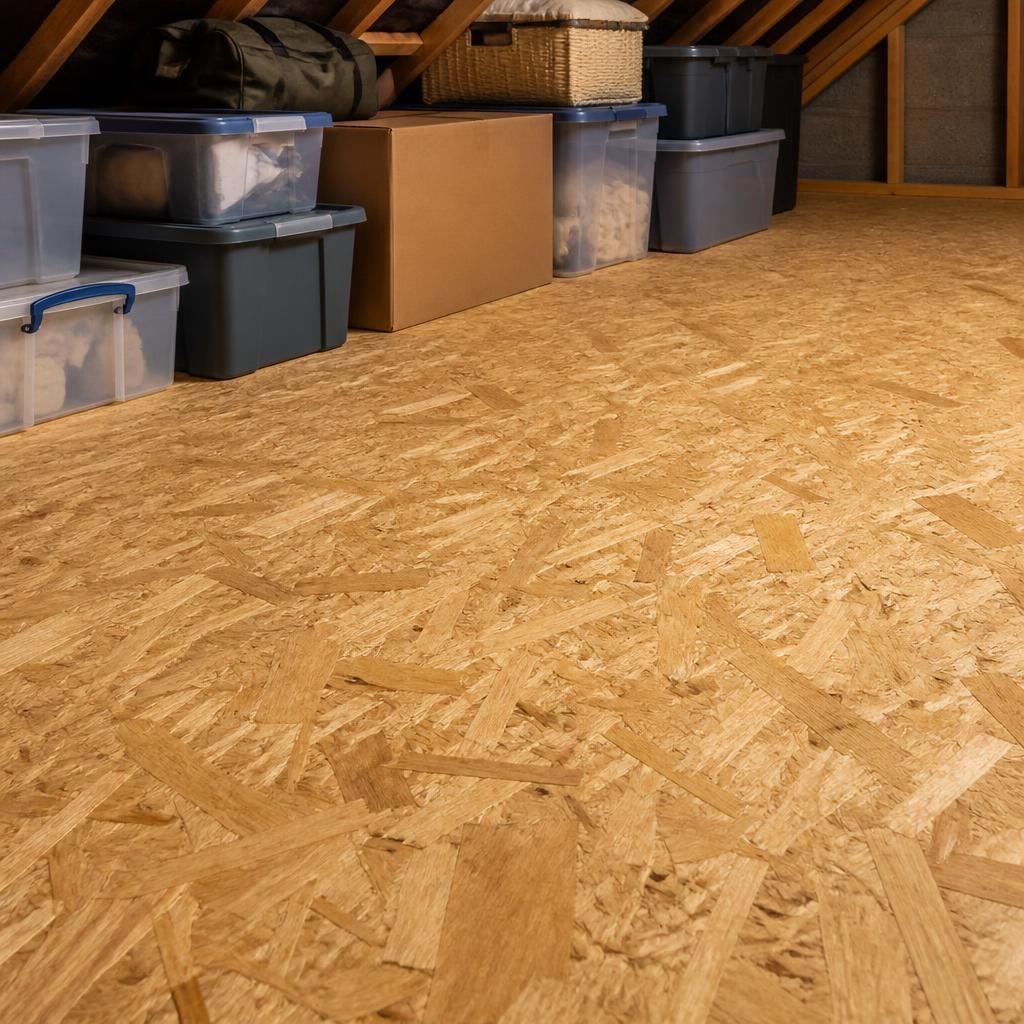
OSB with a textured panel surface
OSB loft boards have a visible strand pattern and can suit layouts where panel stiffness and handling need careful comparison. We assess the finished surface against the intended storage use.

Plywood for layered panel construction
Plywood loft boards show layered timber edges and offer a different feel from chipboard or OSB. We consider panel thickness, access and cutting requirements before specifying them.

Moisture-resistant boards for considered conditions
P5 chipboard loft boards tolerate higher humidity than standard chipboard. They do not resolve roof leaks or condensation, so we investigate damp conditions before fitting boards.

Board dimensions matched to the loft layout
Board dimensions affect how panels move through the hatch and where joints meet. We plan the layout around supports, insulation depth, access routes and stored items.
Boards Matched Properly
Choose loft boards matched to insulation depth, joist spacing and access, creating practical storage above insulation in your loft space.
Questions to Ask About Loft Board Types
Do loft boards need to be moisture resistant?
Ask how each board handles expected loads, moisture, cutting, joint support and movement. Confirm the specification suits storage use, loft conditions and installation access, rather than choosing solely by price.
Do loft boards need raised supports above insulation?
Raised supports preserve insulation depth beneath the boarding, helping prevent compression and maintain ventilation. We assess joists, insulation levels and loading before specifying LoftZone raised flooring for practical storage space.
What load rating should loft boards have?
Check the boards, supports and joists as one system: published ratings may assume particular spans and loading. We assess point loads from boxes, shelving and stored equipment before specifying materials.
Do tongue and groove loft boards reduce movement between panels?
Tongue-and-groove edges interlock panels, helping keep joints aligned and reducing gaps. They still need suitable support, careful fitting and allowance for movement around openings and perimeter during installation and use.
Which loft boards are easiest to carry through a loft hatch?
Smaller loft panels are generally easier to pass through a hatch and position, but create more joints. We assess hatch dimensions, access route and support before selecting suitable panel sizes.