

Loft Insulation Installation
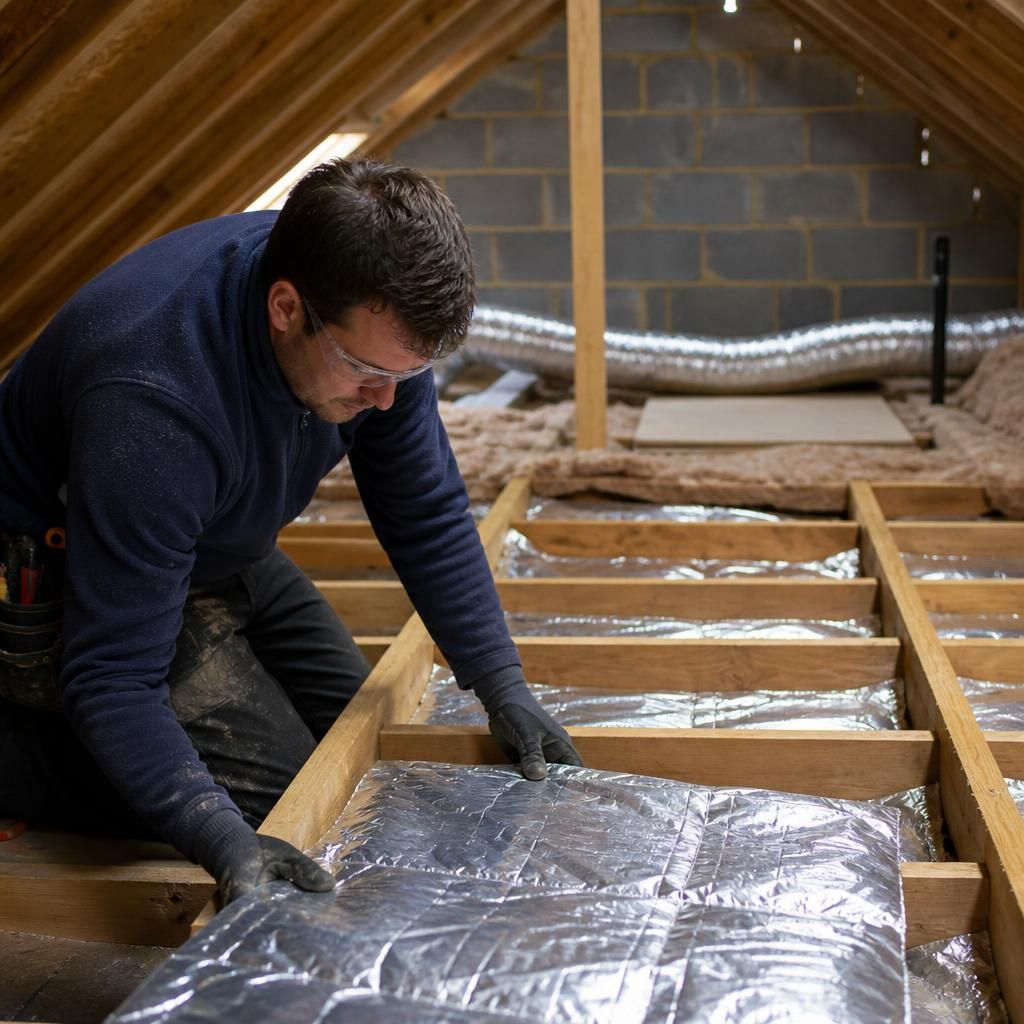
We assess the loft space before fitting suitable insulation, considering joists, eaves and planned storage. Foil insulation installation can complement existing materials, while careful fitting helps retain heat without obstructing ventilation or access.
Insulation that supports a more usable loft
Effective loft insulation helps retain heat within your home, supporting more consistent indoor comfort through colder periods. It also improves the energy efficiency of an otherwise underused part of the building.
Adding loft insulation can bring older or thinner insulation up to a more useful level, while careful fitting helps avoid gaps and unnecessary compression. We work around roof details and eaves so insulation supports the loft without restricting essential ventilation.
Insulation planning also affects how you use the loft afterwards. We can coordinate insulation with raised flooring, so storage remains above the insulation instead of flattening it, while suitable access improvements make the space easier to use.
Why choose Loftopia for loft insulation?
Loft insulation installation depends on the existing build-up, intended use and condition of the loft. These points explain practical choices, helping you compare materials, fitting methods and upgrades without treating every loft identically.
They cover foil insulation, added insulation and preparation for storage. Each box focuses on one consideration, showing where installation details affect the work planned for your home.
How we approach loft insulation installation
Existing insulation assessed
We check existing insulation before adding or replacing material, limiting unnecessary disturbance and identifying areas that need attention.
Deep insulation accommodated
We plan raised flooring above deep insulation, helping create storage without relying on compressed insulation beneath the boards.
Ventilation paths considered
We keep required airflow routes clear during fitting, particularly around eaves where blocked ventilation can affect the roof space.
Details fitted around
We work around cables, pipes and roof features, keeping insulation continuous without concealing important access points.
Insulation suits the loft
We specify fitting work around the loft’s construction and intended use, rather than applying the same insulation approach to every home.
A straightforward approach to loft insulation
Every loft has its own history. Some contain older rolls, stored belongings or awkward corners that need attention before new insulation can be fitted. We treat those details as part of the work, not interruptions.
Before installation, we explain what the work involves and where insulation will sit. We protect nearby areas, cut materials carefully and keep coverage even. If existing insulation needs clearing, topping up or leaving in place, we explain why in plain language.
That measured approach helps you understand what has been fitted and how it supports the home. We leave the loft orderly, with clear information about related boarding or access work. The aim is practical insulation that does its job without making later loft use unnecessarily difficult.
Retain More Heat
Insulation fitted with storage planning helps retain heat while keeping belongings above insulation and access practical for household storage needs.
Specialist knowledge for loft insulation

Assessment before insulation fitting
We inspect insulation depth, joist layout and roof construction before recommending work. This helps us distinguish areas needing replacement from material that can remain in place.

Insulation fitted to the loft structure
We fit insulation to suit the available space between and around the joists. Careful measurements help avoid unnecessary compression and leave the loft structure clearly understood.

Foil insulation considered in context
Foil insulation can work alongside existing materials where the loft construction makes it appropriate. We assess the roof space first rather than specifying it as a standard treatment.

Planning insulation with storage
Storage planning affects how insulation work should be carried out. Where raised flooring is required, we keep storage above insulation rather than compressing material beneath boarding.

Clear information after installation
We explain the materials fitted, areas left unchanged and any points affecting later loft work. This gives you a useful record when considering boarding, access or other storage improvements.
Loft insulation installation questions
How much does loft insulation installation cost?
Professional loft insulation installation assesses the existing loft floor, access, ventilation and moisture risks before selecting and fitting suitable materials without obstructing eaves or compressing insulation beneath future storage boarding.
What does loft insulation installation involve?
It typically includes checking the loft structure, measuring areas and cutting insulation around joists, services and access points, then securing it with sealed joints and clearances for ventilation and boarding.
How much loft insulation is needed?
Required insulation depth depends on the existing material, target thermal performance, loft construction and ventilation. A survey confirms coverage and whether raised boarding is needed to protect it from compression.
Is foil loft insulation suitable for every loft?
Foil insulation can suit some lofts, but suitability depends on construction, moisture control, ventilation and existing materials. A qualified assessment should confirm whether it can provide the thermal performance safely.
Can new loft insulation be installed over existing insulation?
Existing insulation can often remain in place if dry, sound and compatible with the system. An assessment should check for settling, moisture, gaps and ventilation before additional material is fitted.
Insulation that supports everyday storage
Loft insulation helps your home retain heat at ceiling level, supporting a more stable indoor temperature through colder periods. It also improves the energy efficiency of an otherwise underused part of the building.
Professional fitting gives you a clearer understanding of the material already present and the work needed to improve it. We can explain where adding insulation is appropriate and how different materials affect later use of the loft.
Insulation work can be considered alongside raised boarding, access and storage requirements without treating the loft as a habitable room. You receive practical advice about the finished space before deciding which improvements belong in the installation.
What to expect from loft insulation installation
We set out each stage of the installation, from confirming the agreed work to checking the finished insulation. This outline shows where decisions are made, how the loft is prepared, and what information you receive afterwards.
1. Confirm the insulation requirements
We review existing insulation, joist levels, eaves, ventilation and planned storage before confirming the agreed loft insulation installation work.
2. Prepare the loft space
We clear suitable working areas, protect nearby finishes and identify obstructions that could affect insulation placement or access.
3. Assess existing materials
We check whether existing insulation should remain, be topped up or be removed. We explain the reasoning before any changes are made.
4. Fit the insulation
We cut and position suitable insulation carefully, keeping coverage even around joists, edges and access points. Foil insulation is fitted where appropriate.
5. Check ventilation and coverage
We inspect the finished insulation to confirm that coverage is consistent and ventilation routes remain clear at the eaves.
6. Explain the completed work
We explain what has been fitted and how it affects future raised boarding, loft access or storage planning, leaving the working area orderly.
Questions to ask about loft insulation installation
How will loft insulation installation protect ventilation at the eaves?
An installer should inspect existing materials, ventilation, wiring and access before recommending further insulation. This prevents unsuitable coverage, preserves airflow and ensures the specification remains compatible with planned storage use.
Will loft insulation installation affect my new-build warranty?
Professional installation should follow the property’s warranty guidance, avoid compressing insulation or disturbing structural elements, and document the work. Check warranty conditions beforehand, as requirements vary between builders and policies.
How are electrical cables protected during loft insulation installation?
Cables should be identified before insulation is fitted, kept visible or safely accessible where necessary, and not tightly covered. Installation must avoid heat build-up, damage and unsafe future access during maintenance.
What should happen to damp or damaged insulation before installation?
Damp or damaged insulation should be investigated and removed or isolated before material is fitted. Moisture sources need addressing first, preventing concealed deterioration and ensuring the replacement layer performs properly.
How will loft insulation installation handle recessed downlights?
Downlights need specific clearance and fire-safety treatment. Insulation should not cover fittings unless they are rated for contact; installers must follow manufacturer instructions and maintain safe access for future inspection.