
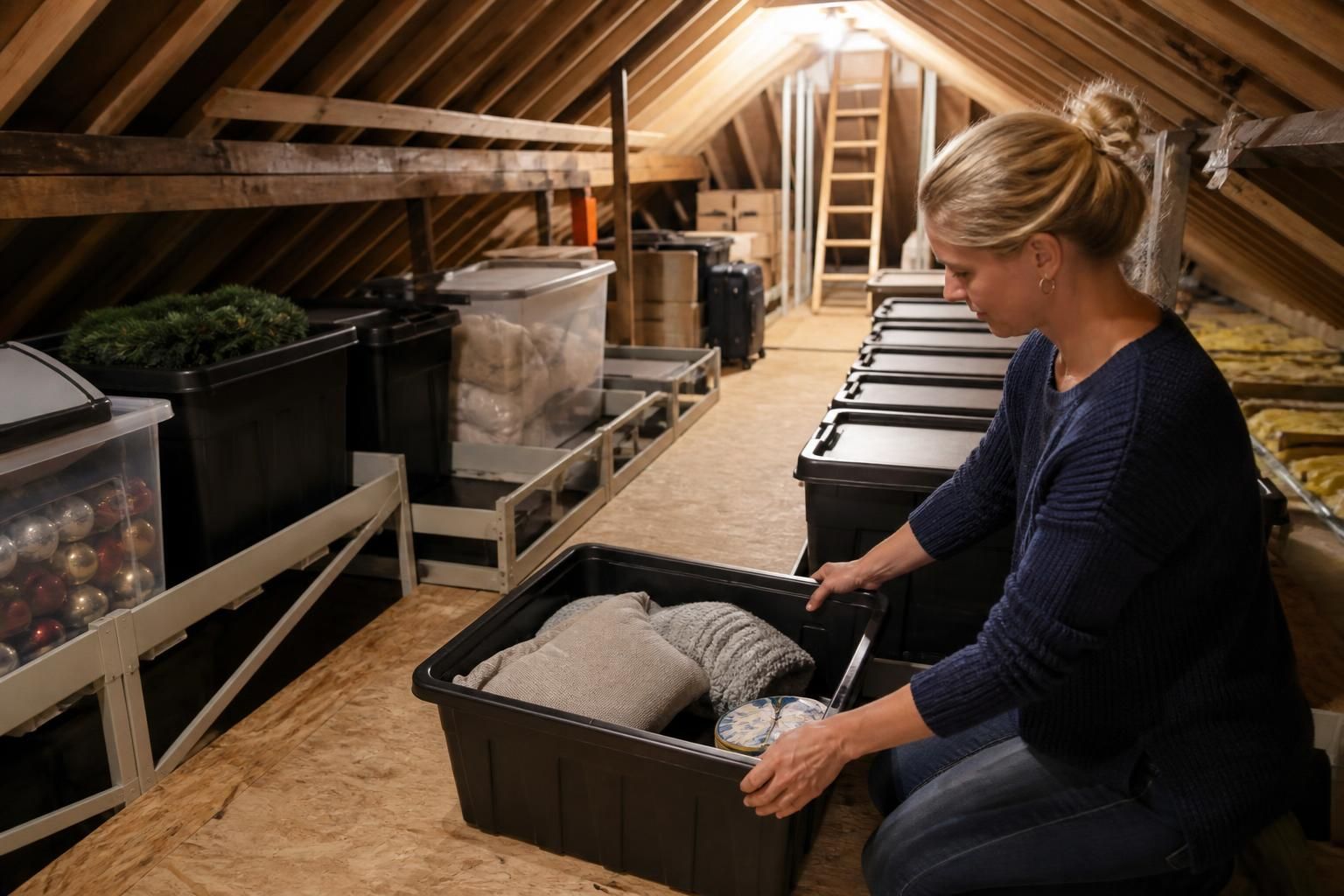
Are loft storage trays suitable for every type of stored item?
No. Loft storage trays suit small, lightweight, enclosed items such as seasonal decorations, soft furnishings and labelled boxes, but not every stored item.
Keep heavy, unstable, sharp, damp or valuable belongings elsewhere, and check tray capacity, item weight and secure placement before storing anything.
No. Loft storage trays suit items that tolerate normal loft conditions and can be lifted safely, but they are not appropriate for every belonging. Assess each item’s weight, shape, material, value and storage requirements before placing it in a tray.
Lofts can experience temperature changes, dust and occasional moisture risks. Trays do not provide the controlled environment needed by belongings that are sensitive to heat, cold or humidity. Keep photographs, important paperwork, artwork, musical instruments and other irreplaceable items in a more suitable part of the home.
Dense items require particular care. Books, tools, kitchen equipment, paint tins and boxed household goods can become heavy when grouped together. A tray may appear to have space available while the combined load exceeds its rated capacity. Check the tray specification and consider the weight of the complete container, not just the item inside.
Shape can also make an item unsuitable. Long, rigid or awkwardly balanced objects may catch against the hatch, roof structure or neighbouring trays. Sharp edges can damage the tray or nearby belongings. Place smaller items in closed containers and keep lids secure, while leaving enough clearance to remove each container without disturbing others.
Items used often may not belong in a tray, even when their weight is acceptable. Repeated lifting from a loft can make access inconvenient and increase the chance of dropping something. Store occasional-use belongings in labelled containers, and keep frequently needed items at an accessible height near the loft entrance.
Do not store materials that could leak, release fumes or create a fire risk. This includes fuel, solvents, gas cylinders, aerosols and some household chemicals. Follow the product label and household waste guidance for these materials rather than using loft storage.
Use this simple check before storing an item:
- Confirm that the item and container fit without forcing the tray or blocking access.
- Check the combined weight against the tray’s stated capacity.
- Use strong, closed containers for small or loose belongings.
- Keep contents dry and inspect them for signs of damp before storage.
- Label containers so you do not need to open several trays to find one item.
- Leave ventilation paths, inspection points and access routes clear.
Loft storage trays are therefore best treated as organised storage for suitable household belongings, rather than general-purpose containers. Loftopia can discuss tray placement alongside raised flooring, shelving and access arrangements, so stored items remain reachable without obstructing the loft.

Some stored items need checking before they go into a tray. Remove batteries from electrical decorations where the manufacturer permits, as batteries can deteriorate during prolonged storage.
Inspect the item again when you retrieve it. If you find corrosion, swelling or leakage, remove it from the loft and follow the manufacturer’s disposal guidance.