
Can raised boarding over mineral wool affect loft fire safety?
Raised boarding does not inherently reduce loft fire safety, provided installers retain mineral wool correctly and avoid obstructing relevant services or access points. Poorly supported boards, compressed insulation or unsuitable materials can create safety risks, so a survey should assess the loft before installation.
Correctly designed raised boarding should not materially reduce loft fire safety. The result depends on the insulation, floor construction, stored contents, electrical services and fire barriers within the loft.
Mineral wool is generally resistant to ignition and can limit heat transfer. Its fire performance still depends on the specific product and installation. A surveyor should identify the insulation type and check whether it remains correctly positioned beneath the raised floor.
Raised boarding changes how you use the loft, but it does not make the area suitable for living or sleeping. You should treat the boarded area as storage and avoid introducing heaters, appliances or other ignition sources.
Stored belongings can increase the available combustible material. Cardboard boxes, soft furnishings, paper, seasonal decorations and some plastics can contribute to fire growth. Keep stored items organised, stable and away from electrical equipment, flues and any areas identified as requiring clearance.
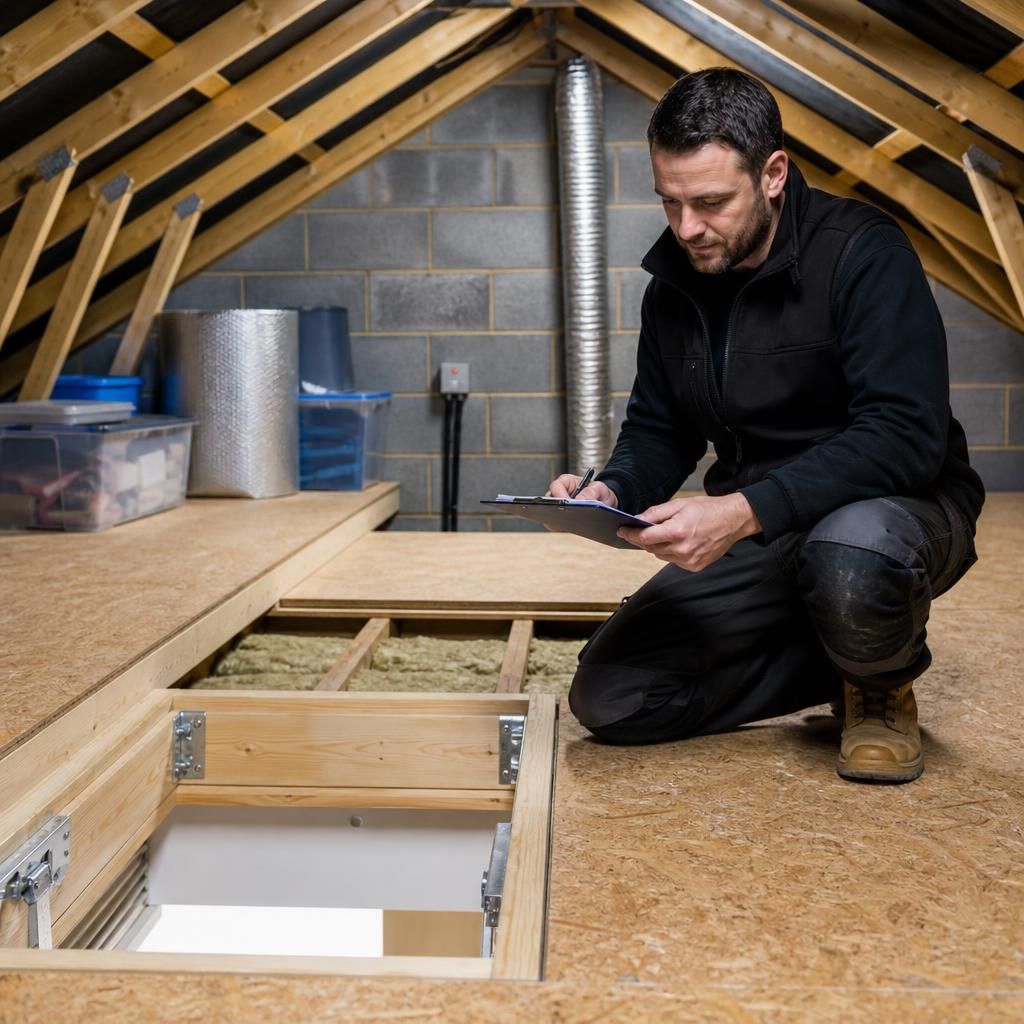
The ceiling below the loft may form part of the fire separation between floors. Boarding should not damage that separation or conceal defects that already exist. A surveyor should examine the following points before work begins:
- Fire barriers at party walls and around protected areas should remain continuous.
- Existing openings around cables, pipes and ducts should not create unprotected routes for fire or smoke.
- Chimneys, flues and heat-producing equipment should retain the clearances specified for the installation.
- Recessed lights should have suitable protection and clearance from insulation and stored contents.
- Electrical cables should remain accessible for inspection and should not become trapped beneath boards.
- The loft hatch should remain usable, with access maintained to relevant services and fire protection features.
Timber boarding is combustible, but its presence does not automatically make a storage loft unsafe. The risk depends on the complete arrangement, including support, clearances, insulation, services and the contents placed above it.
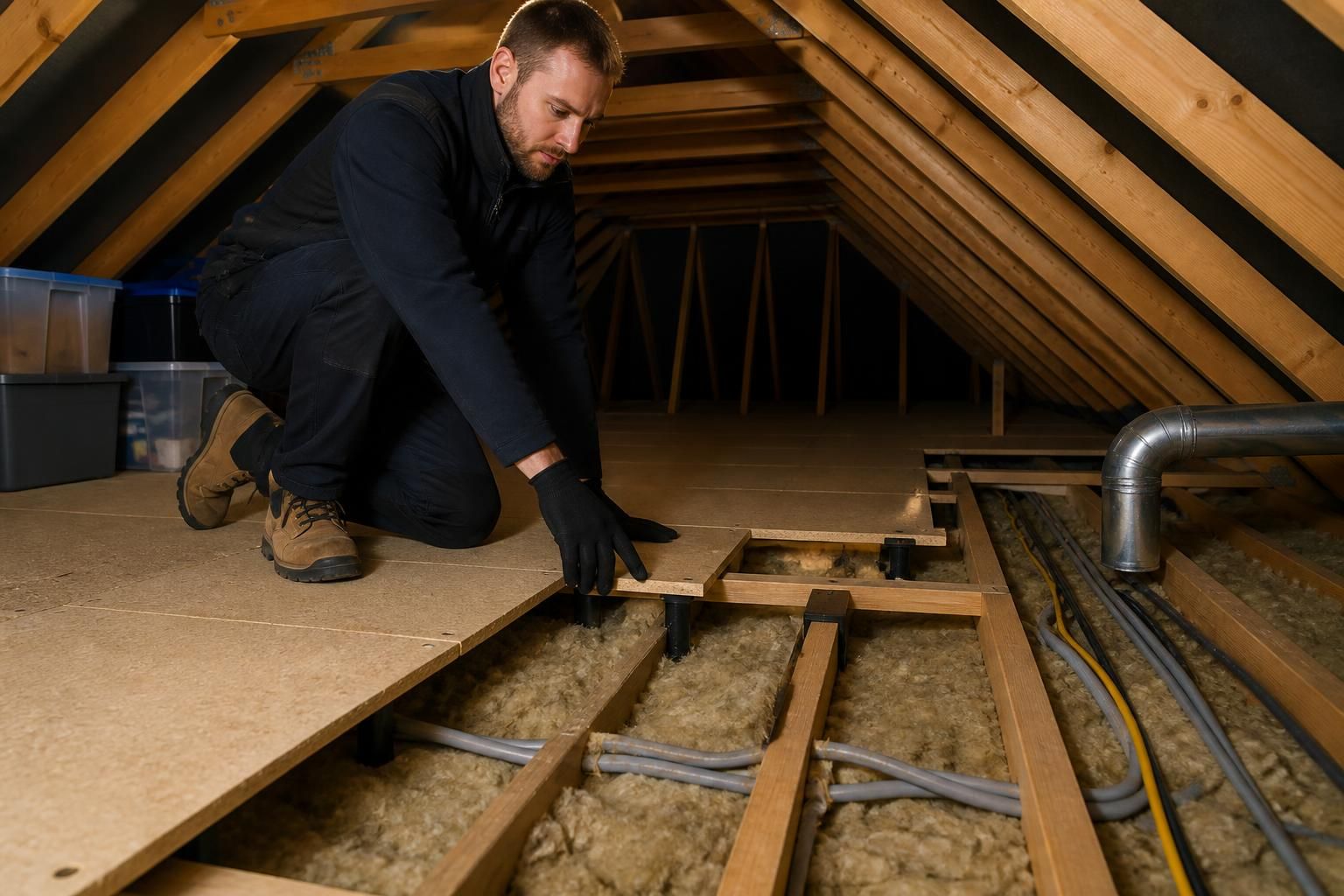
Raised flooring should keep mineral wool at its intended depth rather than flattening it beneath boards. This preserves the insulation layer and avoids creating an unsuitable surface for storage. The floor should also remain stable under the intended domestic storage load.
LoftZone raised flooring provides storage above insulation when the supporting system is planned around the existing joists and loft features. The design should leave appropriate access for inspection and avoid covering points that need servicing.
Fire safety can also be affected by later changes. Drilling through boards, moving cables, adding lights or storing items against barriers can alter the original arrangement. You should ask for advice before making these changes.
Loftopia can assess the loft before installing raised boarding, insulation, ladders, hatches or Loft Storage & Accessories. The assessment should record relevant fire precautions and identify work that needs a suitably qualified electrical or building professional.
Professional raised boarding therefore supports safe storage when the installer considers the whole loft rather than treating the boards as an isolated floor. The survey findings should explain any restrictions on storage, access or later alterations.
Fire safety depends partly on what happens after installation. Keep a clear record of fire barriers, service routes, flue clearances and areas that must remain accessible.
Ask us to identify these restrictions during the survey, so stored items do not conceal important features or prevent later inspection. Keep the guidance with household records if future work affects the loft.