
Can loft joists support raised boarding over mineral wool?
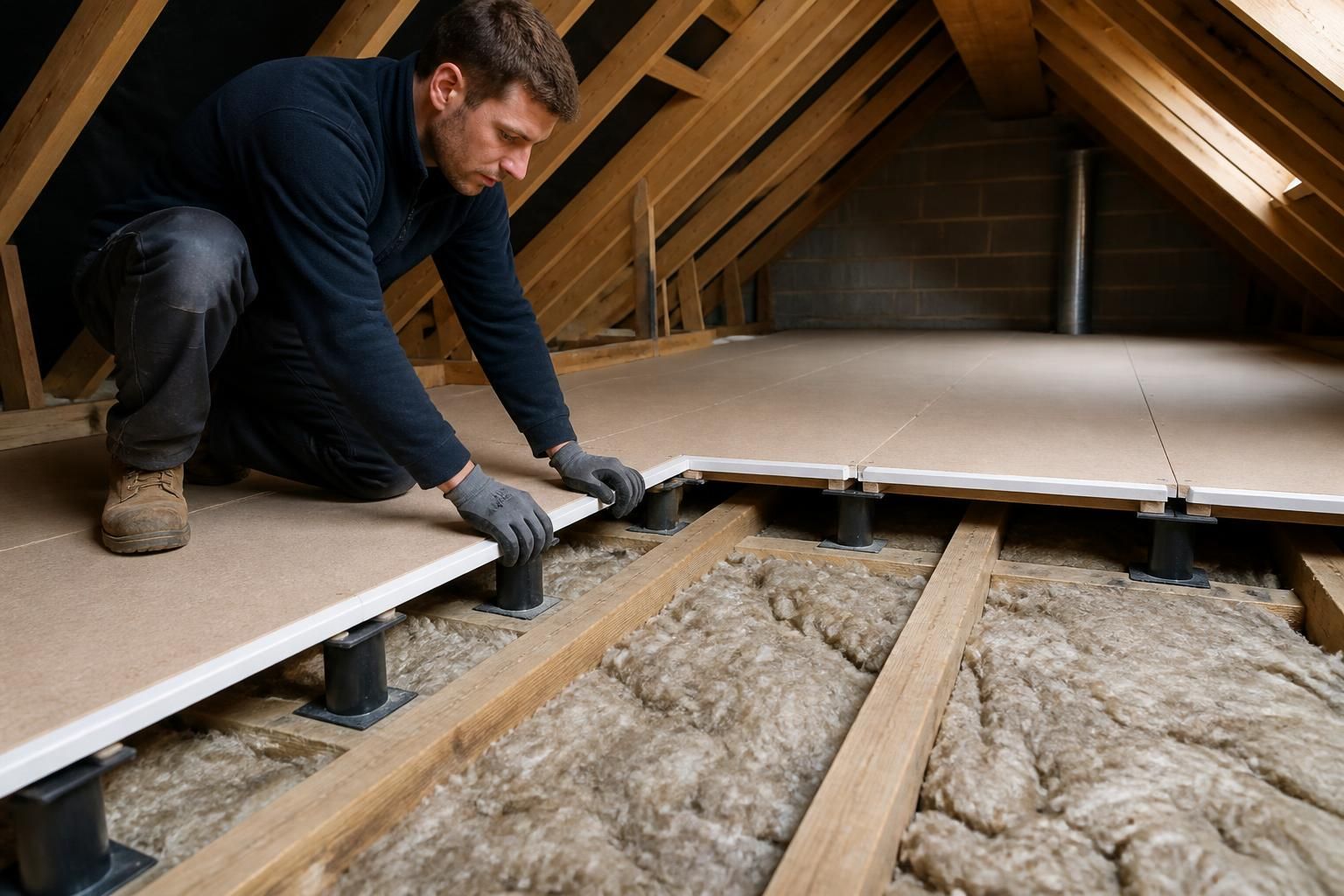
Loft joists can often support raised boarding, but a survey must assess their condition, span, spacing and intended storage load. LoftZone raised flooring transfers the boarding load to the joists while keeping mineral wool below uncompressed, subject to suitable structure and installation.
Raised boarding can be supported by loft joists when the timber, its bearings and the proposed storage use are suitable. Mineral wool does not provide structural support.
Loft joists normally form part of the ceiling structure. They may carry raised storage flooring, but they are not automatically suitable for unrestricted loading. A survey must consider the whole arrangement rather than the visible timber alone.
- Timber condition: The surveyor checks for rot, insect damage, splitting, excessive notching, drilling, staining and other deterioration.
- Structural arrangement: The surveyor considers joist direction, spacing, span, depth and the way each joist bears on supporting walls or other structural members.
- Previous alterations: Cut, moved or weakened joists can change how loads travel through the ceiling structure.
- Existing movement: Sagging, deflection, cracked ceilings or movement around supports may require further investigation before boarding proceeds.
- Planned storage: Suitcases, boxes and seasonal belongings create different demands from concentrated heavy items or dense shelving.
Raised flooring does not increase the strength of inadequate joists. It creates a supporting platform at a higher level, allowing the existing insulation depth to remain below the boards.
LoftZone raised flooring must have its supports positioned over suitable structural members. We check that supports sit correctly on the joist arrangement and that boards connect to the system as specified.
Storage loads should remain distributed across the boarded area. You should avoid placing unusually heavy items in one small location, especially beside openings, near altered timbers or where the survey identifies restrictions.
Access equipment also affects the assessment. A new hatch, ladder or storage section can alter the layout around the boarding, so we plan openings without cutting structural timber unnecessarily.
Services beneath the floor need consideration too. Cables, pipes and ventilation routes must remain accessible and must not be trapped, crushed or damaged by the raised installation.
Where the survey identifies inadequate timber, damaged joists or an unsuitable support arrangement, we do not treat boarding as a way to overcome the defect. Further structural advice or remedial work may be necessary.
Raised loft boarding creates storage space only. It does not turn ceiling joists into a habitable-room floor, and you should not use the boarded area as a bedroom, office or living space.
We use the survey findings to define the boarded area, storage expectations and any restrictions. This establishes whether the joists can support the proposed raised storage floor without relying on mineral wool for support.
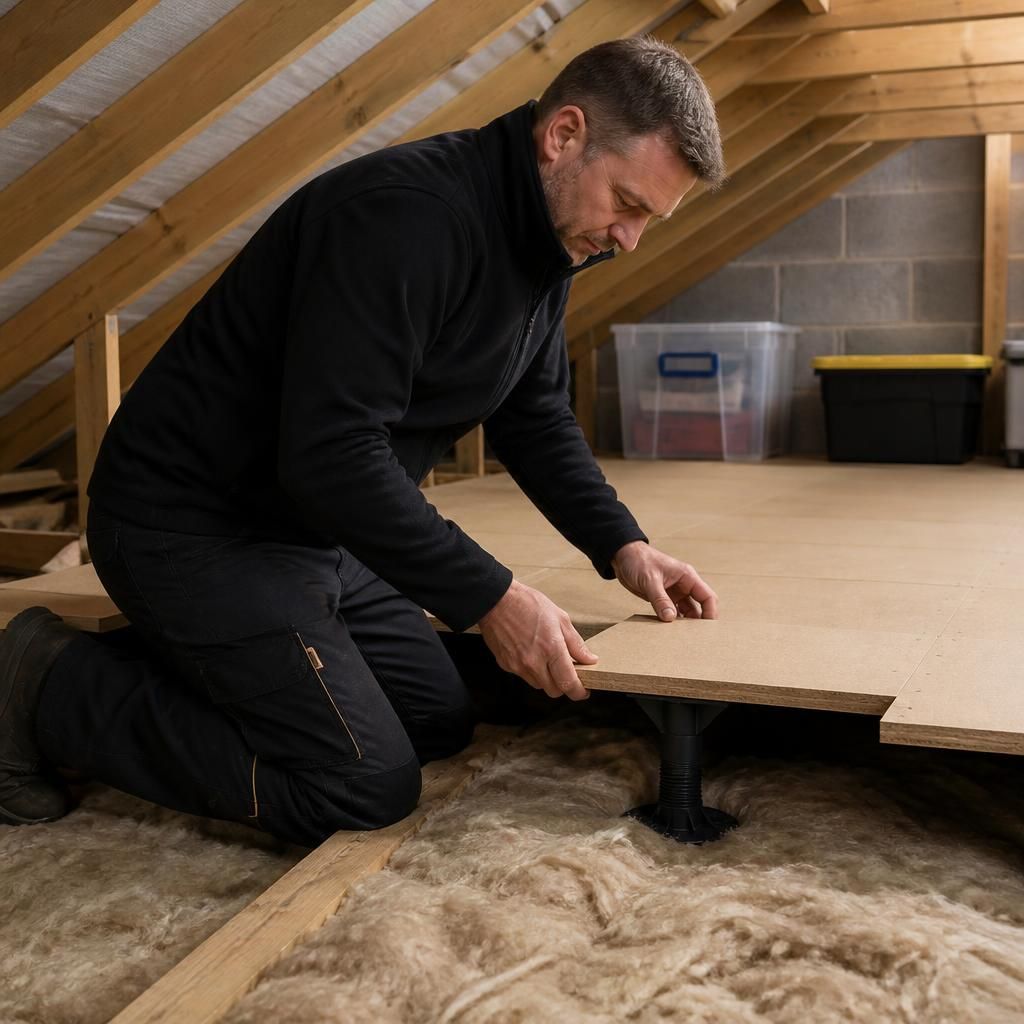
Joists may support raised boarding when the proposed storage use matches the structure’s assessed capacity. The weight of stored contents matters as much as the boards and raised flooring.
Keep storage within the arrangement agreed after the survey. Dense shelving, stacked boxes and concentrated loads can place greater demand on individual joists than evenly distributed belongings, so their positions may need restricting.