
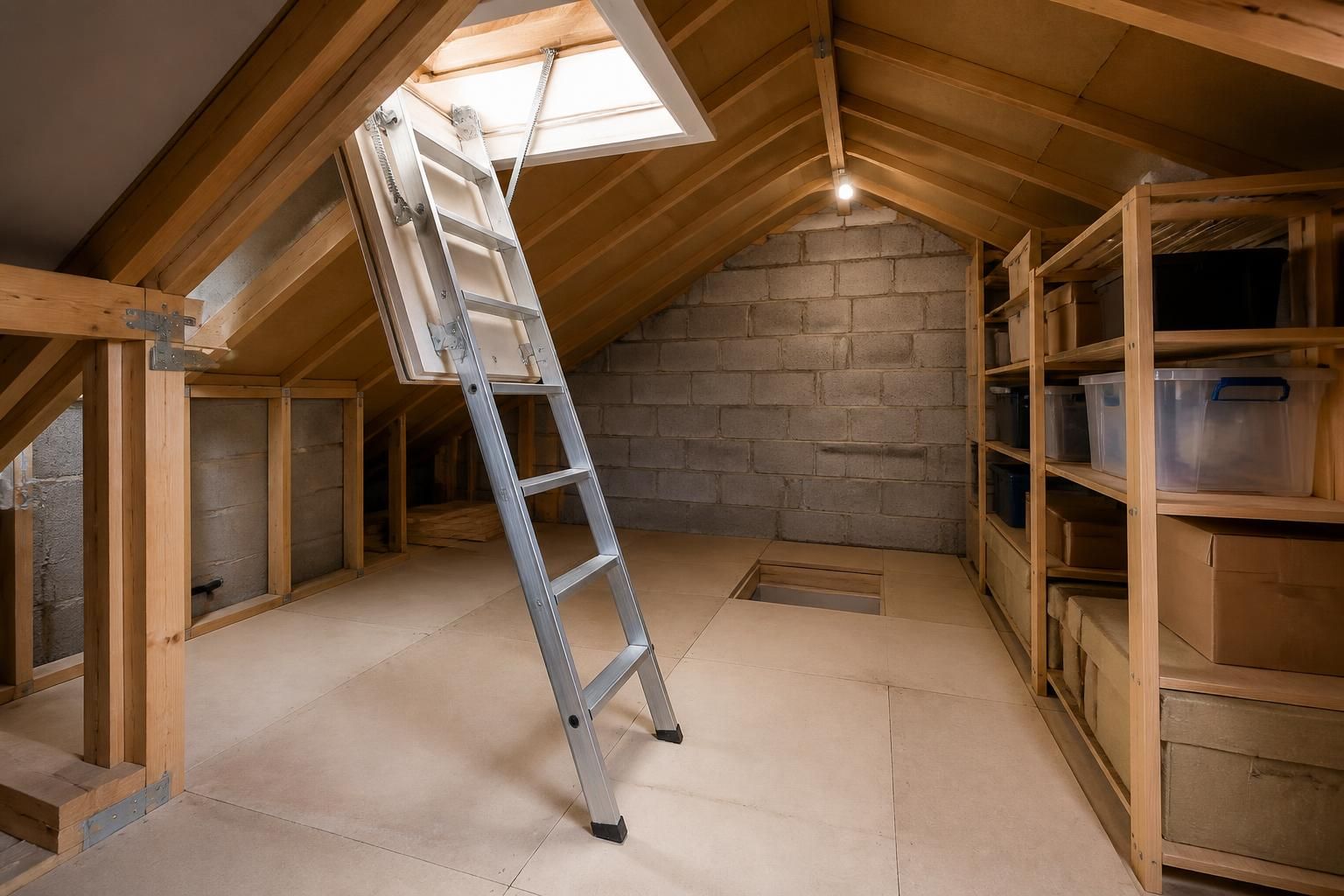
Which compact loft ladder mechanism suits your loft?
An aluminium sliding loft ladder usually suits a compact access point where landing space is limited. A folding timber ladder may suit a wider hatch with more room to open, but the correct mechanism depends on hatch dimensions, ceiling height and landing clearance.
The most suitable compact loft ladder mechanism depends on the hatch opening, ceiling height, landing clearance and the way you will use the loft. An aluminium sliding loft ladder often suits restricted landing space, while a folding timber loft ladder needs more room for its sections to open and rest.
Each mechanism creates a different movement pattern. The ladder must open fully, sit at a stable angle and leave enough space for you to step on and off safely. A compact design is only suitable when the surrounding measurements support that movement.
Aluminium sliding mechanisms
An aluminium sliding loft ladder uses overlapping sections that extend down from the hatch. The sections remain relatively narrow as they move, which can help where the landing is short or furniture limits the opening area.
- The ladder can usually remain close to the hatch when retracted.
- Its sliding movement may suit a narrow landing better than a hinged ladder.
- Aluminium construction keeps the ladder comparatively light to handle.
- The hatch position and ceiling height still determine whether the sections can extend correctly.
This mechanism can suit a loft used regularly for boxes, seasonal items or household storage. You still need sufficient space to stand beneath the hatch and move safely while operating the ladder.
Folding timber mechanisms
A folding timber loft ladder opens in hinged sections. The timber construction can provide broad treads and a familiar stair-like feel, but the folded sections need room to swing and settle below the hatch.
- A wider hatch can make the folded movement easier to accommodate.
- The opening direction matters when the landing contains doors, furniture or a stairwell.
- The ceiling height affects how many sections and what ladder length are appropriate.
- The hatch frame must support the ladder mechanism without restricting its movement.
Folding timber mechanisms can suit homeowners who value a more substantial feel underfoot. They need careful clearance checks because the ladder may occupy more of the landing while you open or close it.
Other compact mechanisms
Some compact ladders use telescopic or concertina-style movement. These designs can reduce the amount of ladder stored beneath the hatch, but their operation and tread arrangement vary between products.
A telescopic ladder may suit a particularly restricted opening, provided its sections extend to the required height and lock correctly. A concertina mechanism can occupy limited floor space, but you should check how easily you can operate it and whether the treads provide comfortable foot placement.
Mechanism names do not establish suitability on their own. The ladder must match the hatch frame, opening size, ceiling height and available landing space. Loftopia can assess these relationships before recommending an access arrangement.
How hatch design affects the mechanism
An insulated drop-down hatch adds weight and depth around the opening. The ladder mechanism must clear the hatch as it opens and avoid contact with the frame, insulation or ceiling finishes.
A small hatch can restrict shoulder room and hand placement, even when the ladder itself fits. Enlarging the opening may change the available structure, so the hatch should be measured before choosing a ladder.
The hatch should also open in a direction that leaves a clear route onto the landing. A ladder that technically fits may remain inconvenient if the hatch, ladder and nearby door compete for the same space.
Choosing by how you use the loft
Occasional access may only require a compact ladder with simple operation. Regular trips to the loft place greater importance on stable treads, hand support, controlled movement and an unobstructed landing.
Carrying storage boxes requires particular care. You should be able to climb while maintaining secure contact with the ladder, rather than balancing items against your body or blocking your view.
Loftopia can combine an appropriate ladder with raised flooring, lighting and Loft Storage & Accessories. Lighting helps you see the hatch and landing, while storage organisation reduces the need to carry loose items across the loft.
What should be checked before installation?
- Measure the hatch opening and inspect the condition of its frame.
- Measure the vertical distance from the loft floor to the landing.
- Check the landing length and width beneath the opening.
- Identify doors, walls, light fittings and furniture that could obstruct movement.
- Confirm that the ladder can open, extend and close without fouling the hatch.
- Check that the finished ladder position allows safe entry and exit.
A survey also helps identify whether insulation, raised flooring or a new hatch will alter the access arrangement. We can then specify a mechanism that works with the completed loft, rather than selecting a ladder from hatch dimensions alone.
For limited landing space, an aluminium sliding loft ladder is often the practical starting point. A folding timber loft ladder may suit a wider opening and a landing that accommodates hinged sections. Telescopic or concertina mechanisms may suit more restricted layouts after careful compatibility checks.
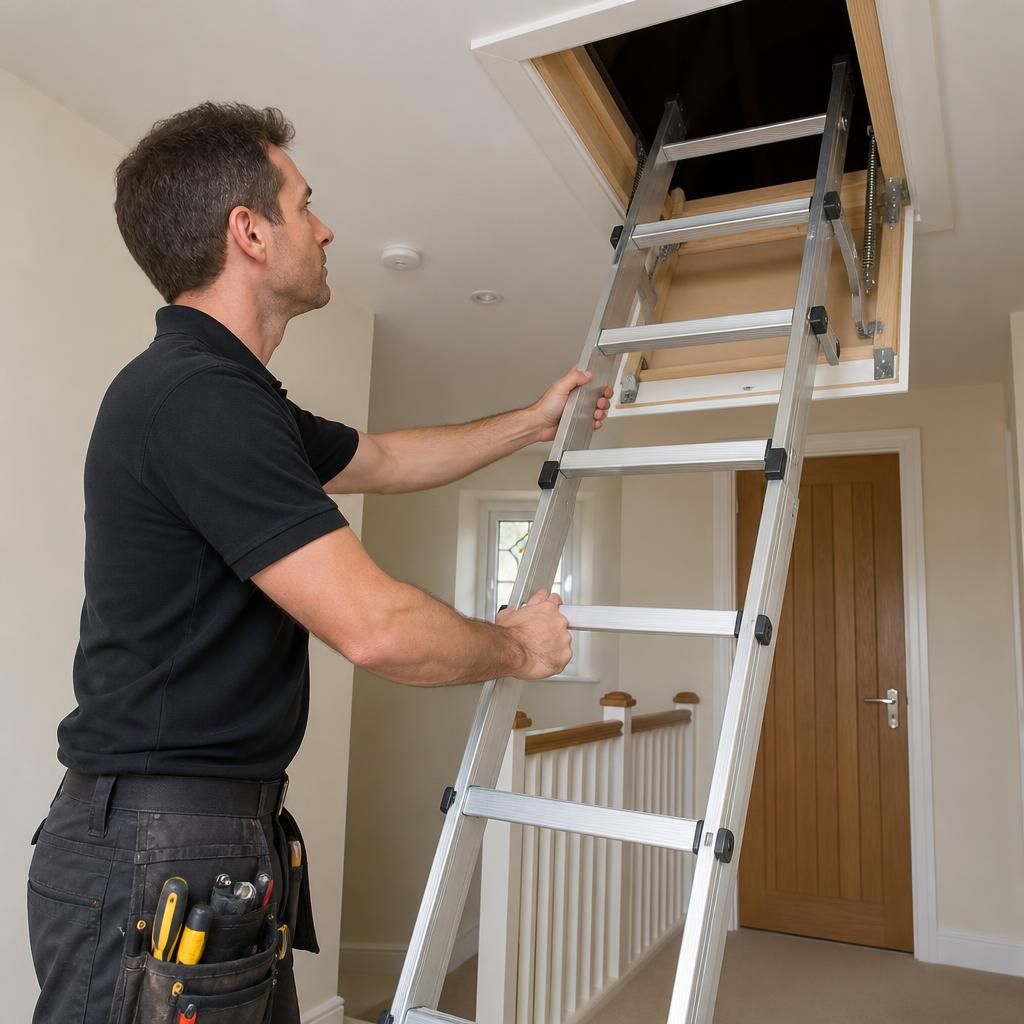
Consider how you will operate the ladder, not only how much space it occupies when stored. You should be able to release, extend and secure the mechanism without standing beneath an obstructed hatch or reaching around nearby fittings.
Aluminium sliding loft ladders need controlled extension of their sections, while timber ladders require space to guide each hinged section into position. The better choice depends on the movement you can manage comfortably and the access route around the hatch.