
How is a loft hatch and ladder secured for regular use?
A loft hatch and ladder are secured by fixing the hatch frame firmly to the ceiling structure and anchoring the ladder to suitable supports. We check the opening, surrounding timbers, ladder position and fastenings so the access remains stable during repeated use.
Regular-use loft access depends on a rigid frame, correctly restrained ladder and secure hatch hardware working together. Each part must suit the ceiling construction, opening size and available landing space.
We begin by checking the opening and identifying suitable timber around it. The frame must not rely on plasterboard alone, because repeated climbing can cause movement, cracking or loosening. The fixing arrangement also needs to account for the ceiling finish, surrounding roof timbers and the weight of the hatch and ladder.
Hatch security comes from more than the hinges. An insulated drop-down hatch needs a properly aligned catch or latch that holds the panel closed. Seals should meet evenly around the frame, without preventing the catch from engaging. A hatch that drops unexpectedly or fails to close fully should not be used until the hardware has been checked.
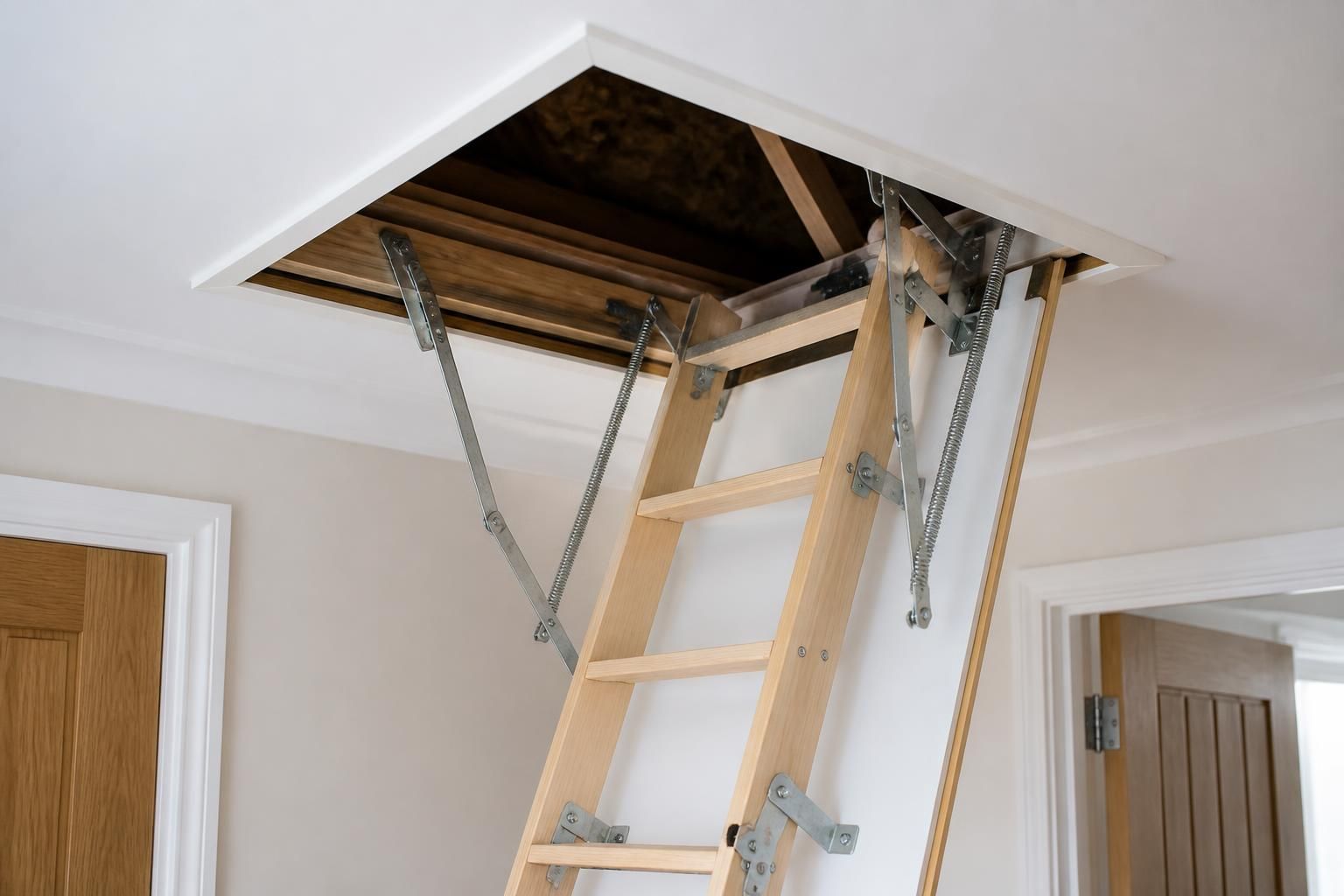
Ladder security depends on the connection at the top and stable contact at the floor. We use suitable brackets or hinges for the ladder type, then check that the sections open, lock and fold correctly. Ladder feet should sit level on the landing, with enough grip to prevent sliding during normal use.
- Top connection: the ladder must remain attached when its weight transfers between the floor and loft opening.
- Locking parts: folding or telescopic sections must engage fully before anyone climbs.
- Floor contact: both feet should rest evenly, without rocking or sitting on loose flooring.
- Climbing line: the ladder should meet the opening at a practical angle, without forcing you sideways.
- Landing area: the space below and above the hatch must remain clear of stored items and trip hazards.
We also check the area around the opening for raised flooring, insulation and roof timbers. Flooring should finish neatly around the access point, leaving the hatch free to open and the ladder free to deploy.
Regular use does not make the ladder suitable for carrying large or heavy boxes while climbing. Keep both hands available where possible, and transfer storage items separately after reaching the loft landing.
Before using the access, check that the hatch is fully supported, the catch has engaged and the ladder feet are stable. Stop using it if you notice movement, damaged fixings, loose joints or a hatch that will not close correctly.
Loftopia can assess the opening, select suitable loft ladders and hatches, and arrange the access work alongside boarding, lighting or shelving where required. This helps keep the hatch, ladder and surrounding storage area compatible.
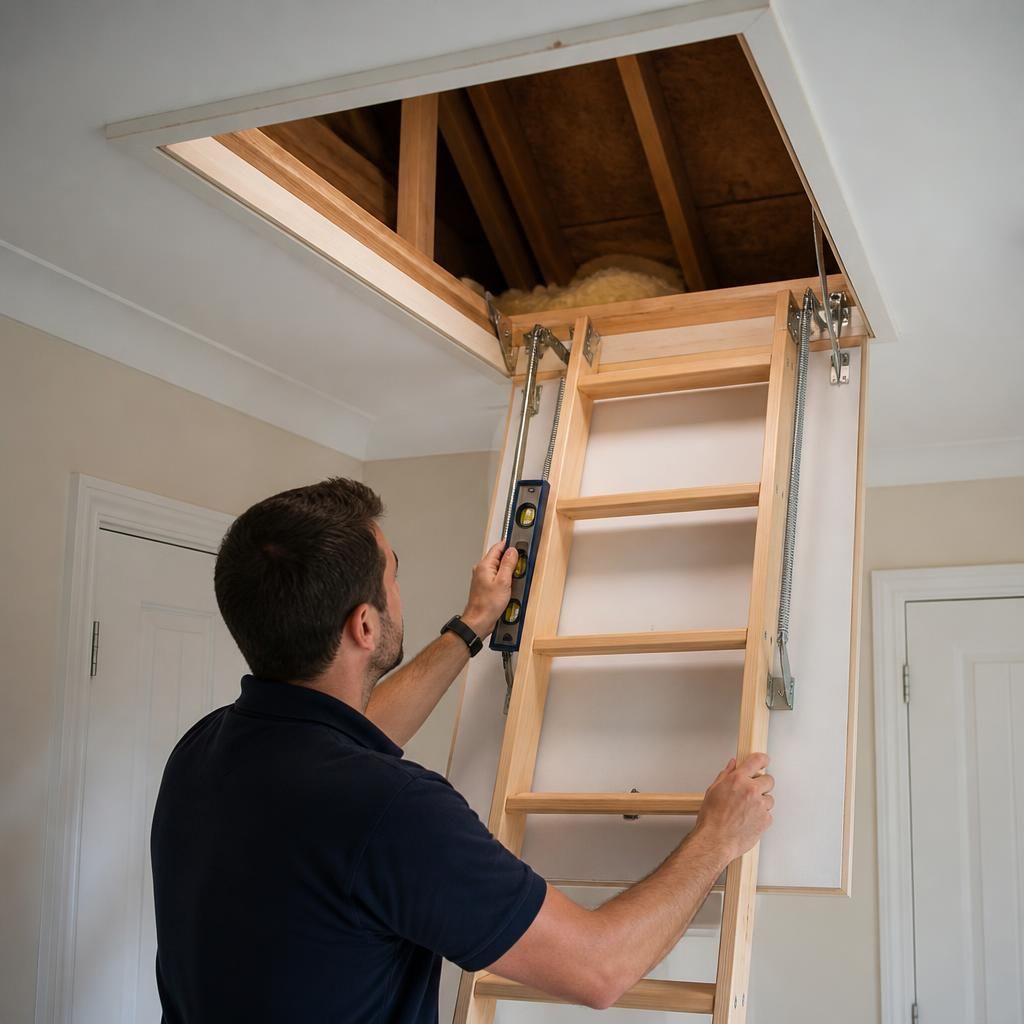
We keep the hatch and ladder aligned with the opening so climbing forces transfer into the frame and supporting timbers, rather than into the ceiling finish.
We check that the frame sits square, the hatch panel closes evenly and the ladder deploys without twisting. Correct alignment helps the catch engage fully and prevents the ladder from pressing sideways against the opening during regular use.