
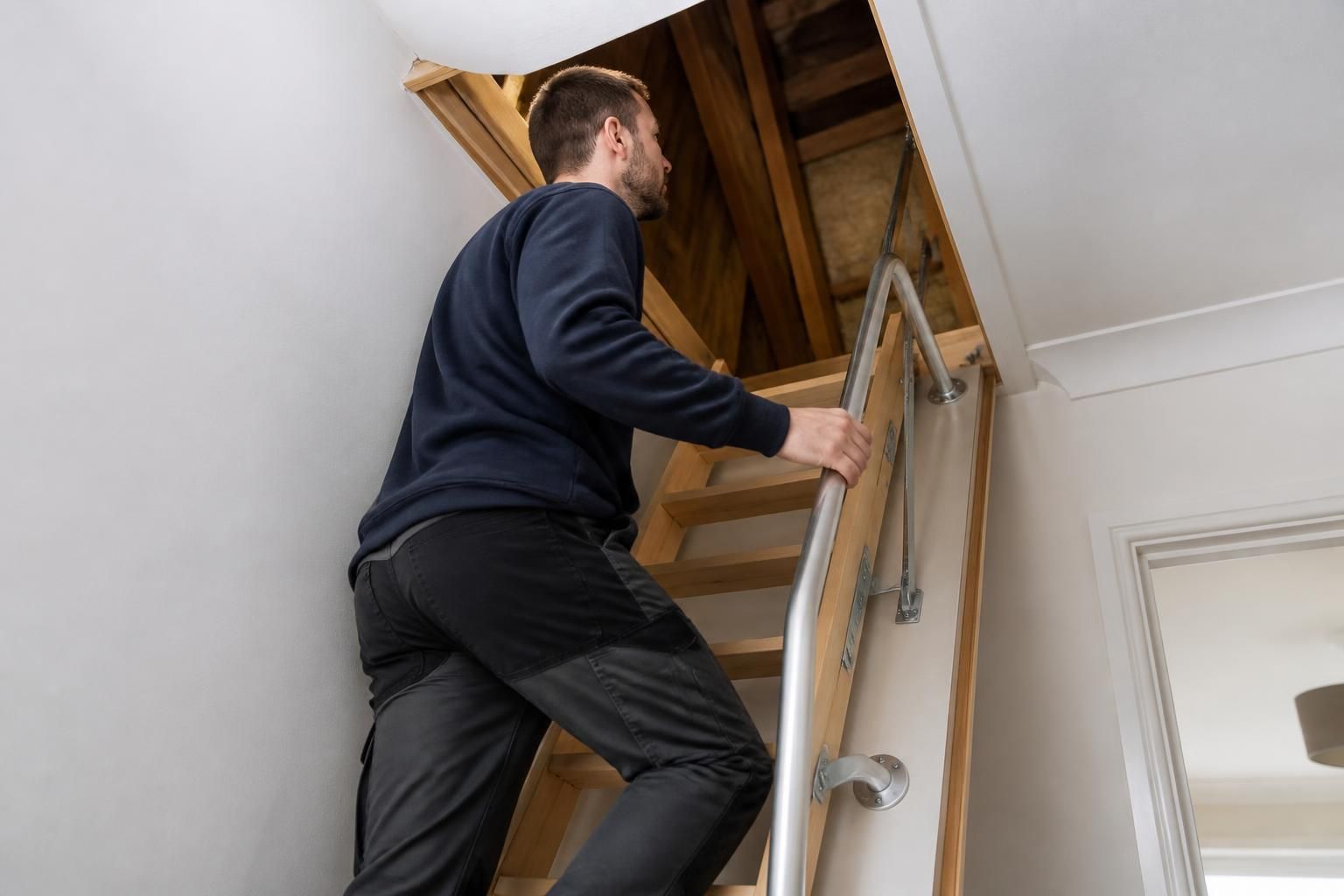
When is a handrail needed with a loft ladder?
A handrail is usually needed when the loft ladder is steep, tall or leaves you without a secure grip while entering and leaving the hatch. We assess the ladder, hatch position and surrounding opening to determine whether a handrail would make access safer.
The deciding factor is whether you can keep a secure grip during the complete transfer between the floor, ladder and loft opening. A handrail is generally appropriate where the access arrangement does not provide that security naturally.
We consider a handrail during a loft access assessment when the ladder has one or more of these characteristics:
- The ladder rises steeply or reaches a significant height.
- The user must turn, step sideways or reach across the opening when entering or leaving the loft.
- The hatch is positioned close to a wall, landing edge or other obstruction.
- The ladder has limited side support or does not provide a continuous handhold.
- The person using the ladder has reduced balance, strength or confidence.
- Regular access makes a stable grip important, rather than occasional inspection access.
A handrail can support the movement between the top of the ladder and the loft floor. This transition often needs more consideration than climbing the ladder itself, because you must place your feet and change position at the hatch.
We may recommend a handrail fixed beside the opening, attached to a suitable ladder arrangement or incorporated into the access design. The correct position depends on the hatch dimensions, ladder direction, surrounding structure and available landing space.
The rail must remain reachable without forcing you to lean away from the ladder. It must also avoid reducing the usable hatch opening or creating an obstruction when the hatch closes. We check these points before selecting the fitting position.
A handrail is not automatically required for every loft ladder. A shorter ladder with secure side rails, a suitable angle and a clear landing area may provide sufficient support. We assess the complete installation rather than judging the ladder in isolation.
Handrails also differ from the ladder’s side rails. Side rails support climbing along the ladder, while a separate handrail can assist when you approach the hatch or step onto the loft floor. Some access arrangements benefit from both.
Carrying boxes can change the safety assessment. You need both hands for a secure climb, so a handrail cannot remove the need to keep loads small and manageable. Store frequently used items where access requires less climbing and avoid obstructing the landing area.
We also consider the people who will use the loft, how often they will enter it and whether the opening allows a controlled step onto the boarded area. These details help determine whether the existing access arrangement needs a handrail or a wider review.
Loftopia can assess handrail requirements alongside timber loft ladders, aluminium sliding loft ladders and insulated drop-down hatches. We explain how the proposed arrangement supports safer entry and exit before installation work begins.
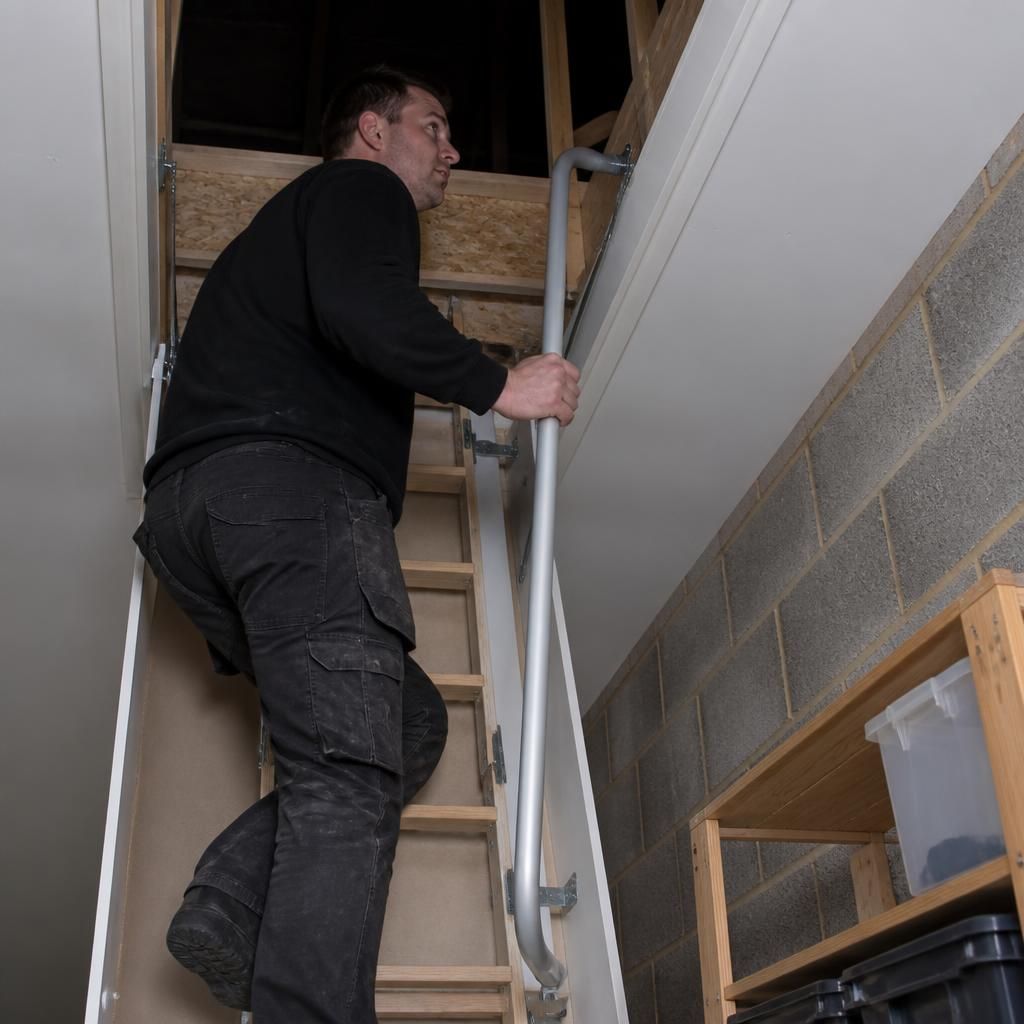
A handrail must be secured to a suitable part of the loft access structure, rather than relying on a lightweight hatch panel or trim. We check the fixing position so the rail remains stable during repeated use.
After installation, keep the rail and its fixing points clear of stored items. Include them in routine checks for movement or looseness, particularly where the loft ladder is used regularly.