
Is partial loft boarding suitable for deep insulation?
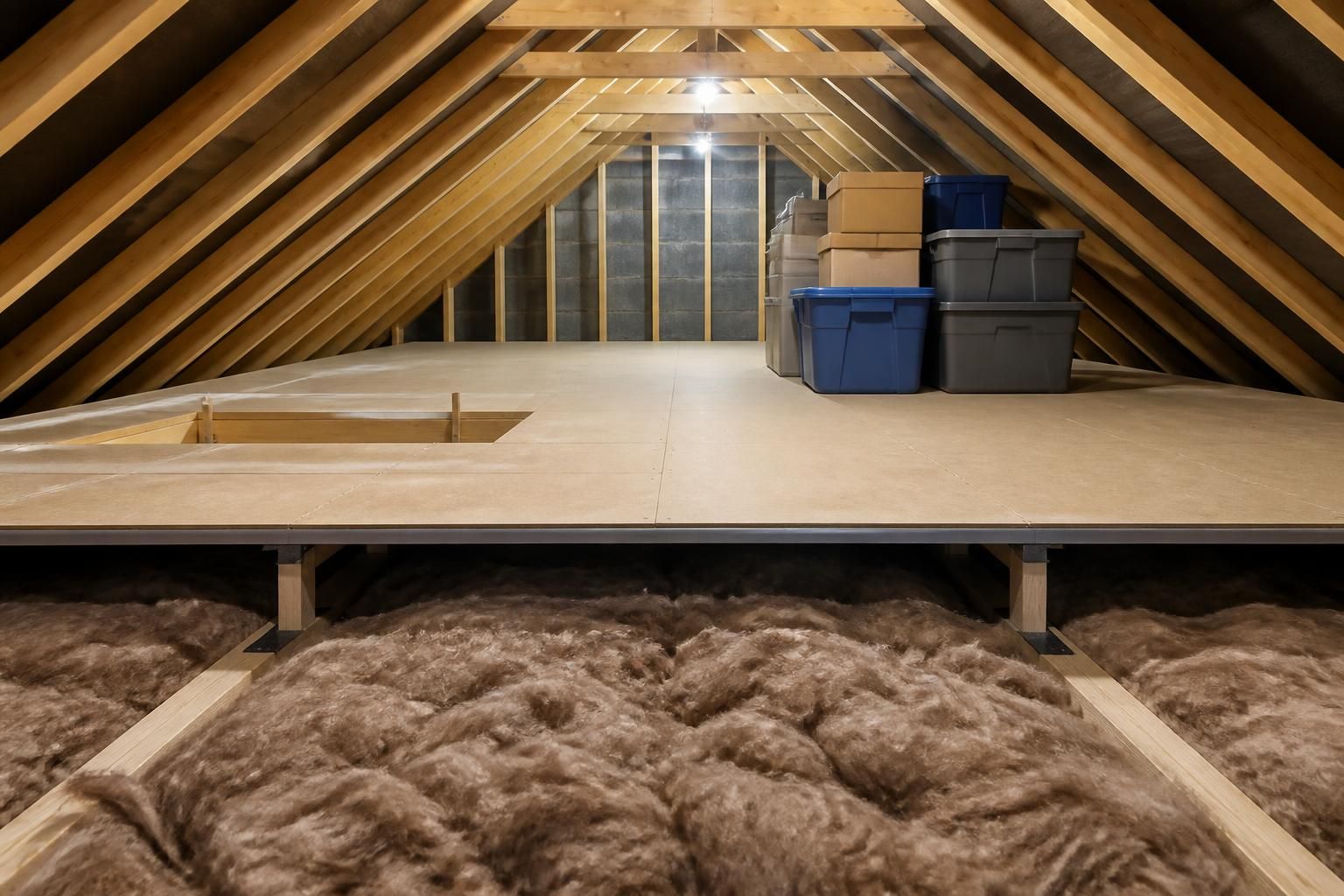
Yes. Partial loft boarding is suitable for deep insulation when we use raised flooring, such as LoftZone, to create storage above the insulation without compressing its intended depth.
Partial loft boarding can suit deep insulation, but the boarding height and layout must be planned around the insulation, roof structure and ventilation. A survey determines how much raised space the loft can accommodate and where flooring should be placed.
Deep insulation often fills the space between and above the joists. Boarding directly across the joists can flatten this insulation and reduce the space available for it. LoftZone raised flooring creates a separate level for storage while allowing the insulation to retain its designed depth below.
The available height above the raised floor still needs careful consideration. A low roof may leave limited clearance for storing boxes or moving around the boarded area. Partial boarding can place storage in the most accessible section without attempting to floor the entire loft.
During an assessment, we consider:
- the depth and condition of existing insulation;
- the height available beneath the roof;
- the position of roof timbers, electrical equipment and other obstructions;
- the location and size of the loft hatch;
- the route into the proposed storage area;
- the need to keep ventilation paths clear at the eaves; and
- the type and approximate weight of items you plan to store.
These checks help determine the raised flooring height, boarding footprint and access arrangement. The boarded area should remain appropriate for storage, rather than being treated as a habitable room or an extra floor of the home.
Deep insulation does not automatically mean that the whole loft needs raised boarding. A partial layout may be more suitable when you mainly need space for seasonal decorations, suitcases or infrequently used household items. The unboarded sections can continue to provide room for insulation and access around roof features.
Storage weight also matters. Household boxes and similar items should be distributed across the boarded area, rather than concentrated in one location. We can discuss the intended contents so the proposed layout reflects normal storage use.
Access may need adjustment when deep insulation and raised flooring increase the finished floor level. An insulated drop-down hatch can improve the opening arrangement, while aluminium sliding loft ladders or timber loft ladders can provide a more practical route into the space.
Partial loft boarding is therefore suitable for deep insulation when the installation accounts for height, insulation, ventilation, structure and access together. A measured assessment gives you a clearer basis for deciding how much flooring you need and which parts of the loft should remain unboarded.
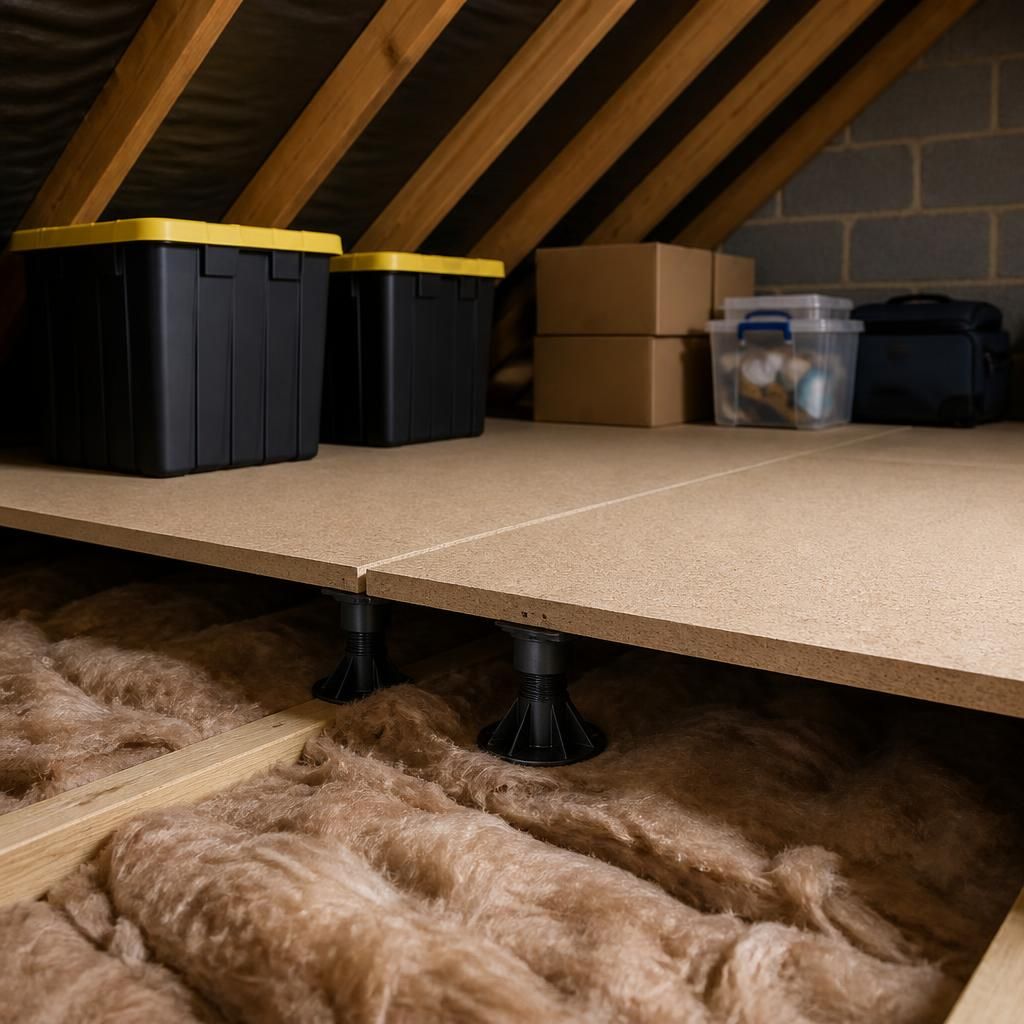
Deep insulation should remain part of the loft’s thermal layer rather than becoming compressed beneath storage boards. LoftZone raised flooring separates the storage surface from the insulation below, allowing boxes to rest on boards at the planned level.
Partial boarding also limits the raised floor to the area you intend to use. This can reduce unnecessary changes around the rest of the loft, while leaving insulation undisturbed where storage is not required. The finished arrangement should still include a clear transition from the hatch into the boarded section.