

Can mineral wool insulation be topped up beneath raised loft boards?
Mineral wool can often be topped up beneath raised loft boards, provided a survey confirms the existing insulation’s condition, available depth, ventilation and the position of loft services. We then select a suitable additional layer without compressing the insulation or reducing the clearance needed for LoftZone raised flooring.
Yes, mineral wool can often be topped up beneath raised loft boards. The work remains suitable only when the existing insulation, roof space and proposed raised flooring have been assessed together.
A top-up may improve continuity where the existing mineral wool has settled, leaves visible gaps or does not provide the intended insulation depth. We inspect the insulation before adding material, because a new layer should not conceal defects that need attention first.
- Wet insulation: We investigate roof leaks, plumbing leaks or condensation before adding mineral wool. Damp material may lose performance and can indicate a wider problem.
- Damaged or contaminated insulation: We assess crushed, soiled or pest-affected areas before deciding whether partial removal or replacement is more appropriate.
- Uneven coverage: We close gaps around the loft perimeter and between joists where practical, while keeping access to relevant services.
- Limited roof-space clearance: We check the remaining height above the completed insulation before specifying raised flooring.
Installers usually place additional mineral wool across the existing layer, rather than forcing more material into the same space. This approach can reduce gaps between insulation runs and avoids relying on compression to create the required depth.
Compression matters because tightly packed mineral wool does not perform in the same way as correctly installed material. Raised flooring must therefore sit high enough to protect the insulation from compression and provide stable support for stored items.
LoftZone raised flooring creates storage above insulation, but it does not turn insulation into a load-bearing floor. We assess the proposed boarding layout separately from the insulation top-up and consider how stored loads reach the supporting structure.
Additional insulation can also change the relationship between the insulation surface, roof edges and loft services. We check the following before installation:
- Air movement at the eaves and other required ventilation paths.
- Cables, pipes, tanks and other services that need protection or access.
- Junction boxes and equipment that should remain accessible for inspection or maintenance.
- Roof timbers and fittings that could obstruct the insulation or raised flooring.
- The hatch opening and route used to move materials into the loft.
Mineral wool should not block ventilation routes at the roof edges. We retain the necessary airflow path and avoid pushing insulation into areas where it could obstruct ventilation or contact roof coverings improperly.
The top-up material must suit the existing loft construction and the available space. We consider the condition and type of existing mineral wool, the intended insulation arrangement and the height required for raised boards.
A top-up can reduce usable headroom because the insulation occupies more vertical space. The completed design must leave enough room to move safely around the storage area and use the loft access equipment.
Raised boarding does not require every part of the loft to receive storage flooring. A survey can identify where extra insulation is practical and where a narrower boarded route or service access section would be more suitable.
We explain any restriction before work begins. If the existing insulation needs replacement, the roof space needs repairs or the available height cannot accommodate the proposed arrangement, topping up may not be appropriate.
For suitable lofts, the completed arrangement keeps mineral wool below the raised boards while providing storage above it. An inspection and clear specification help protect insulation performance, ventilation and access as the loft becomes more usable.
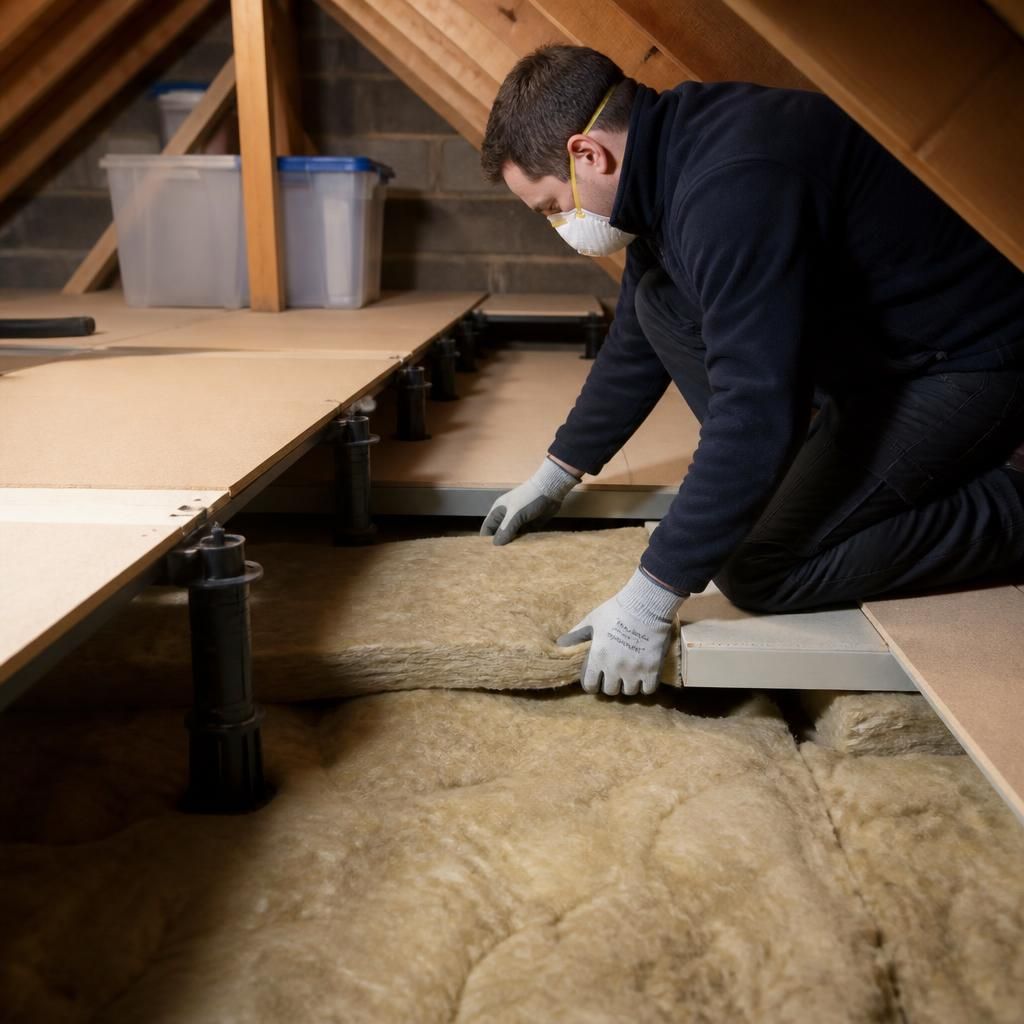
Top-up work is normally planned before raised flooring is fitted. This allows the mineral wool to be placed evenly and prevents completed boards from restricting access to areas needing attention.
If raised boards already cover the loft, sections may need to be lifted so the insulation can be inspected and adjusted beneath them. The final arrangement should show the insulation layer, raised supports and storage boards as separate parts, rather than treating extra mineral wool as support for stored items.