
Are moisture-resistant loft boards necessary?
Moisture-resistant loft boards are not necessary in every loft, but they can help where humidity or occasional moisture exposure could affect stored belongings. They do not replace roof repairs, adequate ventilation or proper insulation, so board choice should follow the loft’s condition and intended storage.
Moisture-resistant boards are most useful when the loft environment or stored contents could face intermittent damp conditions. They are not automatically required for ordinary dry storage.
The term usually describes a board with improved resistance to moisture absorption. It should swell less and retain its shape better than standard chipboard after limited exposure. It remains a wood-based product, so it is not waterproof and should not be treated as a substitute for repairing leaks.
Moisture-resistant loft boards may be worth considering when:
- the loft has previously experienced minor condensation or dampness;
- you intend to store items that could be affected by slight changes in humidity;
- the loft contains plumbing equipment, water tanks or pipework that requires regular inspection;
- stored boxes may be moved frequently, increasing the risk of scuffed or damaged board surfaces;
- the loft’s condition makes additional tolerance useful, even after the underlying cause has been addressed.
They can provide more tolerance if a small amount of moisture reaches the board. They cannot prevent stored items from becoming damp, and they will not remain stable after prolonged water exposure.
Board choice should also reflect how the flooring will be used. Lightweight seasonal items in a dry, well-maintained loft may not justify moisture-resistant boards. Textiles, books, photographs and electrical items need suitable containers, regardless of the board type.
Moisture can come from several sources. Warm air from the home may reach colder loft surfaces, while damaged roof coverings, poorly sealed pipework or plumbing faults can introduce water directly. Each source requires separate attention before storage flooring is treated as complete.
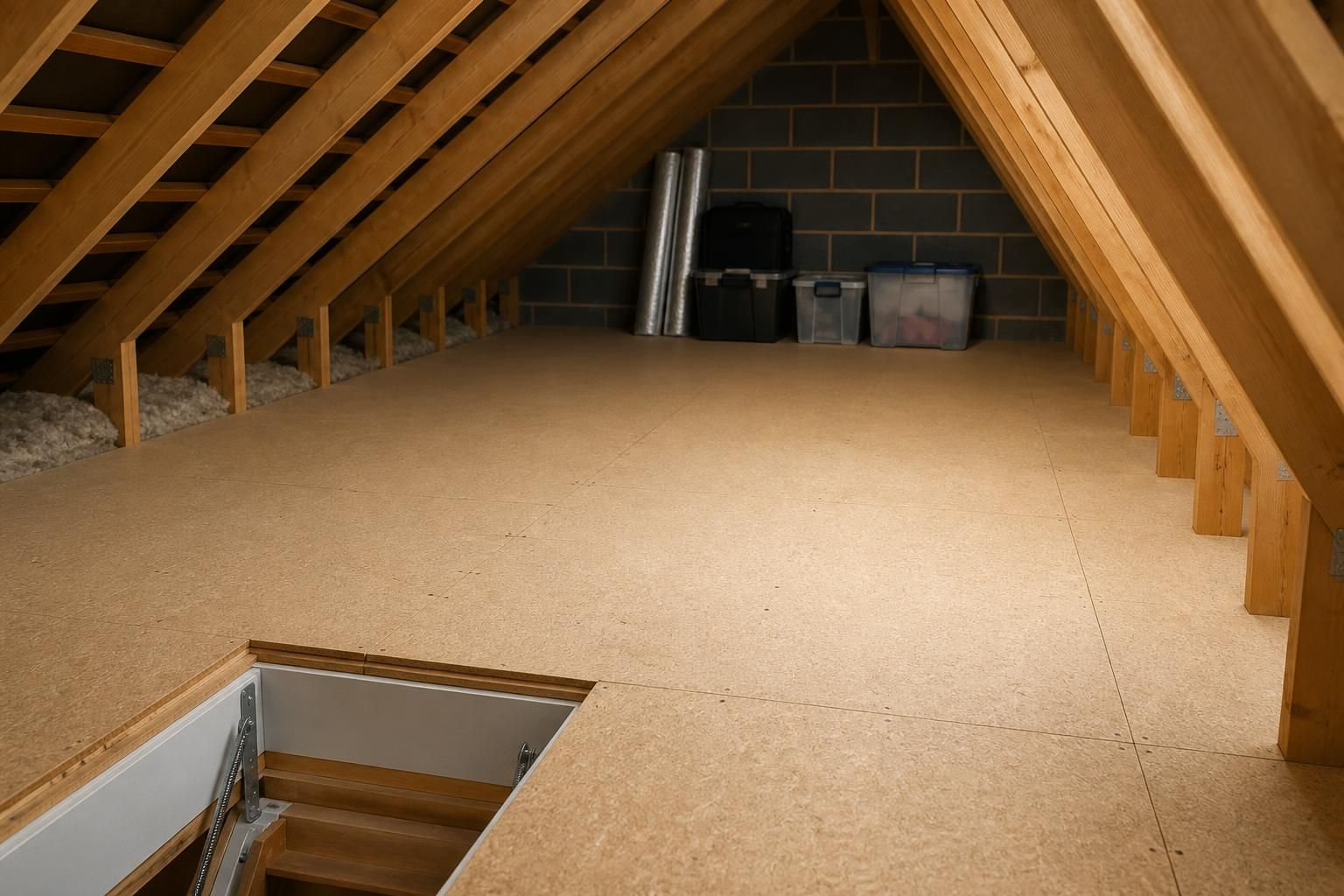
Raised flooring affects the assessment because the boards sit above insulation rather than compressing it. LoftZone raised flooring provides storage above insulation, while leaving the insulation arranged beneath the storage deck. The board material still needs to suit the conditions above and below the flooring.
A moisture-resistant board does not make unsuitable construction safe. It must be supported correctly, fitted with appropriate clearances and kept clear of areas requiring inspection. Cutting can expose the board core, so installation details matter around edges, hatches and service openings.
Moisture-resistant boards are therefore a specification choice, not a general requirement. A loft assessment should consider the roof condition, insulation, ventilation, access, plumbing and the belongings you plan to store.
Loftopia can discuss board selection alongside raised flooring, loft hatches and storage planning. The aim is to match the flooring to the loft’s actual conditions rather than choosing moisture resistance without a clear reason.
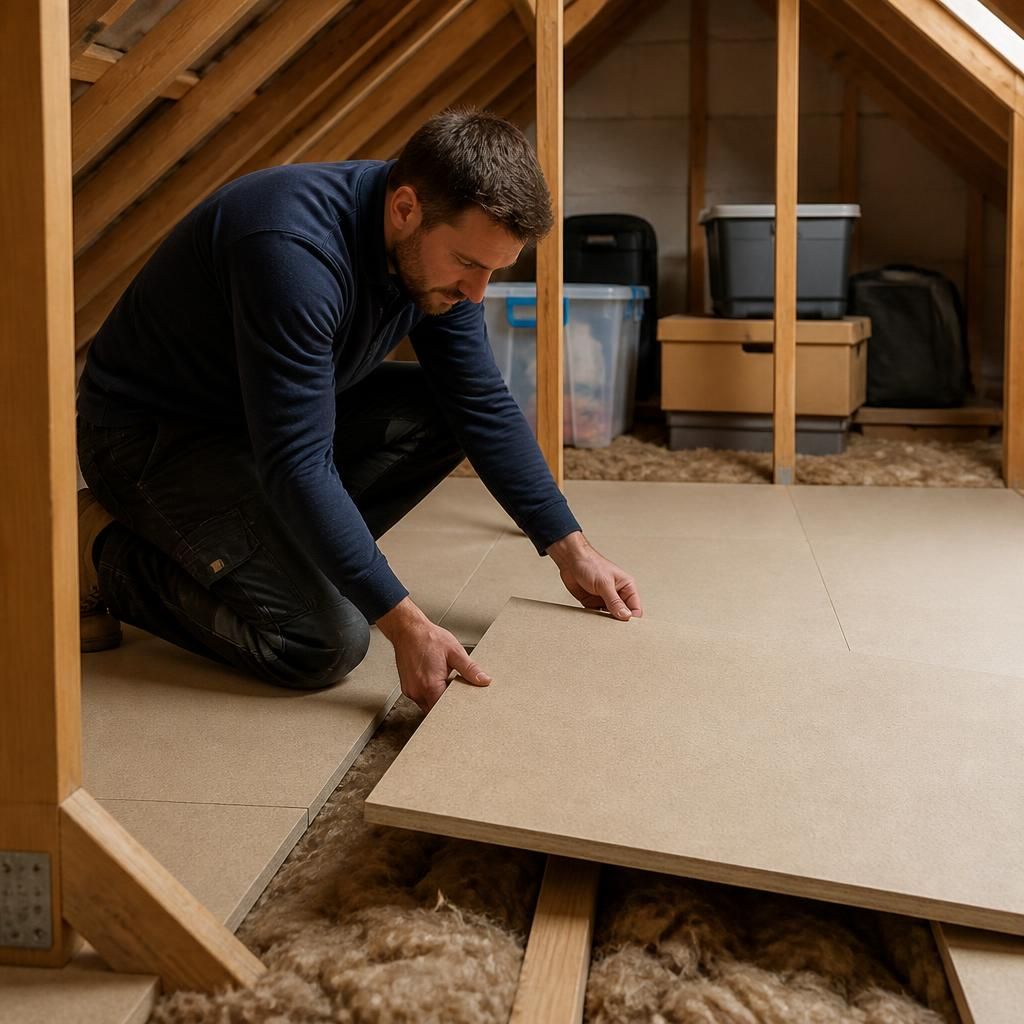
“Moisture-resistant” is not a single performance level. Different boards may have different classifications, so check the product documentation rather than relying on the description alone.
The documentation should confirm the board’s intended environment, permitted use and installation requirements. This helps ensure the selected material suits the loft’s conditions, support arrangement and storage plans. A survey can identify whether the moisture rating adds useful tolerance or offers little practical benefit.