
How should loft condensation be monitored after remedial work?
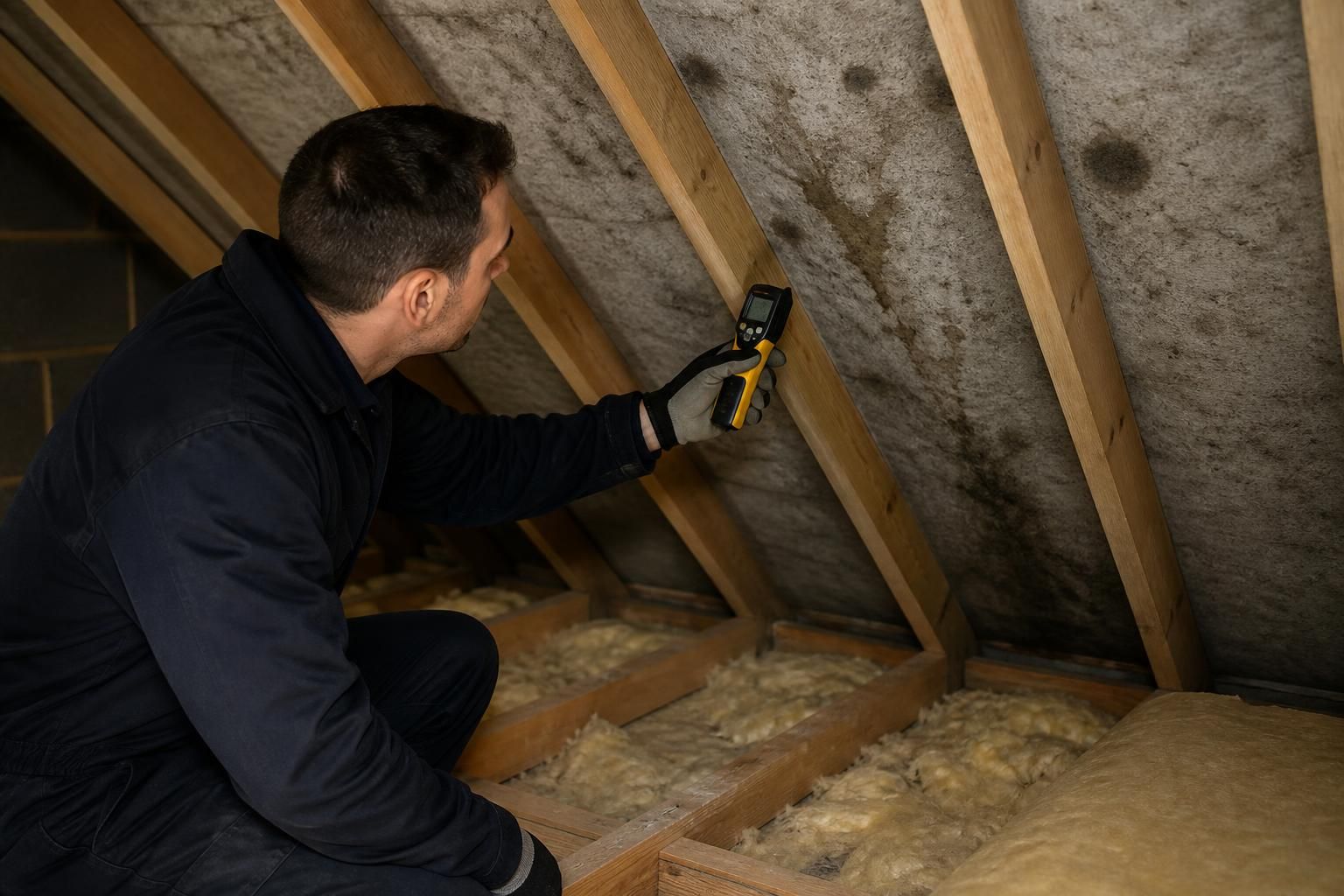
After remedial work, inspect the loft periodically for damp insulation, water droplets, mould or staining on roof timbers and the underside of the roof covering.
Keep dated notes and photographs of changes; ask a professional to investigate if moisture returns, increases or remains after ventilation and insulation issues are addressed.
Monitor loft condensation by establishing a clear baseline, checking the same areas consistently and recording changes in moisture, airflow and building materials.
Before remedial work ends, record what caused the moisture and what was changed. This may include improving ventilation, correcting insulation placement, repairing a roof defect or replacing damaged materials.
Ask the person completing the work to identify the areas requiring follow-up. Understanding the original cause helps you check whether the relevant condition has improved.
- Use consistent checks: Examine the loft under similar conditions where possible. Note recent rainfall, cold weather and any changes to household heating or ventilation.
- Measure the atmosphere: A digital temperature and humidity meter can show trends that are not obvious during a brief visit. Position it away from direct contact with insulation, roof coverings and ventilation openings.
- Check airflow routes: Look for insulation or stored items obstructing intended ventilation paths. Do not push insulation into gaps or alter roof components without suitable advice.
- Assess materials: Feel only accessible, safe surfaces for unusual dampness, and look for changes in timber colour, texture or condition. Do not climb onto unsupported areas or step between joists.
- Review the affected zone: Check around eaves, roof penetrations, ventilation points and any location identified during the remedial work. Moisture concentrated around one defect may indicate a different issue from widespread surface condensation.
Keep the meter readings and written observations together with the remedial work details. A simple record can show whether conditions are stable, improving or deteriorating.
Record the date, approximate loft conditions, meter readings and any changes since the previous check. Avoid changing several ventilation or insulation features at once, because this makes the effect of each change harder to understand.
Condensation often varies with outdoor temperature and household moisture production. Comparing readings from colder and milder periods can therefore be more useful than relying on one visit.
Moisture linked to rainfall may follow a different pattern. If a particular area becomes damp after wet weather, inspect the roof covering, flashing, penetrations and gutters from a safe position, or arrange a competent inspection.
Do not cover unresolved moisture with boarding, stored belongings or additional insulation. Covering the area can restrict visibility and make continued deterioration harder to identify.
Arrange further professional investigation when readings continue rising, the original symptoms return, or the suspected cause remains uncertain. Further assessment may need to consider roof leaks, plumbing, ventilation, insulation depth and indoor moisture levels together.
Monitoring should continue until the loft remains stable through relevant weather conditions. A single dry inspection does not confirm that condensation has been controlled.
Once the loft is demonstrably dry and the cause has been addressed, you can consider storage improvements. Loftopia can discuss raised flooring that keeps storage above insulation, alongside access and organisation work where appropriate.
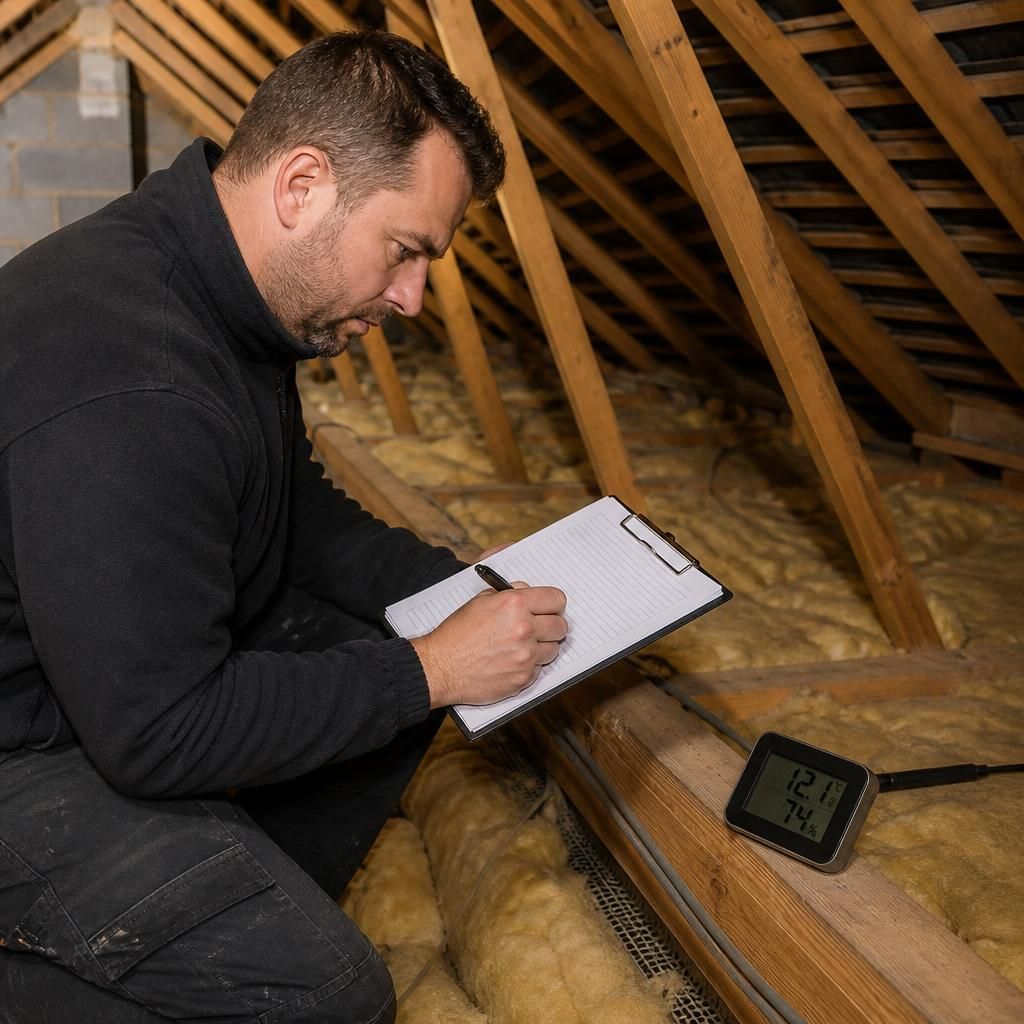
Ask for a written record of the remedial work, including the affected areas, identified cause, ventilation changes and any materials replaced. This gives you a clear reference when reviewing later observations.
Keep the record with dated photographs and meter readings. If the original symptoms return in the same location, the information helps a competent professional compare conditions and decide what requires further investigation.