
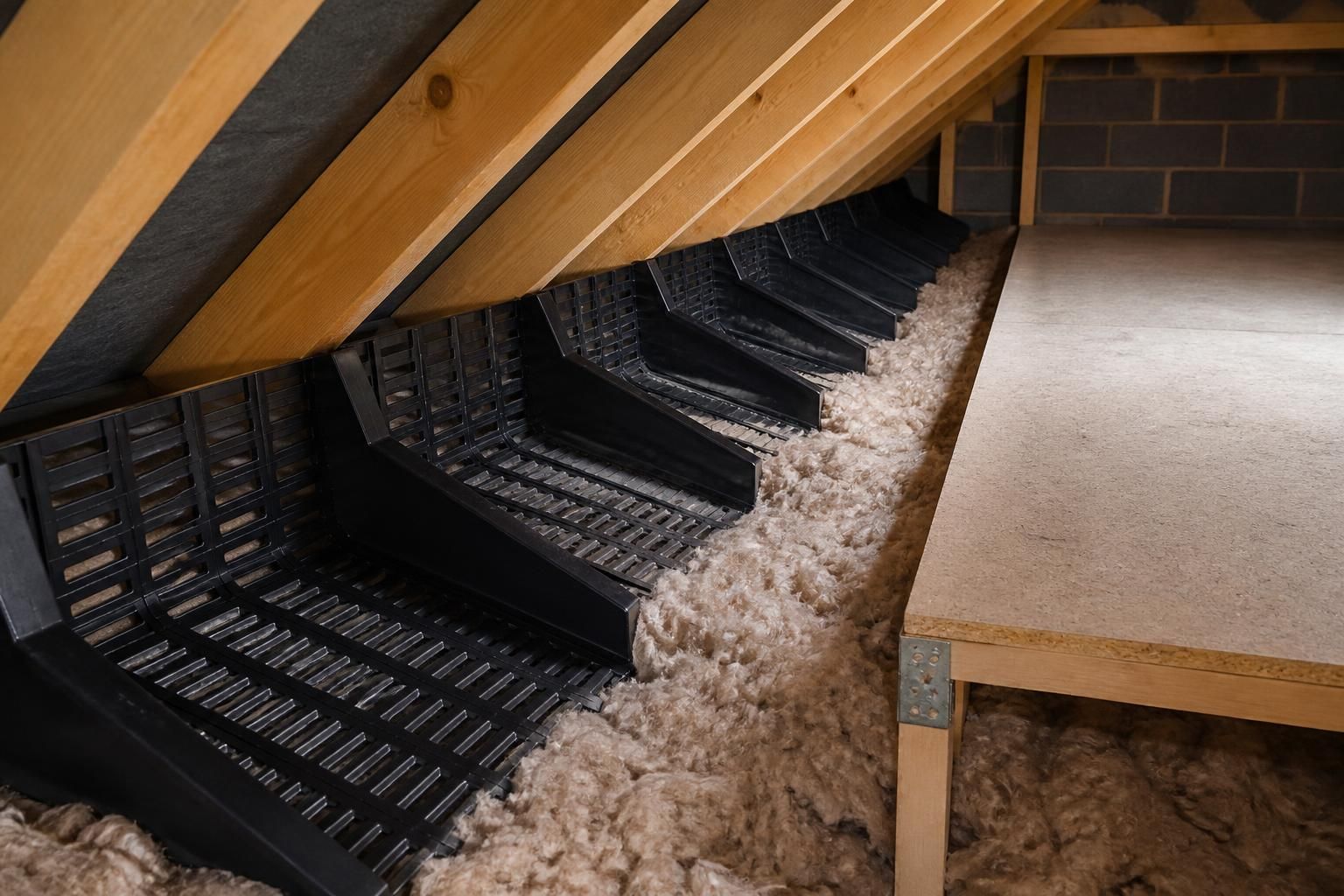
Can loft baffles be added during loft boarding?
Yes. We can add loft baffles during loft boarding where the roof construction requires protected airflow at the eaves, fitting them before LoftZone raised flooring is installed.
We assess the insulation, rafters and ventilation route, then secure the baffles without blocking airflow or compressing insulation beneath the raised storage area.
Loft baffles can be added as part of loft boarding when the roof needs a protected ventilation route at the eaves. Installing them before storage flooring allows the ventilation detail and insulation to be considered together.
Why the timing matters
Insulation must retain its depth while air continues moving from the eaves towards the loft space. Without a clear route, insulation can obstruct the gap beneath the roof covering. Boarding work can also make later access to the eaves more difficult.
We therefore inspect the area before placing raised flooring. This helps identify whether insulation reaches the eaves, whether the rafters provide a suitable fixing point and whether roof vents or other features affect the airflow route.
How baffles work with raised boarding
Baffles form a channel between the insulation and the underside of the roof. They help keep insulation away from the ventilation path while allowing air to pass through the eaves area.
LoftZone raised flooring then provides storage above insulation, rather than forcing boards directly onto a deep insulation layer. The baffles and flooring perform different functions: baffles protect airflow, while raised flooring creates a usable storage surface.
We position the flooring so it does not obstruct the baffle route. The finished arrangement must also leave enough access for inspection and avoid placing stored items directly across ventilation openings.
What the installation involves
-
We inspect the roof edges, insulation depth, rafters and visible ventilation openings.
-
We establish where airflow needs to travel and check for insulation blocking the intended route.
-
We fit suitable baffles between the rafters where protection is required.
-
We secure the baffles so they remain in position during boarding and normal use of the storage area.
-
We install the raised flooring while keeping the ventilation route open.
-
We check the completed area for displaced insulation, blocked openings and visible gaps in the intended airflow path.
The precise arrangement depends on the roof construction. Some lofts have open eaves and clear airflow, while others have insulation pushed into the edges or restricted ventilation openings. Baffles are not automatically required in every loft, so the roof should be assessed rather than treated as a standard layout.
Can baffles be added to an existing boarded loft?
Sometimes, but access can be more limited once boards cover the eaves. We may need to inspect beneath or around existing boards before deciding how the work can be carried out.
Existing insulation may also have settled, been compressed or been placed across the ventilation route. We record these conditions before altering the boarding. If sections must be lifted, we can explain the affected area and the work needed to reach the rafters safely.
Adding baffles does not replace other ventilation requirements. Roof vents, soffit openings and the condition of the insulation still need consideration. A baffle cannot correct a sealed or damaged external ventilation opening.
Loft boarding is intended to create storage, not a habitable room. Keeping the eaves ventilation route open remains important after installation, so stored boxes should not be pushed into the roof edges or against ventilation openings.
A professional assessment is particularly useful where insulation is deep, roof access is restricted or the loft already contains partial boarding. It allows baffles, insulation and raised flooring to be planned as one installation without relying on compressed insulation to support the storage surface.
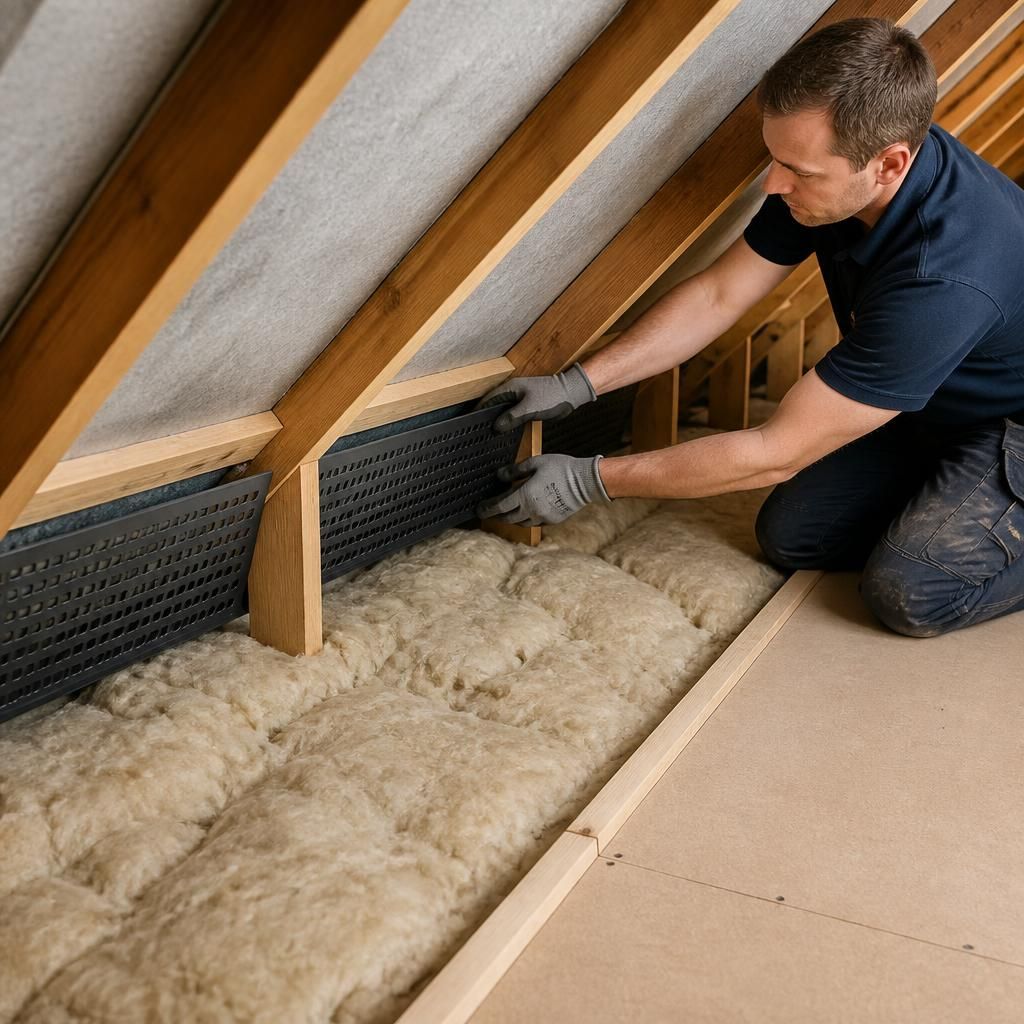
Adding loft baffles during boarding means the eaves detail can be included in the storage layout, rather than treated as a separate alteration later.
We work from inside the loft to position the baffles between suitable rafters, then plan the raised flooring around the protected airflow route. This keeps the storage surface separate from the roof-edge ventilation detail.
Baffles do not carry stored items or replace insulation. Their purpose is to maintain a defined air path, while LoftZone raised flooring creates storage above insulation. We explain any area that should remain clear when the completed loft is used.