
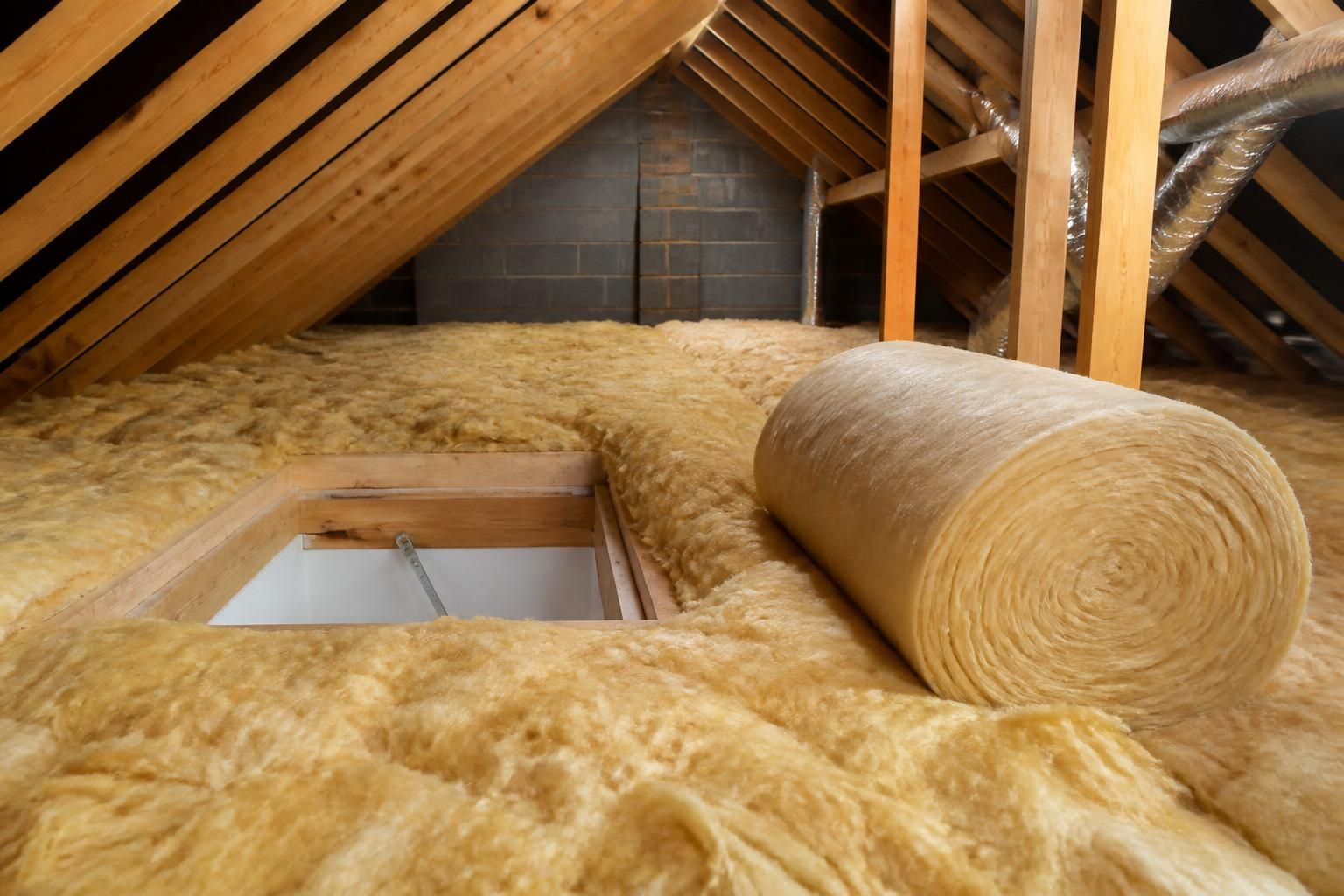
Can additional loft insulation be added over existing insulation?
Yes, additional loft insulation can usually be laid over existing insulation, provided the loft is dry and the existing material is suitable to retain. We assess the insulation, ventilation and access before fitting a compatible top-up without unnecessarily disturbing the existing layer.
The existing layer does not automatically need removing. The deciding factors are its condition, material, moisture exposure and position within the roof space.
We examine the insulation before recommending a top-up. This check identifies areas that have become compressed, displaced or uneven. It also helps establish whether the existing layer still provides a suitable base.
- Dry insulation can often remain in place beneath a compatible additional layer.
- Compressed insulation may need topping up to improve the overall thermal performance.
- Wet, contaminated or mould-affected material may require removal after the underlying cause is corrected.
- Unfamiliar loose-fill insulation should not be disturbed until its material has been identified.
Adding new material over insulation affected by a roof leak will not resolve the leak. We investigate moisture, staining and condensation before fitting further insulation.
The roof edge also needs attention. Insulation must not block eaves ventilation, because airflow helps reduce moisture accumulation beneath the roof covering. We retain suitable ventilation paths while filling gaps around the loft perimeter.
Existing insulation may also surround cables, pipework, water tanks, junction boxes and other services. Additional material can make these items harder to find. We identify important access points and avoid covering them without suitable provision.
Loft insulation must remain effective after storage flooring is added. Standard boards placed directly on top can compress the insulation and reduce the space available for it. We install LoftZone raised flooring where storage access is required, keeping the boarding above the insulation.
Raised flooring also allows insulation to continue beneath the storage area. We plan the flooring around roof supports, services and the areas you need to reach, rather than covering the whole loft automatically.
Some older lofts contain insulation that has shifted over time. We may redistribute suitable material before adding more, so the new layer sits consistently across the ceiling area.
We select the additional insulation according to the existing material, available depth and intended use of the loft. The fitting method can differ between an open roof space, a boarded area and a loft with restricted access.
Adding insulation usually affects the loft rather than the rooms below. Access remains important, however, because a deeper insulated floor can make stored items and services more difficult to reach without planned walkways or raised flooring.
Our assessment therefore considers three stages: the condition of the existing insulation, the requirements for further coverage and the access needed afterwards. This approach avoids disturbing suitable material unnecessarily while identifying work that needs correction before the top-up.
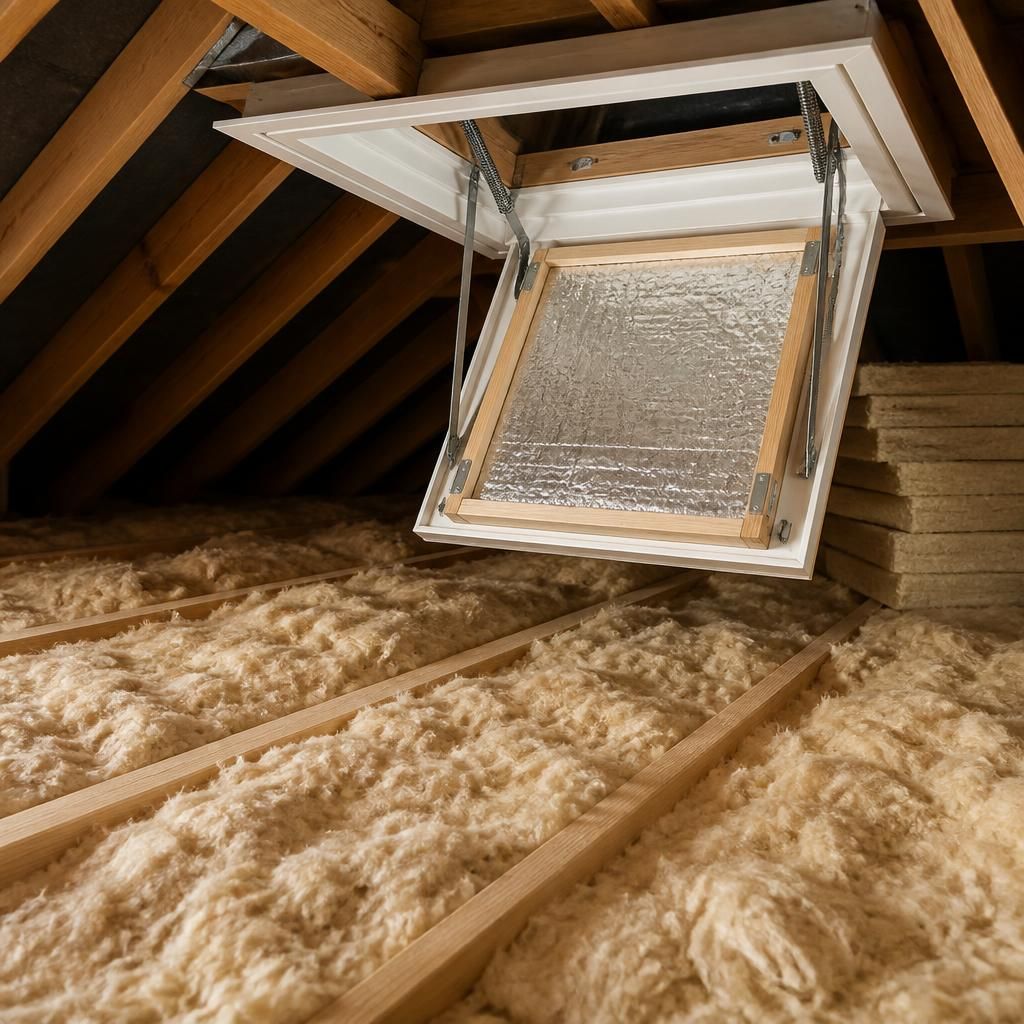
The loft hatch is an important part of an insulation upgrade. Adding insulation across the ceiling leaves a weaker insulated area if the hatch remains untreated.
We check that the hatch can accommodate the added depth and still close securely. Where suitable, an insulated drop-down hatch helps maintain insulation at the opening while making loft access safer.