
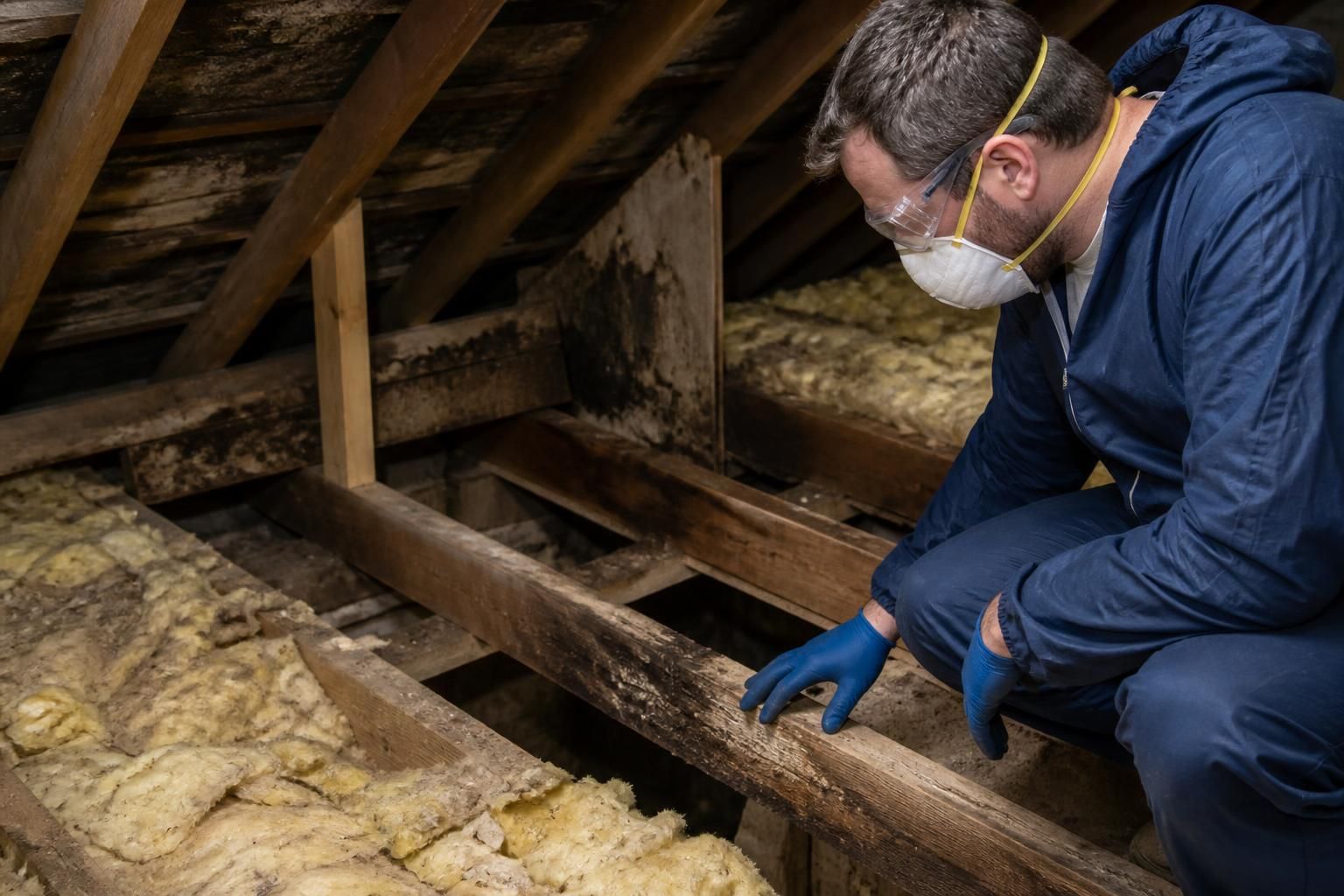
Can loft insulation removal uncover hidden structural damage?
Yes. Removing loft insulation can expose damp, rot, staining or damaged joists that were hidden from view.
If we find a possible structural defect, we can document its location and explain what should be assessed before further loft work continues.
Loft insulation removal can reveal conditions that were not visible during an ordinary loft inspection. It can also show that apparent damage is limited to the insulation or surrounding surface, rather than the structure.
Insulation may conceal parts of the roof structure, joists, supports and ceiling edges. Once those areas become visible, an installer can check for changes that could affect storage work, including:
- Cut, notched or heavily drilled joists that may have been altered for earlier services.
- Joists that have shifted, sagged or developed visible movement.
- Cracked roof members or connections that no longer appear secure.
- Gaps, movement or deterioration around points where timber meets masonry.
- Evidence that water has reached structural timber or roof components.
- Previous repairs that appear incomplete, poorly supported or unsuitable for additional loading.
Removing insulation does not confirm that a structural problem exists. Loft timber can look uneven because of its original construction, historic movement or surface wear. A visible irregularity needs careful interpretation before anyone recommends remedial work.
We inspect exposed areas as part of planning loft work, but insulation removal is not a replacement for a structural survey. We can identify visible concerns, record their position and explain which parts require assessment by a suitably qualified structural professional.
We would normally avoid covering a suspected defect with raised flooring or adding stored weight until the condition has been assessed. This helps prevent an unclear finding from becoming inaccessible after boarding.
A useful inspection record should show:
- The position of the concern in relation to the loft hatch, roof slope or supporting wall.
- The visible form of the issue, such as movement, cracking, deformation or missing support.
- Any nearby signs that could help identify the cause.
- Areas that remain hidden because insulation or other materials could not be removed safely.
A structural professional may recommend opening further areas, checking the roof externally or examining how loads transfer through the building. The appropriate action depends on the location, extent and apparent cause of the issue.
Some findings relate to the building envelope rather than the loft structure itself. For example, a roof covering, flashing or gutter may need attention before affected timber can be assessed properly. Addressing the source is usually important before replacing insulation or completing storage work.
Insulation removal can therefore improve understanding of the loft, but it should be treated as an inspection stage rather than proof that the structure is sound. We can keep the findings clear, avoid covering areas that need attention and explain the next assessment before further loft work proceeds.
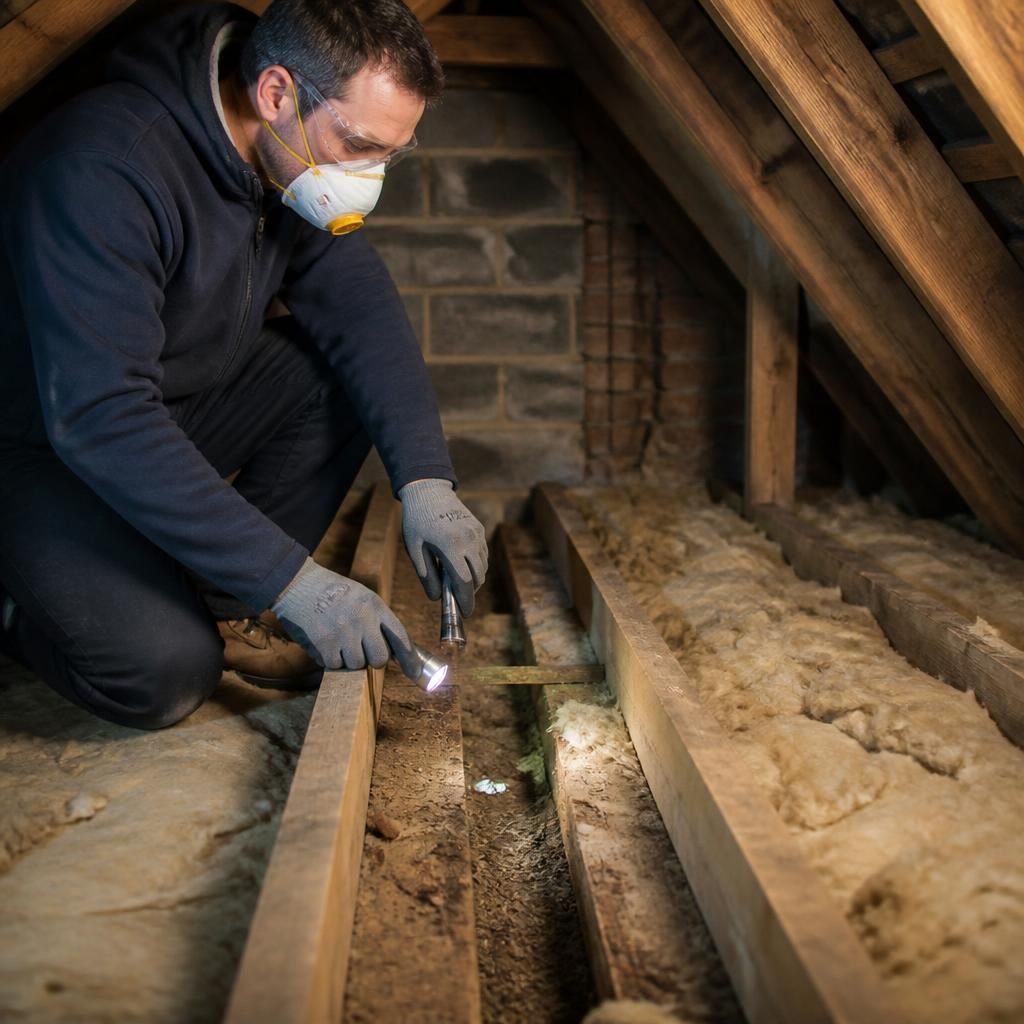
Not every problem uncovered during insulation removal affects the structure. Compressed, displaced or marked insulation may reflect age, storage or previous work rather than damage to the loft timbers.
Equally, clean insulation does not prove that concealed timber is sound. Exposing the surrounding area helps distinguish an isolated surface concern from a condition that extends across adjoining components. We record what is visible and keep uncertain areas open for appropriate assessment before storage work continues.