
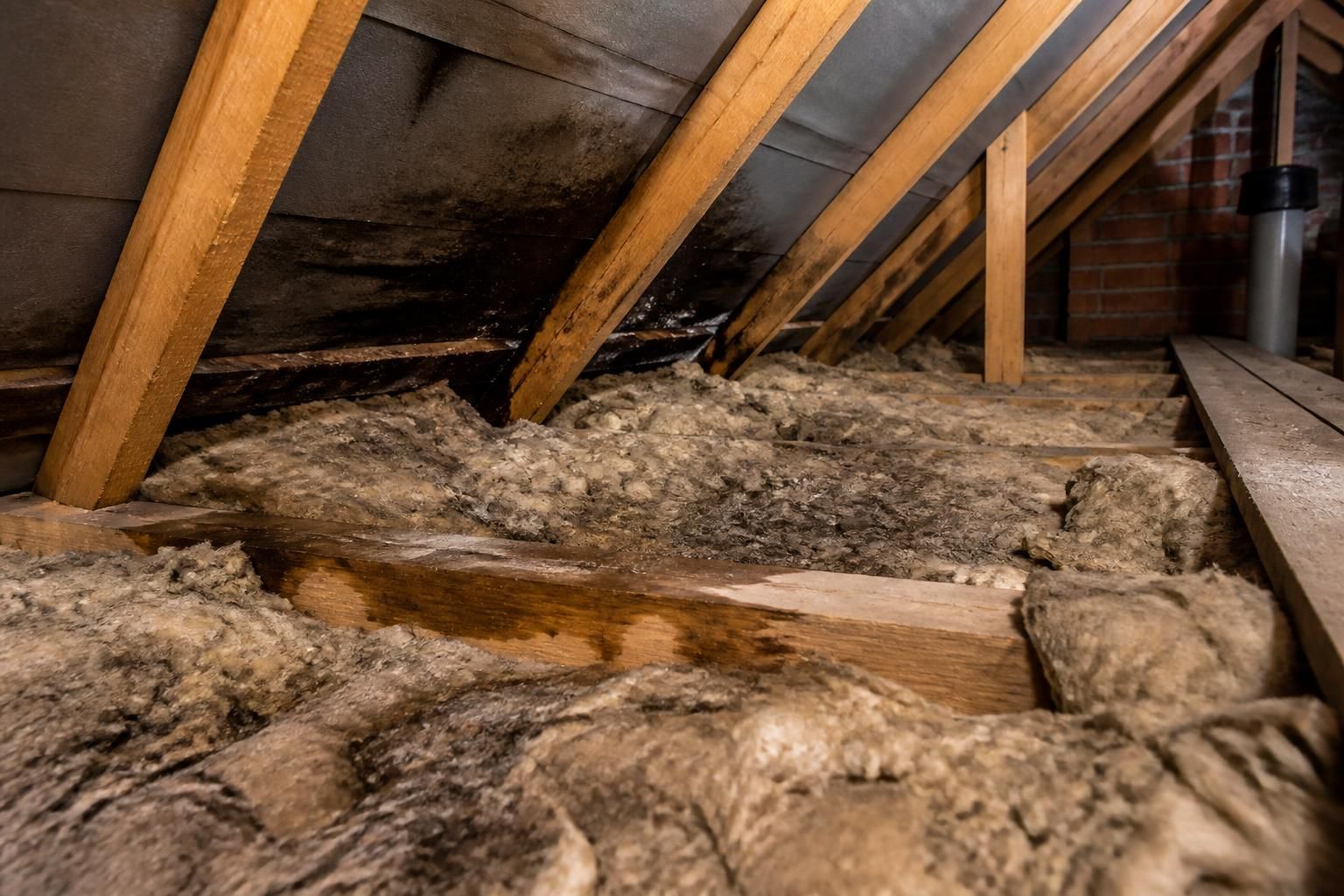
Can moisture damage Rockwool loft insulation?
Moisture can reduce Rockwool loft insulation’s thermal performance if it becomes persistently wet, although the mineral wool itself does not provide food for mould. Damp insulation may indicate a roof leak, condensation or poor ventilation, so identify and correct the moisture source before replacing or covering it.
Yes. Moisture can damage Rockwool loft insulation, particularly when the material remains damp or becomes saturated. The fibres themselves do not rot, but wet insulation can settle, lose its intended thickness and transfer heat more readily.
Moisture can also affect the loft around the insulation. Roof timbers, boarding, fixings and the ceiling below may deteriorate if damp conditions continue. Insulation that looks intact can still conceal moisture beneath it, so a dry surface does not always confirm that the full depth is dry.
Brief contact with water does not automatically mean that all Rockwool must be removed. The outcome depends on how much water entered the loft, how long it remained there and whether the material retained its shape. Wet sections need assessment before anyone disturbs, replaces or covers them.
Look for signs that include:
- Darkened, compressed or uneven insulation.
- Water marks on roof timbers, the ceiling or nearby masonry.
- A musty smell or visible surface growth on adjacent materials.
- Rusting fixings or staining around roof penetrations.
- Repeated condensation on the underside of the roof covering.
Do not rely on insulation alone to diagnose the cause. Water can enter through damaged roof coverings, defective flashing, poorly sealed penetrations or plumbing above the ceiling. Warm, moist air can also reach a cold loft through gaps around the hatch, pipes, cables and light fittings.
Inspection should begin with the roof and the loft’s air movement. A suitable check may include the roof covering, flashing, eaves, ventilation paths, pipework and ceiling penetrations. The inspection should also consider whether stored items or boarding obstruct airflow.
Removing the moisture source comes first. After repairs, affected Rockwool should be allowed to dry only where adequate airflow and safe access exist. Do not compress it, walk on it or cover it with raised flooring while damp.
Drying may not restore material that has collapsed, become contaminated or lost its intended depth. A competent installer can assess the affected area and explain whether local removal, replacement or reinstatement is appropriate.
Raised flooring needs particular care after moisture damage. LoftZone raised flooring can provide storage above insulation, but the supporting structure must not conceal wet materials or obstruct necessary ventilation. We check the insulation and surrounding loft before arranging boarding work.
Electrical equipment requires additional caution. Water near cables, junction boxes, fittings or transformers should be treated as a safety concern. Avoid handling affected equipment and arrange an inspection by a suitably qualified electrician.
Once the loft is dry and the cause has been addressed, insulation can be checked for gaps, compression and disturbed edges. Correct reinstatement helps retain heat and reduces the risk of cold areas where condensation may develop.
Loftopia can assess how moisture has affected the insulation alongside planned loft storage work. We can discuss insulation, raised flooring, access and storage requirements without treating damp material as suitable for covering.
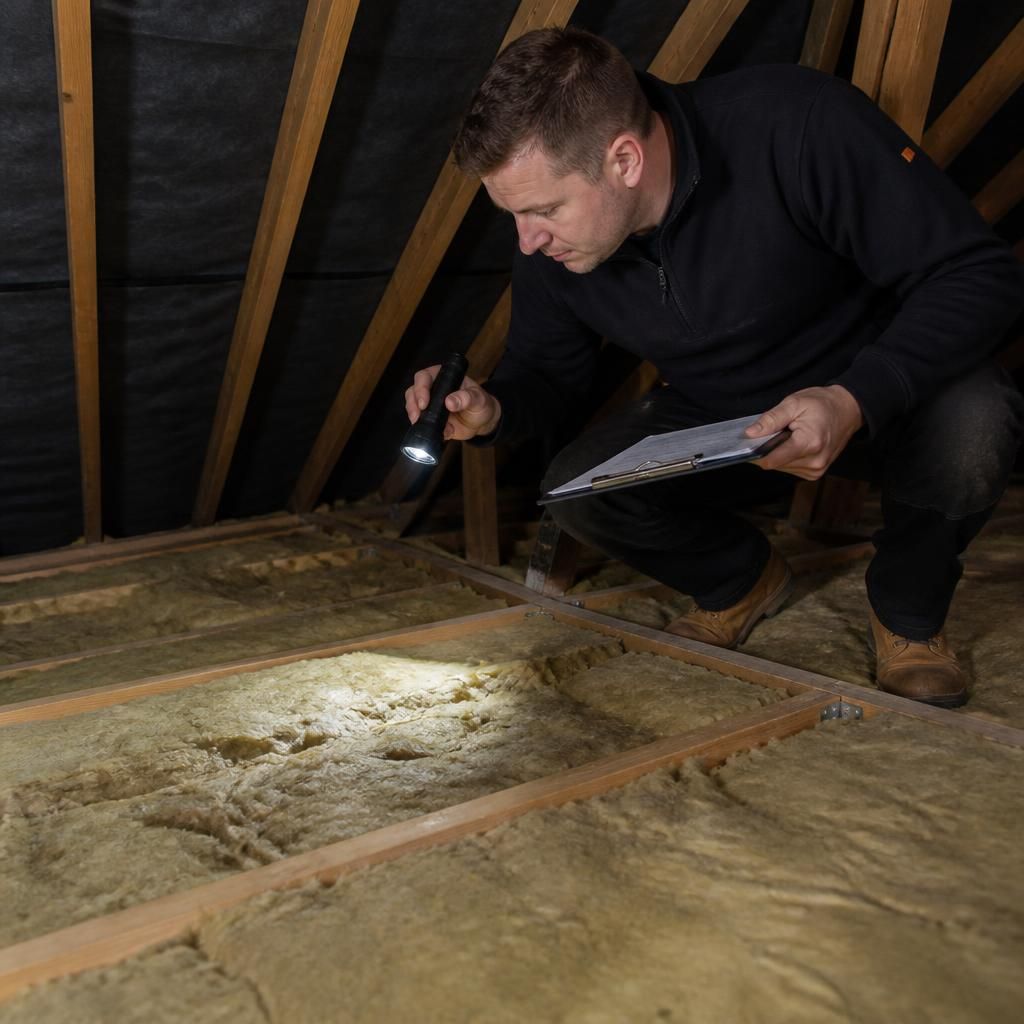
Moisture checks should be completed before loft storage work begins. Installing raised flooring over an unresolved problem can make later inspection more difficult and leave damaged insulation in place.
After the source has been repaired, we assess the affected area separately from undisturbed sections. The assessment considers dryness throughout the insulation, retained thickness, nearby timber condition and whether the area can be accessed safely for future checks.