
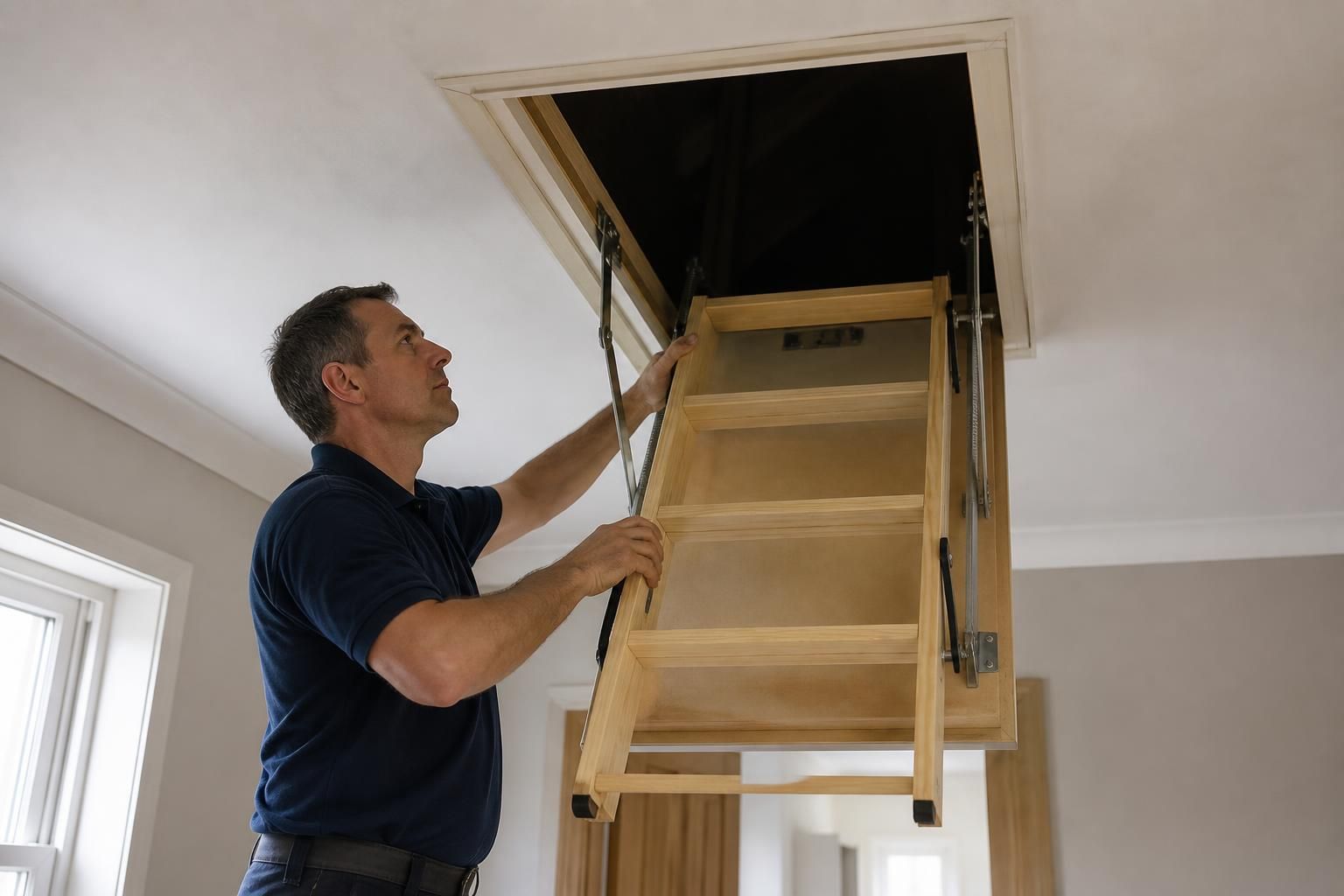
Can I fit a folding loft ladder myself?
You can fit a folding loft ladder yourself if you can accurately assess the hatch, joists, clearance and fixing requirements.
Professional installation is safer when access, deep insulation or structural details are unclear; we can install the ladder and check its fit.
The deciding issue is not assembling the ladder. It is creating a secure opening, supporting the ladder correctly and preserving safe movement around the loft.
DIY installation may be suitable for an experienced homeowner who can follow the product instructions precisely and work safely at height. A folding loft ladder is not a simple piece of furniture. It becomes part of the access route between the room and the loft.
Before starting, read the complete installation instructions and check that the selected ladder matches the opening. Instructions normally specify the required hatch dimensions, fixing points, folded length and space needed for deployment. Do not assume that a ladder will fit because the hatch appears large enough.
The hatch frame must provide a firm fixing. Fixing a ladder through a weak cover, plasterboard or unsuitable trim can allow movement during use. The frame also needs to remain square, so the ladder opens and closes without binding. Altering the opening may require careful work around ceiling finishes and structural timber.
DIY installation usually requires accurate measuring, suitable cutting tools, drills, fixings, a spirit level and safe access equipment. You may also need assistance when positioning the ladder. Folding sections can be awkward to hold while the fixings are being installed.
Check the loft and ceiling area for obstructions before cutting or drilling. These may include:
- electrical cables, junction boxes or light fittings;
- water tanks, pipes and ventilation equipment;
- roof timbers that restrict the ladder position;
- deep insulation around the hatch;
- stored items that could obstruct deployment.
Never cut structural timber without first understanding its purpose. If the planned opening affects joists or other structural members, obtain suitable professional advice before making changes.
Deep insulation can create a further complication. It may surround the hatch and restrict the folded ladder, while a poorly detailed opening can leave insulation displaced. The access arrangement should retain the insulation around the hatch and avoid trapping the ladder mechanism.
Installation also involves checking the closed position. The ladder should fold neatly into the hatch without striking the ceiling, nearby walls, stored items or light fittings. The opening direction matters because a ladder can interfere with doors, furniture or the usual route through the room.
After fixing, operate each section carefully and check that the hinges, brackets and locking parts move as intended. Look for movement at the frame, uneven deployment, loose fixings or contact with the ceiling. Do not use the ladder if it flexes excessively, catches or fails to sit securely.
Safe use depends on more than the ladder itself. Keep both hands available while climbing, maintain three points of contact and avoid carrying bulky items. Store heavy possessions away from the access opening, so the area remains clear when the ladder is lowered.
Professional installation is the safer choice when the hatch needs enlarging, the frame is uncertain, structural timber is involved or the loft contains complex services. It is also sensible when deep insulation makes the installation detail difficult to judge.
We can install a folding loft ladder and check that the ladder, hatch and surrounding loft area work together. We can also discuss an insulated drop-down hatch where heat retention and a proper closure are important.
A ladder installation does not automatically make the loft suitable for general storage. The surrounding floor, insulation and stored load still need consideration. Where storage is required, we can discuss raised flooring, shelving and lighting as separate parts of a loft storage package.
DIY work can be appropriate when the opening is suitable, the fixing method is clear and the installation can be completed without compromising the home. If any of those points remain uncertain, professional fitting avoids turning an access improvement into a structural or safety problem.
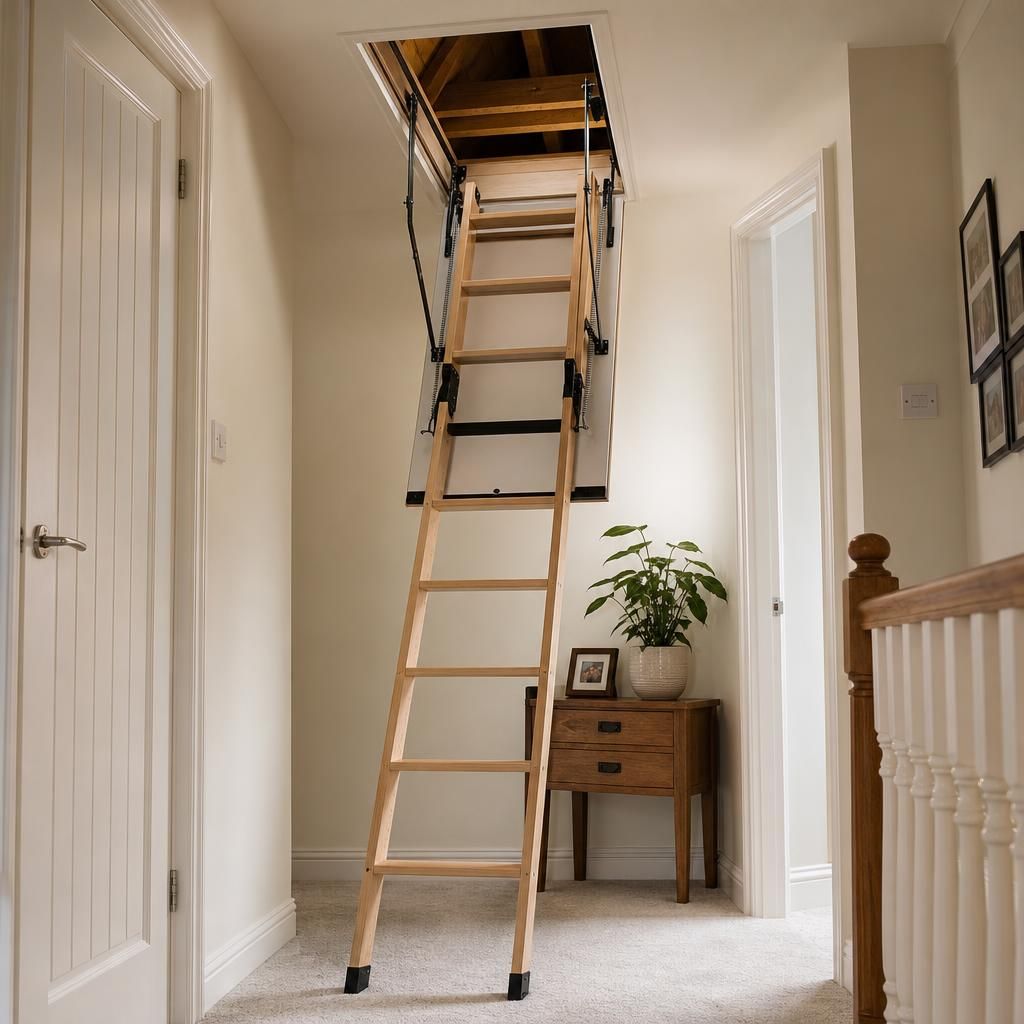
Assess the landing area as carefully as the loft opening. When the folding ladder is lowered, you need clear floor space to stand beneath it and step away safely after climbing.
Check that the lowest rung does not finish beside furniture, a doorway or another obstruction. If the ladder position creates an awkward first or last step, ask us to assess the hatch and access arrangement before you begin.