
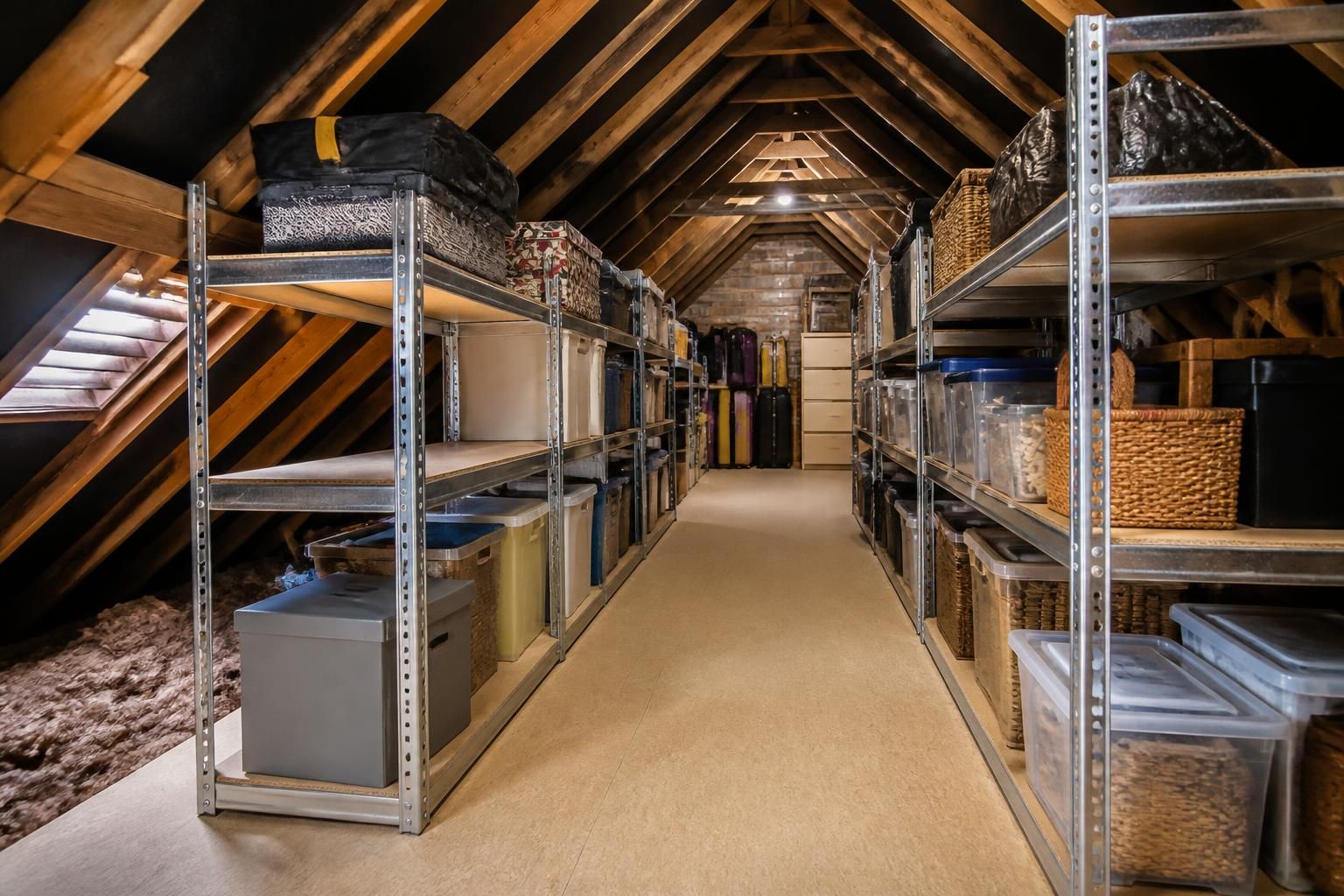
Can loft racking restrict ventilation?
Loft racking should not restrict ventilation when it leaves roof-level airflow paths, eaves vents and other ventilation openings clear.
Keep stored items away from these areas, because blocked airflow can increase condensation risk and affect the loft’s moisture control.
Yes, loft racking can restrict ventilation if its frame, shelves or stored items obstruct designed airflow routes. The risk depends on the roof construction, vent positions, racking layout and how the shelves are loaded.
Roof ventilation allows air to move through the loft and helps control moisture. Air commonly enters near the eaves and may travel towards ridge, tile or other roof-level vents. Racking should be positioned so these routes remain open.
A rack placed across an eaves ventilation path can be more problematic than one positioned further into the loft. Boxes stacked tightly against roof edges can also create a continuous barrier, even when the racking frame itself is open.
Solid panels, enclosed cupboards and closely packed containers restrict airflow more readily than open shelves. Large items can block a vent locally, while several storage bays filled to the roof slope may limit air movement across a wider area.
During planning, check the following points:
- Identify eaves, ridge, tile and other ventilation openings before fixing racking.
- Keep the route between opposing ventilation openings reasonably unobstructed.
- Avoid placing shelves directly across low-level ventilation paths.
- Leave space around roof vents rather than storing boxes against them.
- Do not push bags, cartons or loose materials into narrow roof edges.
- Keep stored items below the roof covering where the roof design requires airflow.
Deep insulation can make the eaves area difficult to inspect. Raised flooring or a carefully planned storage layout can provide usable storage while avoiding unnecessary compression and obstruction around the roof perimeter.
Racking should also avoid covering electrical equipment, light fittings or areas that need inspection. Keeping these points accessible helps you identify dampness, damaged insulation or blocked vents during routine checks.
Condensation may develop when warm, moist air meets cold roof surfaces. Restricted ventilation can reduce the loft’s ability to disperse that moisture. Warning signs include persistent damp smells, surface moisture, mould growth or staining on timber and stored items.
These signs do not prove that racking caused the problem. They can also indicate roof leaks, inadequate insulation detailing, plumbing issues or wider ventilation defects. Investigate the loft rather than simply moving boxes.
Loading matters as much as the rack position. Leave gaps between stored items where practical, avoid tightly packing shelves to the roof slope and keep bulky items away from ventilation openings.
We can assess the proposed racking position alongside loft access, insulation and raised flooring. Loft Storage & Accessories planning can then place shelving where it supports storage without compromising essential inspection and airflow routes.

Visible gaps do not always mean that airflow is adequate. A shelf or box can leave a vent uncovered while still reducing the open area through which air moves.
Ventilation requirements vary with roof construction, so we do not apply one standard clearance to every rack. Loftopia can review the proposed layout, shelf depth and storage position against the existing roof details before fixing the system.