
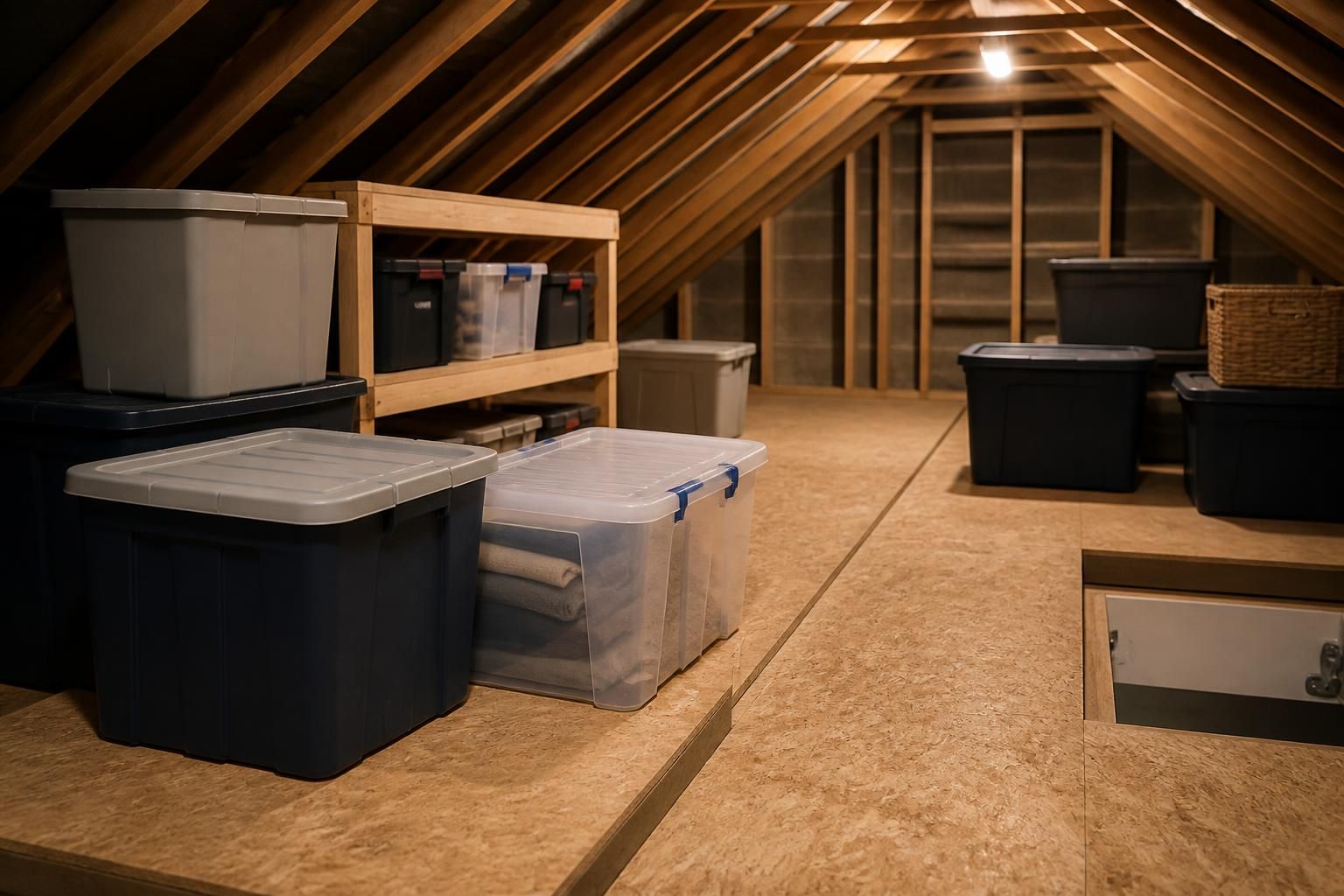
Do loft storage boxes need ventilation?
Loft storage boxes do not usually need ventilation holes, provided the loft remains dry and the boxes do not obstruct ventilation at the eaves.
Store only dry items, avoid trapping damp in sealed containers and leave air movement around boxes to help prevent mould.
Loft storage boxes normally do not need ventilation holes. The loft itself must retain its designed airflow, while boxes should remain clear of roof vents, eaves ventilation and inspection areas.
Ventilation holes in a box are not a substitute for correcting condensation, leaks or inadequate roof ventilation. They can also allow dust, insects and fibres to enter, which may damage stored belongings.
Place boxes on stable raised flooring rather than directly over compressed insulation. LoftZone raised flooring creates storage above insulation and helps preserve the insulation’s intended depth. Keep the flooring layout clear of ventilation paths at the roof edges.
Do not push boxes tightly against the underside of the roof. This can obstruct airflow and may expose contents to cold surfaces where condensation forms. Leave practical clearance around roof timbers, ventilation points and electrical equipment.
Choose boxes with lids that close securely, but avoid using them for items that have not fully dried. Cooling temperatures can cause moisture to condense inside a container when damp belongings are sealed away.
- Dry textiles, decorations and luggage before storage.
- Use clean, intact boxes with lids that fit properly.
- Keep boxes away from roof leaks, water tanks and pipework.
- Allow access for roof inspections and maintenance.
- Do not cover eaves ventilation or block air movement around the roof perimeter.
Ventilation becomes particularly important where the loft has limited airflow, visible condensation or a history of mould. Check the roof covering, flashing, insulation position and ventilation route before adding more storage.
Signs of a problem include musty smells, damp cardboard, softened contents, mould spots, darkened timber or droplets on nails and roof membranes. Remove affected items and investigate the moisture source rather than drilling holes in every box.
Plastic boxes can protect contents from dust, but they do not correct a damp loft. Cardboard absorbs moisture and can deteriorate when stored in a cold or humid environment. Select containers according to the loft conditions and the items inside.
Keep heavier boxes on the parts of the raised flooring designed for storage. A box’s ventilation does not determine whether the floor can support its weight. Check the floor construction and spread loads instead of concentrating them in one small area.
Loftopia can assess the storage area, insulation arrangement, access and ventilation paths before planning Loft Storage & Accessories. This may include shelving, lighting, loft ladders or hatches where those features affect safe access and inspection.
Good ventilation depends on the loft as a whole, not on perforating individual containers. Keep the roof airflow unobstructed, control moisture at its source and store only suitable, dry belongings.
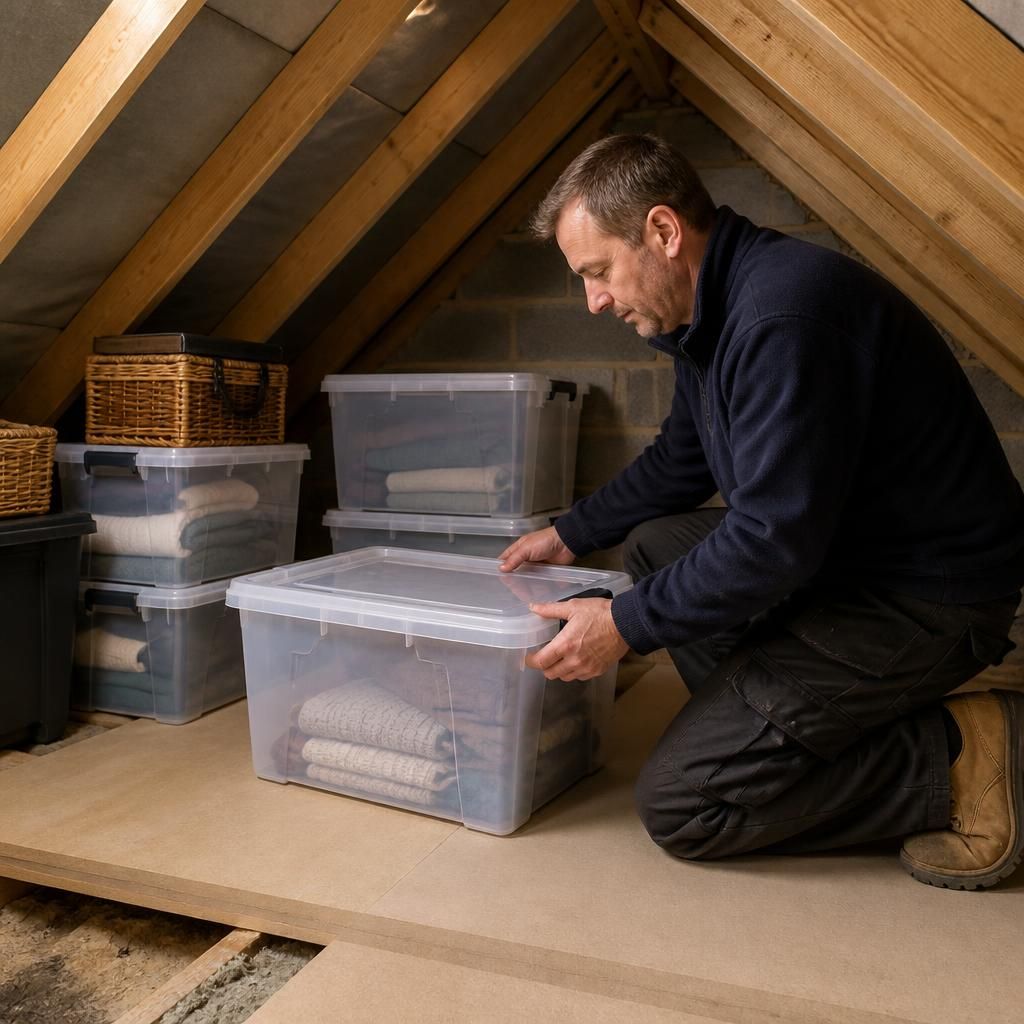
Ventilation belongs to the loft structure, not the storage box. A container with drilled holes cannot provide controlled airflow through the roof space and may allow humid air to reach its contents.
Use the box design to protect belongings, then keep the roof’s ventilation route unobstructed. If moisture appears inside a container, investigate the loft conditions and the stored items rather than adding vents to the lid.